The air inside feels heavy, stuffy, and uncomfortably warm.
You immediately walk over to the thermostat and push the button to blast the air conditioning.
Outside, the sun beats down relentlessly on your roof and walls.
Inside, your HVAC system roars to life, working overtime to fight the heat pouring through your building materials.
Hours later, the sun sets.
The outdoor air turns crisp and cool.
Yet your house remains trapped in a pocket of stuffy warmth, forcing your cooling system to keep running deep into the night.
For generations, human shelter relied on massive stone or thick adobe walls that naturally absorbed daytime heat and released it slowly at night.
Modern buildings threw away that ancient wisdom.
We built lightweight homes out of thin wood, glass, and steel.
Those modern structures offer zero thermal mass.
They heat up instantly when the sun hits them and cool down immediately when the wind blows, forcing us to burn massive amounts of energy on constant heating and cooling.
We cannot build a sustainable, zero-emission future while letting our homes bleed energy through passive, unresponsive walls.
What if your house walls could absorb excess heat like a sponge and store it safely until you needed it?
What if advanced phase change materials could give ordinary building insulation a living memory of temperature?
A quiet, brilliant materials science revolution is transforming construction engineering across the globe.
According to global energy reports from the International Energy Agency (IEA), resource protection frameworks from the United Nations Environment Programme (UNEP), efficiency benchmarks from ENERGY STAR, and academic building thermodynamics research, phase change material thermal energy storage in homes is changing our architectural landscape.
By integrating specialized latent heat compounds into drywall and insulation, we stabilize indoor temperatures naturally and slash household heating and cooling energy use.
Here is how phase change materials work, why latent heat storage changes building economics, and how thermal memory secures our sustainable future.
To understand why phase change materials matter so much, you have to look at the energy inefficiency of standard modern construction.
Traditional houses built centuries ago used thick stone or brick masonry.
Those heavy walls acted as thermal batteries.
They absorbed solar heat during the warm day, keeping indoor spaces cool, and released that stored warmth slowly during chilly nights.
Modern construction abandoned heavy stone in favor of lightweight, fast, inexpensive framing.
While cheap to build, these modern structures possess virtually zero thermal capacity.
They swing wildly between hot and cold extremes with every shift in the weather.
To keep indoor temperatures comfortable around  or
 , heaters and air conditioners run continuously around the clock.
Skeptics once argued that altering building materials was too expensive and complicated for standard residential construction.
Materials scientists and thermal engineers proved those skeptics wrong.
You do not need massive stone blocks to store heat if you embed smart chemistry directly into standard drywall and insulation panels.
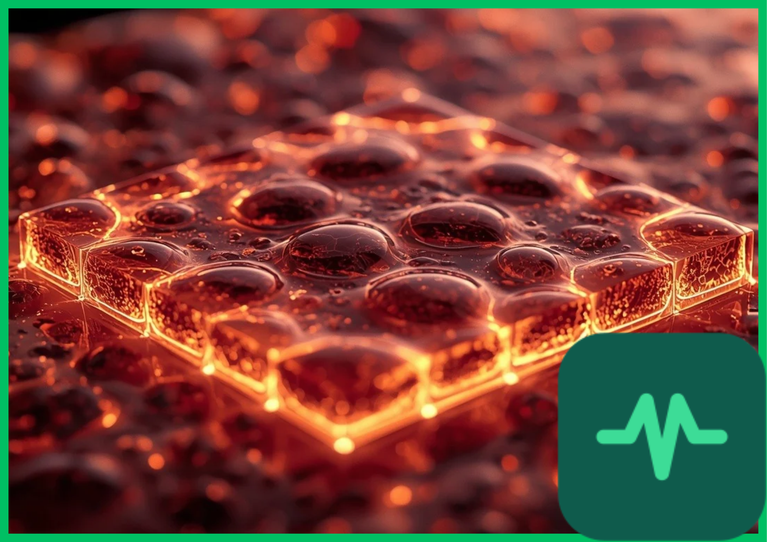
Phase change material thermal energy storage is an advanced building technology that uses specialized paraffin waxes, salt hydrates, or bio-based organic compounds encapsulated inside microscopic capsules and mixed directly into drywall, plaster, or insulation to absorb and release massive amounts of latent heat at a constant target temperature.
Instead of fighting ambient temperature swings with brute-force electricity, the building material adapts dynamically through physical phase transitions:
- The Melting Phase: As indoor temperatures rise past a specific threshold—such as
 or
 —the solid phase change material inside your walls absorbs the excess heat and melts into a liquid, storing thermal energy without letting the room air get warmer.
- Latent Heat Storage: Unlike standard insulation that only slows down heat transfer, phase change materials store energy as latent heat during their physical transition from solid to liquid, packing incredible thermal capacity into a thin layer.
- The Solidifying Phase: When evening arrives and indoor air cools down below the threshold, the liquid material releases its stored warmth back into the room as it solidifies safely back into a solid state.
- Passive Temperature Regulation: The walls act as an invisible thermal stabilizer, smoothing out indoor temperature peaks and valleys automatically without consuming a single watt of electricity.
You get comfortable, stable indoor temperatures while your heating and cooling systems rest quietly in the corner.
How can a thin sheet of drywall or insulation absorb enough thermal energy to keep an entire room comfortable through a scorching afternoon without using power?
It comes down to thermodynamics and the physics of latent heat storage.
Academic thermodynamic research shows that phase change materials store five to ten times more thermal energy per unit volume than traditional building materials like concrete or brick, all while maintaining a steady, unchanging temperature during the phase transition.
When sunlight pours through a window and warms a room, the phase change material captures that thermal spike instantly, locking the heat away inside molecular bonds.
Furthermore, ENERGY STAR and international building efficiency evaluations prove that homes equipped with phase change material insulation reduce seasonal heating and cooling loads by 20% to 35%.
Peak electrical grid demand drops sharply during summer heatwaves and winter cold snaps.
Smart chemistry replaces energy-hungry air conditioners.
The environmental benefits of phase change material thermal energy storage extend far beyond lowering family utility bills or making indoor living spaces more comfortable.
They provide a powerful tool to reduce peak electrical demand on regional power grids.
According to UNEP resource governance frameworks, residential heating and cooling accounts for a staggering share of global electricity consumption, driving utilities to fire up polluting fossil-fuel peaker plants during extreme weather events.
When millions of homes use thermal memory materials to buffer indoor temperatures naturally, peak electrical loads flatten out completely.
According to IEA clean energy roadmaps, scaling up passive thermal energy storage in buildings is an absolute pillar to achieve global decarbonization targets without overloading electrical distribution grids.
When our walls store energy passively, our entire civilization runs with unprecedented cleanliness and efficiency.
Scaling phase change material insulation from pioneering architectural showhomes into universal global construction practice involves navigating real-world manufacturing hurdles.
Ensuring that microscopic encapsulated wax or salt hydrate particles remain evenly distributed inside drywall panels without leaking over decades of repeated melting and freezing requires rigorous materials testing.
Chemical engineers, building product manufacturers, and sustainable architects solve these challenges by using durable polymer capsule shells, developing spray-on thermal plaster slurries, and updating international building codes to reward passive thermal mass.
As manufacturing scales up and production costs decline, phase change materials are transitioning successfully from high-end experimental laboratories into standard residential construction materials worldwide.
Phase change materials prove that advanced chemistry can restore the natural thermal wisdom of ancient architecture to our modern, lightweight homes.
We no longer have to accept that keeping our living spaces comfortable requires running energy-guzzling heating and cooling units around the clock.
By embedding smart latent heat storage compounds directly into our walls, we give buildings a living thermal memory.
We step away from wasteful energy habits, embracing a smart, passive, and enduring standard of residential comfort.
Through brilliant materials science, rigorous academic research, and a deep respect for our planetary resources, thermal memory secures a clean, comfortable, and sustainable future for every home on Earth.



Comments (0)
Login to leave a comment.
No comments yet. Be the first to share your thoughts!