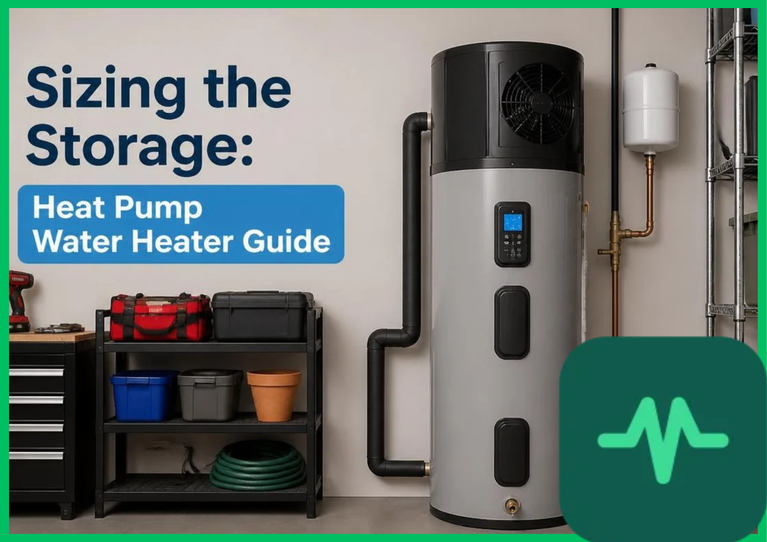
Then, without warning, the water turns ice cold. You gasp, shivering in the stall, wishing you had paid closer attention to your home's water heater before it gave out.
Running out of hot water in the middle of a shower is a miserable experience.
On the flip side, buying a massive, oversized water heater means paying to keep hundreds of liters or gallons of water scorching hot all day long, even when nobody is home.
That constant standby heat loss wastes energy and drives up your monthly utility bills.
Finding the sweet spot between comfort and efficiency comes down to one critical engineering choice: proper sizing.
According to global energy efficiency reports from the International Energy Agency (IEA), resource sustainability frameworks from the United Nations Environment Programme (UNEP), appliance efficiency standards from ENERGY STAR, and academic thermal dynamics research, choosing the correct hybrid water heater capacity transforms your home energy use.
By matching your tank selection to true household hot water demand and accounting for ambient room air volume, you secure endless comfort without wasting power.
Here is how heat pump water heater sizing works, why room volume matters, and how smart thermal storage shapes our sustainable future.
The Hidden Cost of Getting the Size Wrong
To understand why sizing matters so much, you have to look at how traditional water heaters operate versus modern hybrid systems.
For decades, homeowners guessed their tank size based on rough rules of thumb.
If a family had four people, contractors slapped in a standard 189-liter or 50-gallon electric tank and called it a day.
If the family ran the dishwasher while someone took a long shower and another person did a load of laundry in warm water, the tank emptied instantly.
Frustrated, people bought bigger and bigger tanks.
An oversized tank holds a massive body of water that constantly bleeds thermal energy through its metal walls into the surrounding air.
That wasted energy runs day and night, year after year.
Hybrid heat pump water heaters change the equation.
They are remarkably efficient because they pull heat from the air, but they heat water more gradually than old-fashioned resistance elements.
Getting the sizing right ensures your hybrid unit keeps pace with your family's busiest mornings without needing to rely on inefficient backup coils.
Evaluating Household Hot Water Demand
How do you figure out the exact tank size your family actually needs?
You start by looking at your daily habits rather than just counting heads.
Every household has peak demand windows—usually early in the morning or late in the evening when multiple hot water tasks overlap.
Consider your daily routine:
- Do two family members take showers at the exact same time every morning?
- Do you run a hot-water dishwasher and a washing machine simultaneously?
- Do you fill a deep soaking tub on winter weekends?
Academic thermal dynamics research shows that understanding your first-hour rating—the amount of hot water a tank can deliver in sixty minutes starting with a full tank—is far more important than total tank volume.
A well-sized hybrid heat pump water heater recovers heat fast enough during the day that a smaller storage tank can easily handle heavy peak demands, provided the capacity matches your family's simultaneous usage patterns.
The Crucial Role of Ambient Room Air Volume
There is another unique factor to consider when sizing a heat pump water heater: the air around it.
Unlike traditional electric tanks that can hide inside tiny, sealed closets, a heat pump water heater needs room to breathe.
Mounted on top of the storage tank is a compressor that pulls heat out of the surrounding air.
If you install the unit in a tiny, cramped utility closet with less than roughly 28 cubic meters or 1,000 cubic feet of unconditioned air space, the unit quickly strips all the warmth out of that room.
Once the air turns cold, the heat pump struggles to extract thermal energy, forcing it to switch on its backup resistance coils and lose its high efficiency.
ENERGY STAR installation guidelines recommend placing heat pump water heaters in spaces with good ambient air volume—such as an unfinished basement, a garage, or a utility room connected to other living areas.
If tight spaces are your only option, simple louvered doors or smart ducting kits solve the airflow challenge easily.
Matching Tank Capacity to Your Lifestyle
Selecting the right hybrid water heater capacity requires balancing your peak usage with your physical space.
For a smaller household of one or two people with modest morning routines, a compact 150-liter or 40-gallon tank usually provides plenty of hot water while fitting comfortably into modest utility spaces.
For busy families of three to five people juggling simultaneous showers, laundry, and dishwashing, a 189-liter to 300-liter or 50-gallon to 80-gallon tank ensures you never run out of warm water during peak hours.
According to IEA efficiency assessments, sizing your tank correctly prevents the heat pump from overworking, extending the mechanical lifespan of the compressor and maximizing energy savings over decades of service.
Heating Our Homes Responsibly
Choosing the right water heater size is more than a mechanical checklist. It is a vital step toward personal and global sustainability.
According to UNEP sustainable housing frameworks, upgrading to a properly sized heat pump water heater cuts an average household's water-heating energy consumption by up to 70%.
That massive reduction saves money every month while shrinking your carbon footprint.
When you combine smart thermal storage with renewable electricity grids, your home becomes a model of efficiency.
You step away from wasteful energy habits, embracing a comfortable, intelligent standard of living.
Through careful sizing, smart thermal engineering, and thoughtful appliance selection, heat pump water heaters secure a warm, sustainable future for every home on Earth.


Comments (0)
Login to leave a comment.
No comments yet. Be the first to share your thoughts!