

 to
 times that of carbon dioxide over a 100-year horizon). Under international treaties including the Kigali Amendment to the Montreal Protocol, global mandates require the rapid phase-down of high-GWP synthetic compounds. In response, residential and industrial heat pump engineering has shifted decisively toward natural working fluids—principally propane (R290), carbon dioxide (R744 [
 ]), and ammonia (R717 [
 ])—which combine zero ozone depletion potential (ODP = 0) with negligible global warming potentials (
 ) while delivering superior thermodynamic performance coefficients.
Thermodynamic Properties of R290 (Propane) and Natural Working Fluids
The foundational physical principle governing natural refrigerant heat pump performance is the superior thermodynamic transport property profile of low-boiling-point hydrocarbons and carbon dioxide. Propane (R290), classified chemically as  , exhibits an atmospheric boiling point of
 (
 ) at standard barometric pressure (
 [
 ]), closely matching or exceeding the vapor pressure curves of synthetic fluorinated gases.
The coefficient of performance ( ) of a vapor compression heat pump utilizing R290 frequently surpasses legacy fluids due to favorable latent heat of vaporization (
 [
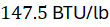 ] at
 [
 ]) and low specific heat ratios. High latent heat enables high volumetric cooling and heating capacities, allowing compressors to circulate smaller mass flow rates while delivering equivalent thermal output to conditioned spaces. Furthermore, R290 exhibits low liquid and vapor viscosity coupled with high thermal conductivity across both evaporator and condenser heat exchanger surfaces, reducing boundary-layer thermal resistance and elevating overall heat transfer coefficients by 10% to 20% compared to R410A.
Global Warming Potential (GWP) and Ozone Depletion Elimination
Evaluating the environmental efficacy of low GWP refrigerants requires examining atmospheric lifetimes, radiative forcing coefficients, and ozone degradation mechanisms. Synthetic HFC refrigerants contain stable carbon-fluorine bonds that persist in the troposphere for decades, trapping thermal infrared radiation with extreme efficiency.
In contrast, natural working fluids originate from natural biogeochemical cycles and exhibit ultra-short atmospheric persistence:
- Propane (R290): Possesses a GWP of 3 and an atmospheric lifetime of approximately 14 days, decomposing rapidly via hydroxyl (
 ) radical oxidation without damaging stratospheric ozone layers (
 ).
- Carbon Dioxide (R744): Serves as the baseline atmospheric reference gas, possessing a GWP of exactly 1 and complete ozone depletion elimination (
 ).
- Ammonia (R717): Features a GWP of 0 and an atmospheric lifetime of less than a week, acting as a natural nutrient in terrestrial ecosystems.
Citing UNEP environmental transition reports, transitioning global heat pump manufacturing to natural refrigerants eliminates gigatons of cumulative carbon dioxide equivalent ( ) emissions over the coming decades, satisfying stringent international climate mitigation targets.
Technical Data Specifications of Natural Refrigerant Parameters
| Refrigerant Working Fluid | Chemical Formula | Global Warming Potential ( ) | Ozone Depletion ( ) | Atmospheric Boiling Point | Safety Classification (ISO 817) |
|---|---|---|---|---|---|
| Propane (R290) |  |  |  |  (  ) | A3 (Higher Flammability) |
| Carbon Dioxide (R744) |  |  |  |  (  [Sublimation]) | A1 (Non-Flammable) |
| Ammonia (R717) |  |  |  |  (  ) | B2L (Higher Toxicity / Low Flammability) |
| Legacy Synthetic (R410A) | Blend |  |  |  (  ) | A1 (Non-Flammable) |
| Legacy Synthetic (R32) |  |  |  |  (  ) | A2L (Mildly Flammable) |
Hydrocarbon Safety Standards, Flammability, and Charge Limits
While propane (R290) and other natural hydrocarbons offer exceptional thermodynamic efficiency and near-zero global warming potential, their A3 safety classification under ISO 817 (denoting higher flammability) imposes rigorous engineering constraints on equipment design, charge limits, and manufacturing protocols.
To mitigate ignition risks in residential and commercial indoor environments, international safety standards—specifically IEC 60335-2-40—restrict refrigerant charge sizes for hermetically sealed heat pump systems. Standard residential monobloc and split-system heat pumps utilizing R290 are constrained by strict charge thresholds (typically limited to  [
 ] per independent refrigerant circuit without mandatory floor area ventilation restrictions, scaling up to
 to
 or higher when integrating engineered secondary fluid loops, mechanical ventilation interlocks, and hermetic barrier enclosures).
Engineers design R290 heat pump outdoor units with hermetically brazed copper tubing joints, spark-free brushless DC (BLDC) inverter compressor motors, and solid-state electronic switching relays to eliminate potential ignition sources. Furthermore, internal refrigerant leak sensors integrated into the chassis baseplate shut down system power valves instantly if vapor concentrations exceed 20% of the lower flammability limit (LFL).
Compressor Lubrication, Material Compatibility, and System Optimization
Implementing natural refrigerants requires modifying internal compressor metallurgy, lubrication chemistry, and expansion valve control loops. Because hydrocarbons like propane possess high miscibility with synthetic compressor oils, traditional mineral oils or standard polyester lubricants undergo viscosity thinning under high operating pressures and temperatures.
Heat pump manufacturers resolve this viscosity degradation by utilizing specialized polyolester (POE) or polyalkylene glycol (PAG) lubricants with tailored molecular weight distributions, maintaining adequate oil film thickness across scroll compressor bearings and sliding vane surfaces. Material compatibility testing confirms that R290 is chemically compatible with standard copper, brass, stainless steel, and aluminum heat exchanger tubing, as well as synthetic elastomers (such as hydrogenated nitrile butadiene rubber [HNBR] and polychloroprene) used in O-rings and service valve seals.
Electronic expansion valves (EEVs) controlled by real-time superheat algorithms regulate refrigerant mass flow into the evaporator, preventing liquid slugging and ensuring that vapor entering the compressor suction port maintains a stable superheat of  to
 (
 to
 ). This precise thermal control maximizes volumetric efficiency and protects compressor scrolls from mechanical shock.
The Final Take
Mastering low-gwp refrigerants natural refrigerant heat pump physics accelerates global building decarbonization by uniting ultra-low environmental impact with high thermodynamic efficiency. Citing UNEP and IEA assessments, transitioning heat pump systems to natural hydrocarbons like propane eliminates synthetic fluorinated greenhouse gases while achieving superior coefficient of performance metrics. By enforcing rigorous hydrocarbon safety standards and optimizing compressor lubrication, natural refrigerant heat pumps establish an indispensable foundation for sustainable thermal energy infrastructure.


Comments (0)
Login to leave a comment.
No comments yet. Be the first to share your thoughts!