
It feels impossible that heat could exist out here.
Yet, hidden inside the freezing atmosphere, thermal energy is waiting.
Traditional heating systems burn fossil fuels or use electric resistance coils to generate heat from scratch. They work like miniature power plants inside your basement, burning fuel or running electricity directly through heating elements.
Air source heat pumps take a completely different approach. They do not create heat. They move it.
Even when outdoor temperatures drop below freezing, air source heat pumps extract ambient heat from the outside air and pump it indoors. It sounds like a magic trick, but it is pure thermodynamics.
Here is how these remarkable machines capture warmth from frozen air and heat your home with incredible efficiency.
The Secret: Heat Is Everywhere
To understand how a heat pump works, you have to change how you think about cold.
In human terms, sub-zero weather feels bitterly cold. In the language of physics, heat is simply molecular movement.
As long as a substance's temperature sits above absolute zero—the theoretical point where all molecular motion stops—it contains thermal energy.
Air at -15 degrees Celsius (5 degrees Fahrenheit) still holds a vast amount of usable heat energy. A heat pump does not need warm air to function. It only needs to find a fluid that is colder than the air around it.
That is where specialized refrigerants come into play.
The Four Stages of the Vapour-Compression Cycle
A heat pump runs on the exact same thermodynamic cycle as your kitchen refrigerator, just pointed in the opposite direction. Instead of pulling heat out of a box and rejecting it into your kitchen, it pulls heat out of the outdoor air and releases it into your home.
The system relies on a closed circuit filled with a liquid refrigerant that boils at extremely low temperatures. That cycle unfolds across four continuous steps:
1. Evaporation
Liquid refrigerant flows through the outdoor evaporator coil. Because this refrigerant is chilled far below the temperature of the outdoor air, heat transfers naturally from the breeze into the fluid. That absorbed thermal energy causes the liquid refrigerant to boil and turn into a cold gas, even on a freezing winter day.
2. Compression
That low-temperature gas flows into an electric compressor. The compressor squeezes the gas tightly, raising its pressure and spiking its temperature dramatically. This is the only stage in the cycle that consumes significant electrical power, using electricity to concentrate and elevate the gathered thermal energy.
3. Condensation
The hot, high-pressure gas moves indoors through a heat exchanger called a condenser. Here, it transfers its stored heat into your home's indoor air distribution or water heating circuit. As the refrigerant gives up its heat, it condenses back into a warm liquid.
4. Expansion
Finally, the pressurized liquid passes through an expansion valve. The valve creates a sharp drop in pressure, causing the refrigerant to cool down instantly far below outdoor temperatures. The cycle restarts as the fluid loops back outside to absorb more heat.
Understanding Efficiency and the COP Metric
Because heat pumps move existing thermal energy rather than burning fuel to create it, their efficiency is astonishing.
Engineers measure this efficiency using a metric called the Coefficient of Performance, or COP.
The COP represents the ratio of heat energy delivered to the electrical energy consumed. A typical modern heat pump operates with a COP between 3 and 5 under normal conditions.
This means that for every 1 kilowatt-hour of electricity you feed into the compressor, the system pumps 3 to 5 kilowatt-hours of thermal energy into your home.
Compare that to an electric space heater or baseboard heater, which has a maximum efficiency ratio of 1 to 1. Heat pumps deliver multiple units of heat for every unit of electricity they consume, cutting heating energy use by up to 70%.
Managing Frost and Extreme Weather
People often worry that freezing weather will break their heat pump.
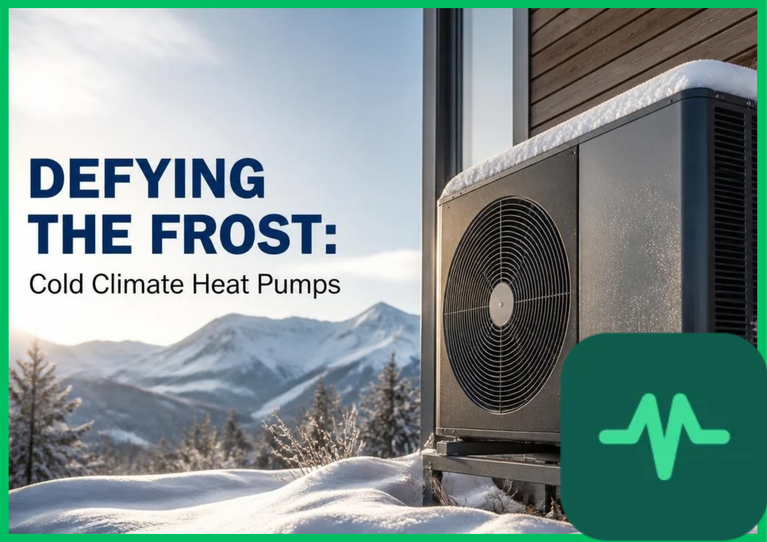
When outdoor humidity is high and temperatures hover around freezing, moisture in the air can condense and form a layer of frost on the outdoor evaporator coil.
Modern heat pumps handle this automatically. When frost builds up, the system temporarily reverses its cycle for a few minutes—running in cooling mode to heat up the outdoor coil—melting the frost away during a quick defrost cycle.
Advanced inverter compressors adjust their speeds dynamically, squeezing maximum efficiency out of sub-zero air and keeping homes comfortable even when winter temperatures plummet.
A Greener Way to Heat and Cool
By harnessing the thermodynamics of phase change and ambient heat transfer, air source heat pumps have revolutionized residential comfort.
They provide efficient heating in winter, reverse to provide gentle cooling in summer, and slash household energy consumption.
Understanding how these machines pull warmth out of freezing air reveals a brilliant truth: sometimes, the best way to heat your home is to simply capture the energy that surrounds you.
Comments (0)
Login to leave a comment.
No comments yet. Be the first to share your thoughts!