Inside your home, however, you stay warm and comfortable.
For generations, keeping a building warm during freezing weather meant burning something. Furnaces burned natural gas, oil, or coal. Electric baseboard heaters ran electrical currents through metal coils, burning up electricity at a fierce rate.
These traditional heating methods obey a strict rule of physics: they convert fuel or electricity directly into heat. They can never give you more energy than you put into them.
In fact, due to exhaust losses, they always deliver less.
A quiet technological revolution is transforming residential and commercial buildings worldwide.
According to heating market reports from the International Energy Agency (IEA), efficiency standards from ENERGY STAR, and academic thermodynamics research, air source heat pumps defy ordinary expectations.
They do not create heat by burning fuel. They move heat from one place to another.
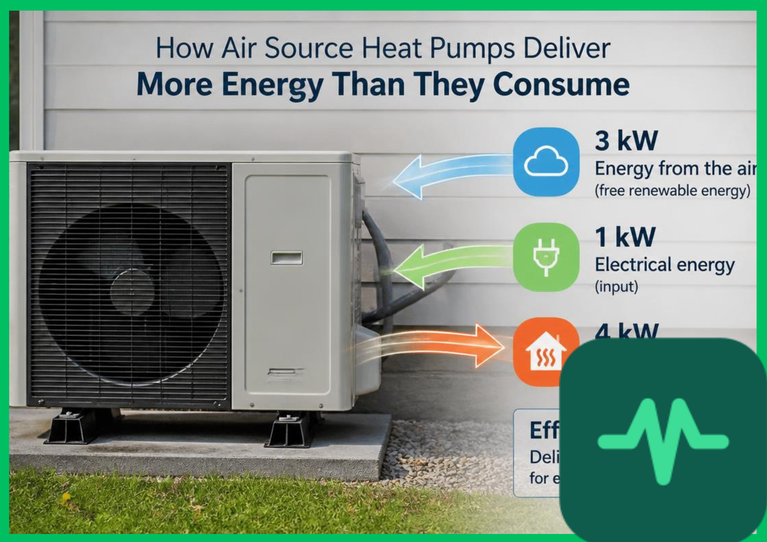
As a result, modern heat pumps deliver three to four units of thermal energy for every single unit of electrical energy they consume.
Here is how thermodynamic principles make this efficiency possible, why these systems outperform traditional furnaces, and how they reshape global energy consumption.
The Core Physics of Moving Heat
To understand how an air source heat pump delivers more energy than it consumes, you have to look at what heat actually is.
Even when outdoor winter air feels freezing cold to your skin, it still contains massive amounts of thermal energy. Absolute zero—the complete absence of thermal motion—sits far below freezing, down at minus 273 degrees Celsius (minus 459 degrees Fahrenheit).
As long as the outdoor air temperature sits above that extreme limit, thermal energy exists in the atmosphere.
A heat pump captures that ambient outdoor heat and moves it inside your living room.
The mechanism relies on a closed-circuit refrigeration cycle, mirroring the exact physics happening inside your kitchen refrigerator.
Inside the sealed copper tubing of the heat pump runs a specialized liquid refrigerant with a very low boiling point.
When that liquid refrigerant circulates through the outdoor coil, it absorbs ambient heat from the outside air, even on a frosty winter day.
That warmth causes the liquid refrigerant to boil and turn into a low-pressure gas.
Compression and Amplification
Once the refrigerant turns into a warm gas, it enters an electrically powered compressor.
This is where the magic of efficiency happens.
The compressor squeezes the gaseous refrigerant, increasing its pressure rapidly.
When you compress a gas, its temperature rises sharply. The mechanical work of the compressor supercharges the thermal energy absorbed from the outdoor air, turning lukewarm vapor into intensely hot gas.
That superheated gas then flows through the indoor condenser coil.
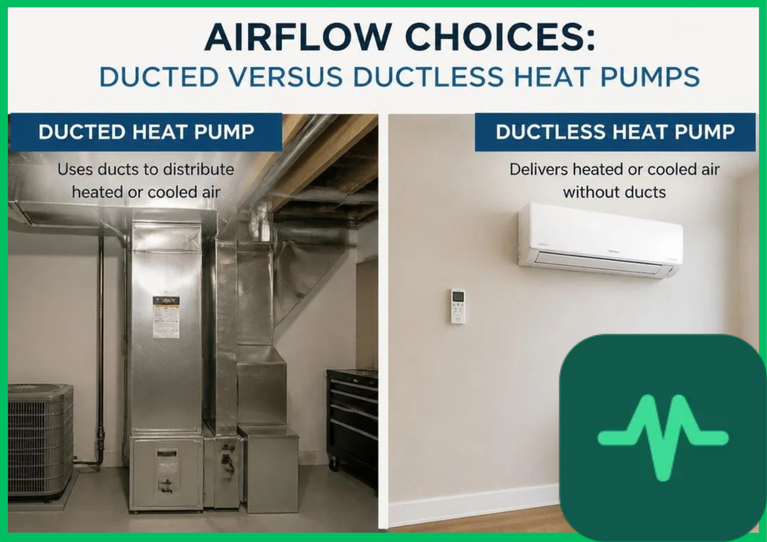
As indoor air blows across the hot coil, it picks up the thermal energy and circulates it through your home's ductwork or wall units, keeping rooms cozy and warm.
Having released its heat indoors, the high-pressure liquid refrigerant passes through an expansion valve, drops in pressure, cools down significantly, and flows back outside to start the cycle over again.
The electricity you pay for does not create the heat directly. It merely runs the compressor and fans that pump ambient heat indoors.
That is why the system achieves a Coefficient of Performance (COP) rating of 3 to 4, translating to an operational efficiency of 300% to 400%.
No gas furnace or electric resistance heater can ever match that output.
Dispelling the Myth of Cold-Climate Failure
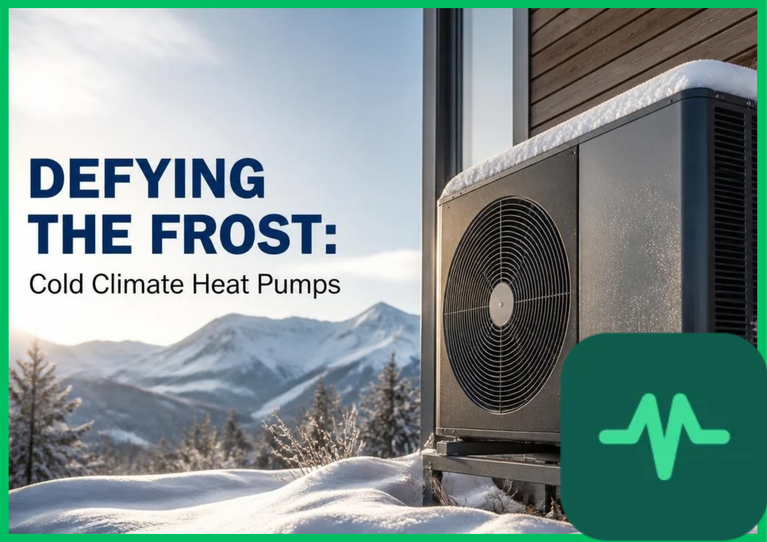
A common misconception is that air source heat pumps stop working the moment winter temperatures drop below freezing.
Early generations of heat pumps did struggle in sub-zero weather, losing heating capacity when outdoor air grew brutally cold.
Modern engineering changed that reality completely.
Advanced variable-speed inverter compressors, enhanced vapor injection technologies, and optimized refrigerants allow modern air source heat pumps to extract warmth from outdoor air even when temperatures plunge as low as minus 15 degrees Celsius to minus 25 degrees Celsius (approx. 5 degrees Fahrenheit down to minus 13 degrees Fahrenheit).
Academic HVAC studies and IEA deployment reviews confirm that heat pumps now operate reliably in some of the coldest residential climates on Earth, replacing dirty fossil-fuel boilers with clean, efficient thermal comfort.
Slashing Household Bills and Carbon Emissions
Switching from combustion heating to an efficient air source heat pump delivers profound financial and environmental benefits.
Because the system moves existing thermal energy rather than burning fuel, it cuts household energy consumption dramatically.
Lower energy consumption translates directly to lower monthly utility bills, protecting families from the wild price spikes of volatile global oil and gas markets.
On an environmental level, heat pumps produce zero local combustion emissions.
When powered by an electrical grid integrating clean wind, solar, or hydroelectric generation, they offer one of the most effective ways to slash residential carbon footprints and combat climate change.
Powering a Sustainable Thermal Future
Air source heat pumps prove that smarter engineering outperforms brute-force consumption.
By harnessing the ambient thermal energy hiding in the outdoor air, we heat our homes using a fraction of the electricity required by traditional systems.
We are moving away from combustion, reducing household energy waste, and building a comfortable, sustainable future for buildings everywhere.
Comments (0)
Login to leave a comment.
No comments yet. Be the first to share your thoughts!