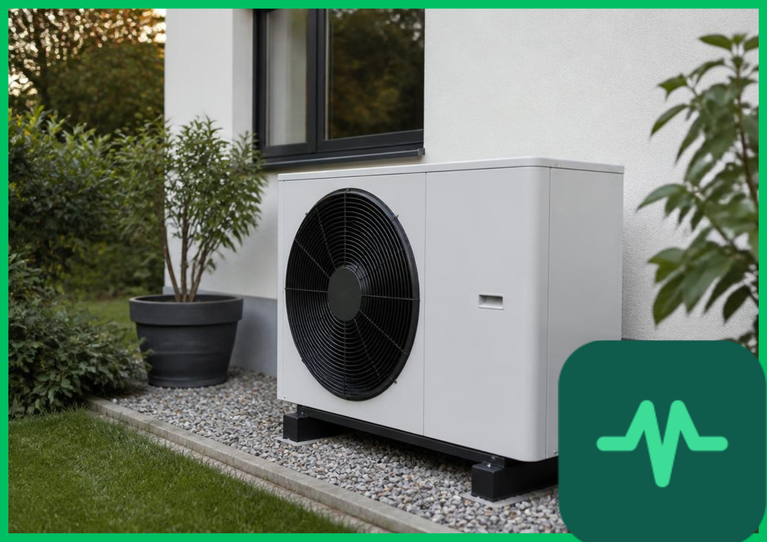
Heat pump adoption is changing across major markets. Global heat-pump sales fell by about 2% in 2025. However, Europe recorded a strong recovery.
Sales increased by 11%, marking the first annual growth in the region since 2022.
The result shows that the heat-pump market remains sensitive to energy prices, policies and consumer confidence.
Germany Leads the European Recovery
Germany was a major driver of Europe's recovery.
The IEA reports that German heat-pump sales increased by 55% during the first half of 2025.
It was also the first year in which heat pumps outsold gas boilers in Germany.
This is significant. It suggests that heat pump adoption can move quickly when market conditions support it.
Why Heat Pumps Matter
Heat pumps use electricity to move heat rather than producing heat through combustion. That can make them highly efficient. They can also work well with renewable electricity.
As electricity systems become cleaner, heat pumps can become part of a broader clean-energy strategy.
However, the environmental benefits depend partly on how electricity is generated.
Energy Prices Matter
Consumers look at costs. A heat pump may save energy.
However, the upfront cost can be high. Operating costs also depend on local electricity and gas prices.
Therefore, heat pump adoption can slow when electricity becomes expensive compared with gas. This was one factor affecting European markets in recent years.
The United States Saw a Decline
The US market moved in the opposite direction. Heat-pump sales fell by about 13% in 2025.
The IEA says several factors contributed, including refrigerant changes, shortages and weaker housing construction.
Even so, heat pumps continued to outsell gas boilers in the United States for the fourth consecutive year.
China Remains Important
China is one of the largest heat-pump markets. Sales remained broadly stable in 2025.
China also has significant manufacturing capacity for heat pumps and important components. This makes China important to the global supply chain.
Heat Pumps and Smart Homes
Heat pumps can also become part of smart-home systems. A smart energy-management system can monitor electricity prices and household demand. It can then help manage heating.
If the home has solar panels and a battery, the system can also coordinate those technologies.
Therefore, heat pump adoption is increasingly connected to the wider smart-home market.
Africa Has a Different Opportunity
Heating is not the main energy challenge across much of Africa. Cooling is often more important.
However, heat-pump technology includes systems that can provide hot water and cooling.
Efficient heat-pump water heaters could therefore have applications in African homes and businesses. The technology must be adapted to local needs.
EcoGreenPulse View
The story of heat pump adoption shows why clean technology cannot be separated from economics. Consumers need affordable solutions.
Manufacturers need stable markets. Governments need effective policies. Utilities need reliable electricity.
If these pieces work together, heat pumps can become an important part of energy-efficient buildings.
Conclusion
Heat pump adoption is growing in some markets while declining in others. Europe's 11% sales increase in 2025 shows that demand can recover quickly.
However, affordability, energy prices and policy remain important.
The future of heat pumps will depend on how well governments and businesses address these challenges.
Source: IEA, Global Energy Review 2026 — Technology: Heat Pumps.
Comments (0)
Login to leave a comment.
No comments yet. Be the first to share your thoughts!