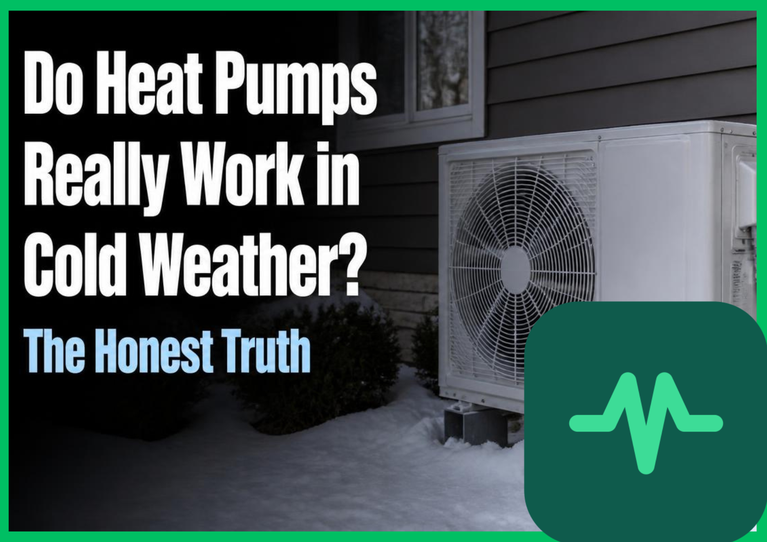
Some people swear they don't work below freezing. Others insist that's outdated nonsense. Both sides sound completely certain.
So what's actually true?
Where the myth came from
Early heat pump technology genuinely did struggle in colder climates. Decades ago, performance really did drop noticeably once temperatures fell well below freezing.
That reputation stuck, and honestly, it made sense at the time. The problem is, technology moved on while the reputation stayed frozen in place.
What's actually true today
Modern heat pumps, particularly the versions specifically designed for colder regions, perform dramatically better than their older counterparts. Many can maintain solid efficiency even in genuinely harsh winter conditions.
This isn't marketing spin. It reflects real engineering progress in compressor technology and refrigerant design over the past decade.
That said, honesty matters here too. Extremely low temperatures still reduce a heat pump's efficiency somewhat. The difference is, modern systems handle that dip far more gracefully than older units ever could.
Why some homeowners still have bad experiences
Not every heat pump is built the same way. A standard, budget-friendly model designed for milder climates genuinely will underperform in serious cold. That's not a myth. That's simply the wrong equipment for the wrong climate.
The real issue often isn't heat pumps as a category. It's homeowners buying a system that was never designed for their specific weather in the first place.
Choosing a cold-climate-rated model makes an enormous difference, and skipping that step is where most disappointing experiences actually begin.
The backup heat question
Many cold-climate heat pump systems include a backup heating element for the coldest days of the year. This isn't a design flaw. It's a smart, intentional safety net.
Think of it less as the heat pump failing, and more as a system smart enough to know when to call in extra help during the harshest stretch of winter.
What genuinely affects performance
Insulation matters enormously. A poorly insulated home makes any heating system work harder, heat pumps included.
Correct sizing matters too. A heat pump that's too small for your home will struggle regardless of the outdoor temperature. This is a common installation mistake, not a flaw in the technology itself.
Regular maintenance plays a role as well. A neglected system, dirty filters and all, will underperform no matter how advanced the underlying technology is.
The efficiency reality, honestly stated
Even the best cold-climate heat pump won't be quite as efficient at negative temperatures as it is on a mild fall day. That's simple physics, not a flaw specific to heat pumps.
The honest comparison isn't "perfect efficiency versus none." It's "still meaningfully efficient in the cold versus the alternatives," which often include far less efficient traditional heating methods.
Questions worth asking before installing one
Is the specific model rated for cold climates, or is it a standard version being sold without that distinction made clear?
Has the installer properly sized the unit for your home's actual size and insulation level?
Does the system include appropriate backup heat for your region's coldest expected temperatures?
Getting honest, clear answers to these questions matters more than the general "do heat pumps work in cold weather" debate people argue about online.
The honest bottom line
Heat pumps absolutely can perform well in cold weather, but only when the right model is chosen and properly installed. The technology has genuinely improved. The myth simply hasn't caught up yet.
If you're considering one, focus less on old rumors and more on cold-climate ratings, proper sizing, and a qualified installer. Get those details right, and the cold weather concern mostly takes care of itself.
Comments (0)
Login to leave a comment.
No comments yet. Be the first to share your thoughts!