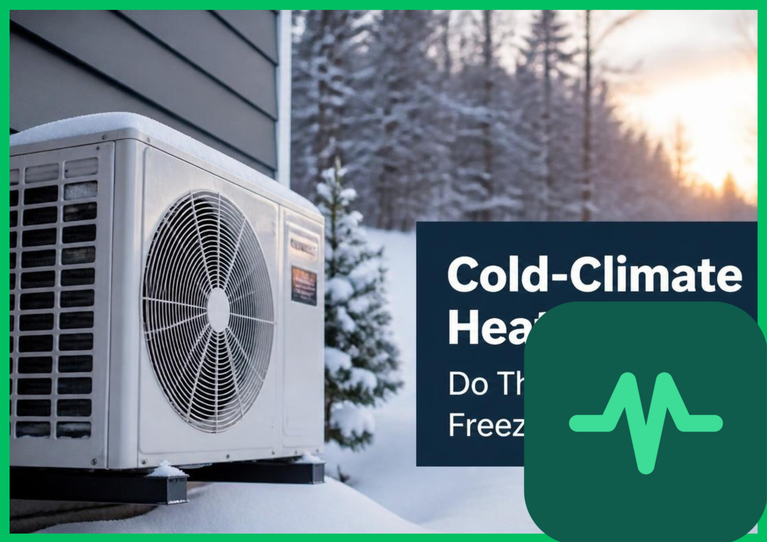
If you live in Minnesota, Maine, or anywhere winters get genuinely brutal, you've probably heard this warning before: "Heat pumps don't work in the cold." For years, that was mostly true.
Here's the good news. It isn't anymore. Cold-climate heat pumps have quietly gotten much, much better. Let's talk honestly about what changed, and whether one actually makes sense for your home.
Why Heat Pumps Used to Struggle With Cold
Old heat pump technology genuinely did struggle once temperatures dropped below freezing. The system works by pulling heat from outdoor air, and older refrigerants simply couldn't extract much heat once the air itself got extremely cold.
This created a real reputation problem. Homeowners in cold states heard horror stories, systems freezing up, barely heating the house, forcing people to rely on backup electric strips that ran up electric bills fast.
That reputation stuck around for years, even as the underlying technology quietly improved.
What Actually Changed With Cold-Climate Heat Pumps
Modern cold-climate heat pumps use completely different refrigerants and compressor technology than older models. These newer systems can pull meaningful heat from outdoor air even at temperatures well below zero.
Many current models maintain strong performance down to negative fifteen or even negative twenty degrees Fahrenheit. That's a genuinely dramatic improvement over older technology, which often struggled well before reaching those temperatures.
Real Performance Numbers Worth Knowing
Let's talk honestly about numbers here, since vague reassurance doesn't help anyone making a real decision.
The best cold-climate heat pumps today maintain around 70 to 80 percent of their full heating capacity even at very low temperatures. That's genuinely impressive performance, especially compared to models from even ten years ago.
Some systems do still need backup heating for the very coldest days of the year, the truly extreme cold snaps. This backup is usually electric resistance heat, and it only kicks in during those rare, brutal stretches, not throughout the whole winter.
Why This Matters So Much for Northern Homeowners
If you've been avoiding a heat pump because you assumed it couldn't handle your winters, it's genuinely worth reconsidering that assumption now.
Cold-climate heat pumps still offer the same efficiency benefits as regular heat pumps, lower energy bills, cleaner heating, and cooling in summer from the same single system. You're not sacrificing performance to get those benefits anymore, not the way you would have a decade ago.
What to Actually Look For When Shopping
Not every heat pump on the market is rated for genuinely cold climates, and this distinction matters enormously.
Look specifically for models labeled as cold-climate rated, or ones certified through programs designed to verify strong cold-weather performance. A knowledgeable local installer should be able to point you toward models proven to work well in your specific region.
Don't just buy the cheapest heat pump you find and assume it'll handle a Minnesota winter. Regular models genuinely aren't built for that kind of cold, even if they work fine in milder climates.
The Emotional Relief of Finally Trusting the Technology
There's something genuinely reassuring about watching old assumptions get overturned by real progress. For years, cold-climate homeowners felt stuck choosing between efficiency and reliability, unable to have both at once.
Cold-climate heat pumps finally close that gap. You don't have to choose anymore between staying warm and staying efficient. That feels like real, meaningful progress, not just a marketing claim.
Backup Heat: Not a Sign of Failure
Some homeowners worry that needing backup heat during extreme cold means the heat pump "failed" somehow. That's not really accurate.
Even the best cold-climate heat pump might need a little backup support during the coldest week of a brutal winter. This is expected, normal behavior, not a flaw. The system still handles the vast majority of your heating needs efficiently throughout the rest of the season.
Cost Considerations Worth Understanding
Cold-climate heat pumps often cost somewhat more upfront than standard models, given their more advanced technology. This higher price tag can feel discouraging at first glance.
Factor in the federal heat pump tax credit and any state or utility rebates, though, and that gap often shrinks considerably. Combined with lower monthly energy bills over time, many homeowners find the investment pays for itself within several years.
Talking to Neighbors Who've Already Made the Switch
If you're on the fence, this is genuinely one of those decisions where talking to real people helps more than reading spec sheets. Ask around in cold-climate online communities or local homeowner groups.
You'll likely find plenty of people in genuinely cold states who've already made this switch and are happy with the results. Real, honest testimonials from people living through the same winters you do carry real weight here.
Common Questions About Cold-Climate Heat Pumps
Can cold-climate heat pumps really work in negative temperatures?
Yes. Modern cold-climate models maintain strong performance down to negative fifteen or twenty degrees Fahrenheit, a major improvement over older technology.
Will I still need a backup heating system?
Possibly, for the very coldest days of the year. Many homeowners keep a small backup system for extreme cold snaps, though it rarely runs.
Are cold-climate heat pumps more expensive than regular ones?
Generally yes, upfront. Tax credits, rebates, and lower monthly bills often offset that difference over time, though.
How do I know if a heat pump is actually rated for cold climates?
Look for specific cold-climate certification or ratings, and work with a local installer experienced in your specific region's weather.
Final Thoughts
Cold-climate heat pumps have genuinely earned a second look, even from skeptical homeowners in the harshest winter states. The old reputation for struggling in the cold simply doesn't match today's technology anymore.
If brutal winters have kept you from considering a heat pump, it's worth revisiting that decision with fresh eyes. The technology finally caught up to the promise, and for a lot of American families, that's genuinely good news.
Comments (0)
Login to leave a comment.
No comments yet. Be the first to share your thoughts!