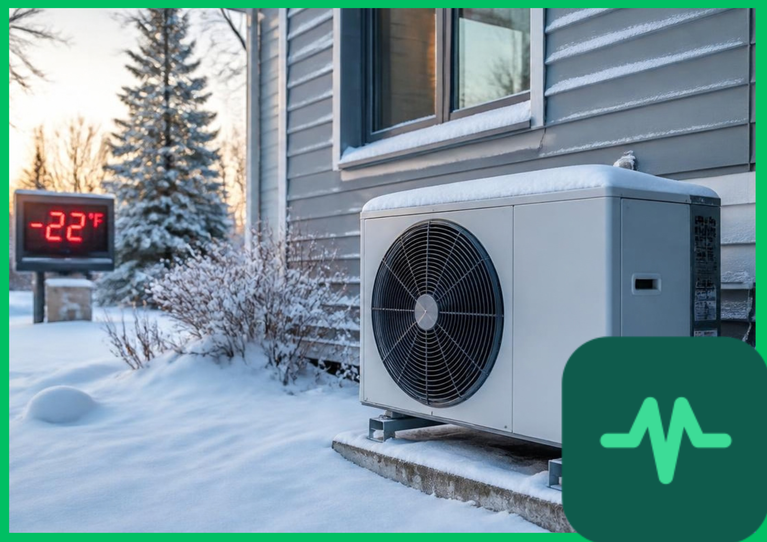
You watch the weather forecast. A severe winter cold snap is barreling toward your region.
Temperatures drop rapidly, plunging down to -20 degrees Celsius (-4 degrees Fahrenheit). Snow piles up against your windows.
Inside your home, you sit comfortably in a warm living room, wrapped in a sweater with a warm cup of tea.
If you rely on a modern heat pump for your heating, you do not worry about the weather outside.
Yet, a persistent myth lingers in conversations about home efficiency. People whisper that heat pumps fail when winter gets too cold.
They believe you need a roaring gas furnace or backup electric resistance coils to survive sub-zero weather.
That myth belongs to an older era of engineering.
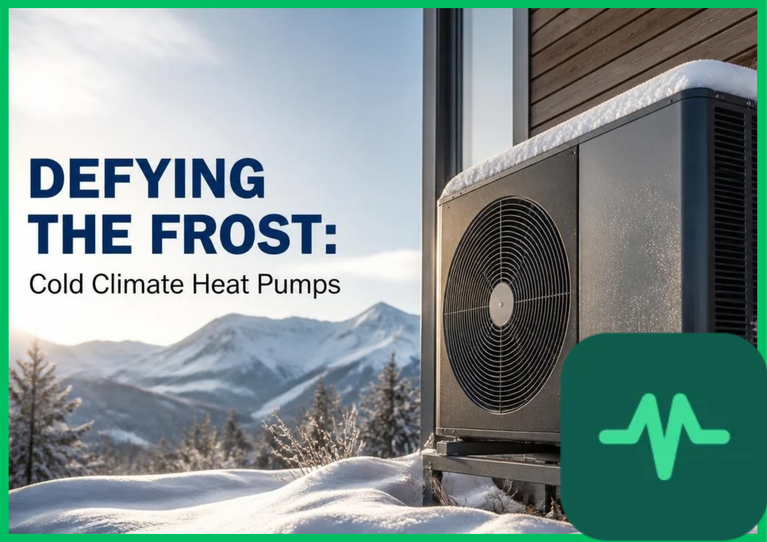
Modern low-temperature heat pumps handle extreme winter weather with ease, keeping your home warm and cozy even when the thermometer bottoms out.
The Evolution of Cold-Weather Heating
To understand why modern heat pumps succeed where older models struggled, you have to look at how the technology has evolved.
Early heat pumps worked well in mild climates. When winter temperatures dropped below freezing, their heating capacity faded. They struggled to extract enough thermal energy from frigid air.
To compensate, those older systems relied heavily on expensive backup electric resistance strips—essentially giant toaster coils inside your ductwork—to keep houses warm during cold snaps.
Engineers watched this limitation and went back to the drawing board.
Over the last decade, research and development transformed heat pump engineering completely. Today's systems are built from the ground up to conquer severe winter cold without breaking a sweat.
How Inverter Compressors Change the Game
The beating heart of a modern cold-weather heat pump is the inverter compressor.
Older heat pump compressors operated like a traditional light switch: they were either fully on or completely off. When they ran, they ran at maximum speed, cycling on and off constantly to regulate indoor temperatures.
That on-off cycling strained mechanical parts and struggled in extreme cold.
Inverter technology changes everything. An inverter compressor acts like a vehicle's gas pedal. It adjusts its rotational speed dynamically in real time.
When outdoor temperatures plummet, the inverter compressor ramps up its speed, spinning faster to pump refrigerant through the system at high volumes.
This dynamic adjustment allows the system to extract maximum thermal energy from frigid air, maintaining full heating capacity even when outdoor conditions turn brutal.
Real-World Performance in Sub-Zero Weather
How do these advanced systems perform in the real world?
Modern low-temperature heat pumps maintain high heating efficiency and full thermal output in environments dropping down to -15 degrees Celsius, -20 degrees Celsius, and beyond (5 degrees Fahrenheit to -4 degrees Fahrenheit and lower).
They do this by using advanced scroll compressors, specialized vapor-injection technology, and optimized refrigerants engineered to boil at ultra-low temperatures.
Even when outdoor air feels bitterly cold to human skin, the refrigerant inside the sealed copper coils remains colder still, pulling every available unit of thermal energy out of the breeze.
Addressing the Backup Heat Question
Even with advanced engineering, extreme weather events can push any heating machine to its absolute limit.
When a historic polar vortex drops outdoor temperatures to extreme, record-breaking lows, a heat pump's heating capacity may eventually dip below the peak heat loss of a poorly insulated house.
That is why cold-weather installations often include a backup heat source—such as a small hydronic coil or integrated electric backup—as an insurance policy for rare weather extremes.
In a well-insulated home with a properly sized system, that backup heat rarely kicks on. The heat pump handles 95% to 99% of your annual heating needs effortlessly.
Embracing Reliable Cold-Climate Comfort
The myth that heat pumps cannot handle cold weather is officially outdated.
Modern low-temperature heat pump systems provide reliable, efficient, and powerful heating through the harshest winters across the globe.
They prove that you do not need to burn fossil fuels or rely on crude resistance heating to stay warm.
Trust the engineering, upgrade your home comfort, and enjoy a warm, cozy house no matter how cold the winter wind blows outside.

Comments (0)
Login to leave a comment.
No comments yet. Be the first to share your thoughts!