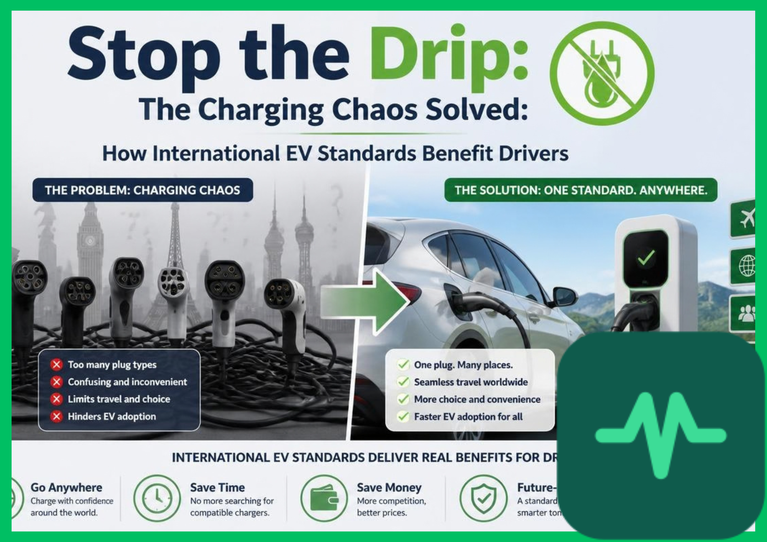
For too many families, the reality of public charging has felt very different.
Imagine pulling up to a charging station on a rainy night with your kids in the back seat. You are low on power. You get out of the car, pull the heavy cable toward your vehicle, and realize the plug does not fit your car's port. Or maybe the plug fits perfectly, but a message on the screen tells you that you cannot charge unless you download a specific app, create an account, and load it with money you might never get back.
This fragmentation has caused immense frustration for years. It turns simple road trips into stressful logistics puzzles. Thankfully, a massive shift is happening right now. International policy frameworks are stepping in to clean up the mess. By pushing for global EV charging standards, these agreements are quietly fixing the public network, lowering costs, and making electric cars practical for everyday families.
The Root of the Charging Puzzle
To understand why public charging has been so complicated, you have to look at how early electric cars were built. When the industry first started, there was no single blueprint. Different manufacturers in different parts of the world built whatever they thought was best.
One company designed a plug that worked great for their specific cars. Another engineering team across the ocean built a completely different shape. Some plugs were designed for slow, overnight charging at home, while others were built to handle the intense electrical currents needed to top up a battery in twenty minutes.
The result was a confusing mess of electric vehicle plug types. For consumers, it felt like trying to charge a smartphone in a world where every single brand used a different wall outlet. If you drove across a national border or changed car brands, your old charging habits suddenly became useless.
This layout did not just hurt drivers; it actively penalized families on a budget. When charging stations have to support three or four different types of hardware on the same machine, building and maintaining them becomes incredibly expensive. Those high operational costs are passed directly to you, making public electricity prices higher than they ever needed to be.
The Push for Universal Hardware
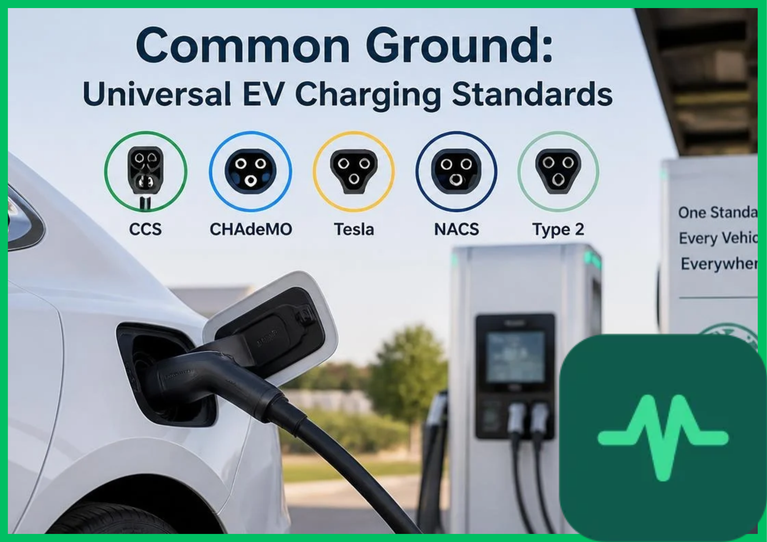
No one wants to buy a car that might become obsolete in five years because the charging infrastructure changes. International regulatory bodies and industry groups finally recognized this massive barrier to entry. They began working together to establish a unified approach to universal EV charging.
The core idea is simple: every car, regardless of the brand or country of origin, should be able to pull up to any public charger and plug in seamlessly.
Moving toward a standardized plug design changes the financial math for manufacturing. When factories can mass-produce a single type of connector instead of designing custom hardware for specific markets, production costs drop sharply. These savings eventually trickle down to the consumer marketplace, making new and used electric vehicles cheaper to purchase.
Standardization also means public stations become more reliable. Maintaining a charging station with one universal cable type is significantly easier than keeping track of multiple delicate adapter mechanisms. For families who rely heavily on public infrastructure because they do not have a private garage, this increased reliability removes the daily anxiety of wondering if the local station will actually work when they arrive.
Software Harmony and Open Networks
The physical plug is only half the battle. The other major headache for drivers has always been software barriers. Historically, public charging stations operated like private clubs. If you did not have their specific membership card or smartphone app, you were locked out of the electricity.
Modern international policies are actively tackling this problem by mandating an interoperable EV chargers model. These frameworks require charging networks to open up their software systems to talk to one another.
Direct Payment without Apps
New guidelines are pushing for simple, direct payment methods at all public charging points. You should be able to walk up to a machine, tap your regular debit or credit card, and start charging instantly. You do not need to share your personal email, create a new password, or link a digital wallet just to get enough power to drive home.
Open Communication Protocols
By enforcing open communication standards between the vehicle and the grid, cars can now talk directly to the charger. This technology allows for a seamless process where you simply plug the cable into your car, and the machine automatically recognizes your account and handles the billing in the background. It removes all the middle steps, making refueling an electric vehicle just as straightforward as filling a traditional tank.
Lowering Costs for the Public Network
Building a vast, reliable grid of charging stations requires billions of dollars in global investment. When the market is fragmented, private companies are hesitant to invest. They worry about spending millions on hardware that could be outdated within a few years if the industry shifts to a different standard.
Clear global policies provide the predictability that investors need. When companies know exactly what plug standard will be used for the next two decades, they can confidently invest in expanding the public EV charging network.
This stability triggers healthy competition. As more charging providers enter the market using the exact same hardware standards, they have to compete for your business based on price and customer service. For budget-conscious families, this open competition is the best defense against predatory electricity pricing at the pump. It ensures that public charging remains an affordable alternative to fossil fuels over the long haul.
Future-Proofing for Everyone
The transition to a unified charging ecosystem is a vital win for consumer rights. It ensures that the electric vehicle revolution remains accessible to everyone, not just tech enthusiasts who enjoy managing multiple apps and adapters.
When you buy a car, you are making one of the largest financial decisions of your household's life. You deserve to know that your investment is safe. Thanks to the steady alignment of international hardware and software rules, the chaotic days of public charging are coming to an close. Driving an electric vehicle is finally becoming what it always should have been: simple, dependable, and affordable for every family.
Comments (0)
Login to leave a comment.
No comments yet. Be the first to share your thoughts!