The sun starts to dip below the horizon, casting deep orange shadows across the empty highway.
You look down at your dashboard. The battery indicator flashes a warning light. Range anxiety creeps into your chest.
You pull off at the next charging station, eager to plug in and recharge.
You step out of the car, walk up to the charging pedestal, and stare at the plug in disbelief.
The cable does not fit your car.
It has a different shape. The pins do not match. The socket on your vehicle is completely incompatible with the cord in your hand.
You feel a sudden wave of panic and frustration.
Imagine pulling up to a gasoline station where every single pump used a different, proprietary nozzle shape that only fit one specific car model.
You would never accept that chaos for petroleum cars.
For the early years of the electric vehicle revolution, fragmented charging connectors created a frustrating obstacle for drivers worldwide.
Different automotive brands used competing plug standards, locking drivers into isolated charging ecosystems.
We cannot build a seamless clean transport future on a foundation of incompatible plugs.
A quiet, brilliant standardization revolution is sweeping across international highways.
According to global energy transition reports from the International Energy Agency (IEA), resource protection frameworks from the United Nations Environment Programme (UNEP), efficiency benchmarks from ENERGY STAR, and academic mobility research, universal electric vehicle charging standards are changing how we travel.
By unifying plug designs and communication protocols across the globe, we create a frictionless charging experience for every driver.
Here is how universal standards work, why interoperable charging networks change long-distance road trips, and how global harmonization secures our sustainable future.
The Tower of Babel on Our Highways
To understand why universal charging standards matter so much, you have to look back at the early days of electric vehicle manufacturing.
When automakers rushed to build their first battery-powered cars, they designed proprietary charging ports.
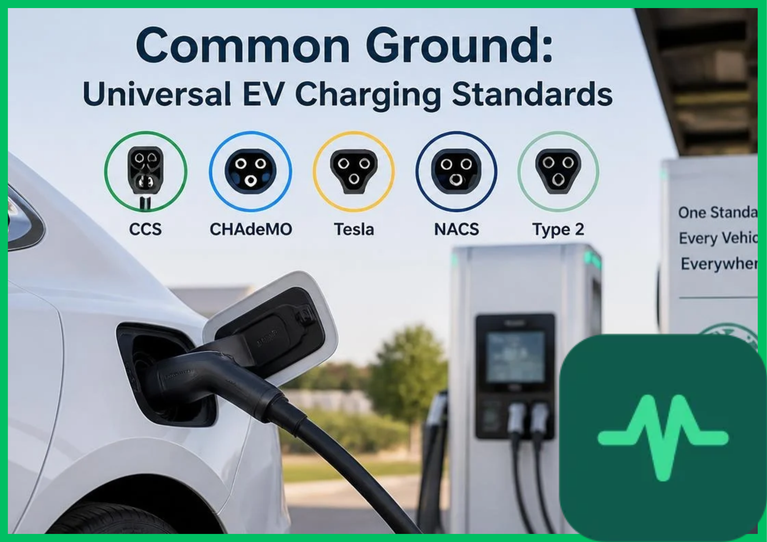
One brand used one style of plug for slow AC home charging and a completely different shape for fast DC highway charging.
Another regional brand used an entirely separate plug design that only worked within its home country.
If you bought an electric car from one manufacturer, you could not use public charging stations built by a competing network without carrying clumsy, expensive mechanical adapters.
It was an inefficient mess.
Drivers felt trapped. Charging operators struggled with low equipment utilization, and governments worried that fragmented infrastructure would slow down the transition away from fossil fuels.
Physics and consumer demand made it clear: electricity needs a universal language.
Just as every electrical appliance in your home plugs into a standard wall socket, every electric car on Earth needs a universal connection to power.
What Is a Universal EV Charging Standard?
A universal electric vehicle charging standard is an internationally agreed-upon set of physical plug designs and digital communication protocols that allow any electric car to plug into any charging station anywhere in the world and charge safely at maximum speed.
Instead of fighting over proprietary connectors, international engineering committees collaborated to harmonize hardware specifications.
The modern universal standard combines AC slow charging and high-power DC fast charging into a single, elegant plug architecture.
When you pull up to a public charging station in any city or country, you know instantly that the cable will fit your car.
There are no adapters to fumble with in the rain. There is no guessing whether your vehicle communicates with the pedestal.
You plug in, the car and the charger exchange digital safety handshakes in milliseconds, and clean electricity begins flowing into your battery.
The Science of Plug Compatibility and Digital Handshakes
How can a single physical plug handle everything from a slow trickle charge in a home garage to a blistering 350-kilowatt fast charge on an interstate highway?
It comes down to clever pin architecture and digital communication protocols.
Academic mobility research shows that universal plugs separate high-voltage power pins from low-voltage digital signal pins.
When you push the connector into your car's socket, the power pins stay disconnected while delicate digital pins touch first.
The vehicle management system and the charging station converse instantly in a shared digital language.
They check battery temperature, voltage limits, state of charge, and billing authorization before a single electron flows through the copper wires.
If the system detects any moisture, loose connections, or temperature anomalies, the digital handshake aborts instantly, ensuring absolute safety for the driver.
According to ENERGY STAR and international appliance efficiency evaluations, standardized connectors maintain high electrical contact integrity, minimizing resistance energy losses during high-power energy transfers.
Environmental Integrity and Global Infrastructure Growth
The benefits of universal EV charging standards extend far beyond convenience and peace of mind on road trips.
They play a vital role in global resource efficiency and infrastructure economics.
When charging operators do not have to install multiple redundant cables and proprietary adapters on every single pedestal, manufacturing costs drop significantly.
According to UNEP resource circularity frameworks, standardized hardware reduces electronic waste and simplifies equipment maintenance across public networks.
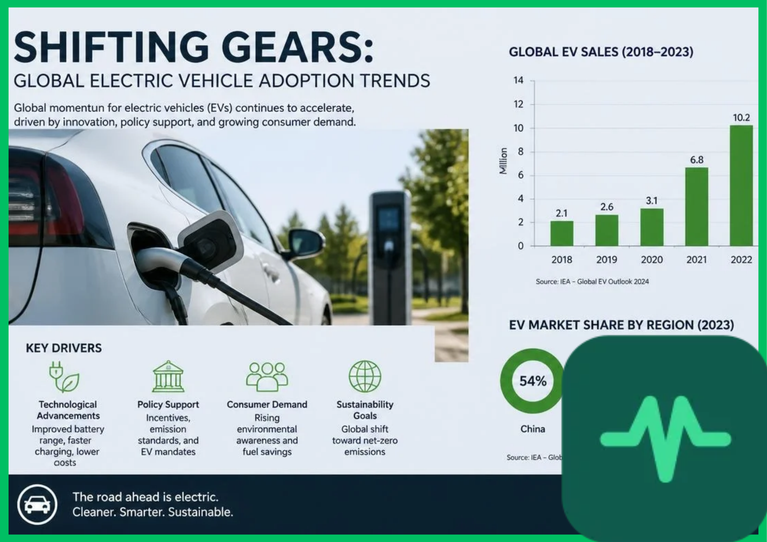
According to IEA clean transport roadmaps, universal charging interoperability accelerates global electric vehicle adoption by giving consumers the confidence that buying an electric car will never strand them due to incompatible plugs.
When every charger works with every car, capital is invested efficiently into building more charging stations rather than duplicating competing proprietary designs.
Overcoming Global Harmonization Hurdles
Achieving global harmonization across diverse automotive markets required patience, compromise, and rigorous testing among international regulators.
Different regions evolved along separate technological paths during the early years of the electric vehicle boom.
Bringing those divergent paths together into a unified global standard took years of cooperative engineering.
Today, international standards bodies continue refining wireless protocols, automated plug-and-charge billing, and bidirectional power transfer capabilities, ensuring that universal chargers keep pace with emerging automotive technologies.
As standard charging corridors expand across developing economies and rural highways alike, the dream of borderless electric travel becomes a reality.
Driving Toward a Universal Future
Universal electric vehicle charging standards prove that international cooperation can solve complex industrial fragmentation.
We no longer have to accept a confusing patchwork of incompatible plugs and proprietary charging stations.
By unifying physical connectors and digital protocols across the globe, we create a seamless, reliable, and open charging network for every driver on Earth.
We step away from isolated silos, embracing an interconnected, efficient, and enduring standard of clean transportation.
Through brilliant engineering harmonization, collaborative global policy, and a deep respect for our shared environment, universal charging standards secure a clean, thriving future for our world.

Comments (0)
Login to leave a comment.
No comments yet. Be the first to share your thoughts!