For millions of people around the world, this simple routine is completely out of reach.
If you live in a high-rise apartment building, a shared townhouse, or a rented complex, charging your car becomes a daily battle. You cannot simply drill holes in a shared wall to install a charger. You cannot run long extension cords across public sidewalks or down three flights of stairs from your balcony. For a long time, if your building's management team said "no" to a charger, your electric car journey ended right there.
This structural barrier has created a sharp divide between standalone homeowners and apartment dwellers. It makes clean transportation feel like an exclusive club reserved only for those who own a piece of land.
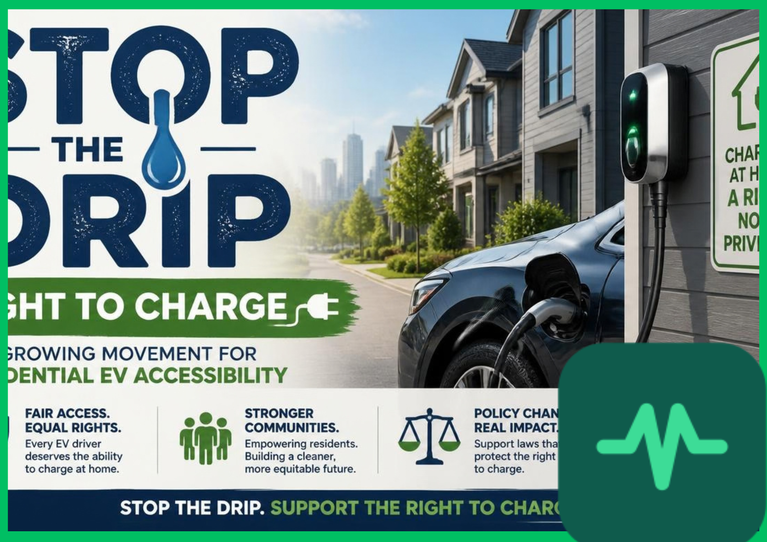
Thankfully, the landscape is changing. A powerful legal and social movement is sweeping across global communities. It is built around a simple, fair principle: your living situation should not dictate your ability to drive a clean vehicle. This movement is known as the push for right to charge laws.
The Silent Barrier for Apartment Tenants
To understand why this issue is so emotional for many drivers, look at the hurdles faced by EV charging apartment tenants. Imagine finding the perfect electric car. It fits your budget, it matches your daily commute, and you are excited to stop burning fossil fuels. You bring the idea to your property manager or condo board, expecting a constructive conversation.
Instead, you get a wall of resistance.
Building managers often reject these requests out of fear. They worry about how a personal charger will impact the property's shared electrical panel. They worry about who will pay for the installation, how the electricity bills will be tracked, and what happens if a neighbor gets jealous.
Because managing a multi-family building is already complex, the easiest answer for a landlord or a board is simply to say no. It takes no effort to deny a request.
This automatic rejection leaves tenants trapped. They are forced to rely entirely on expensive, inconvenient public charging stations. They spend hours sitting in grocery store parking lots or retail hubs just to top up their battery. This dynamic drains their free time and erases the core convenience of electric car ownership. It turns an eco-friendly choice into a second part-time job.
What Exactly is the Right to Charge?
The core principle behind this policy shift is simple. It strips away the power of arbitrary denial from property owners and condo associations. Under a typical right-to-charge legal framework, a landlord or building board cannot legally block a resident from installing a charging station in their designated parking space, provided the resident meets specific safety and financial criteria.
This policy changes the entire conversation around residential electric vehicle charging. It shifts the baseline from a system of permission to a system of compliance.
The resident still has to jump through logical hoops. You cannot simply install whatever you want without a plan. These laws require the tenant to use certified, professional electricians who understand local building codes. The installation must meet strict engineering standards to ensure the building's wiring remains safe and stable.
Most importantly, the financial burden remains squarely on the person making the request. The tenant pays for the charging hardware, the professional labor, and any structural upgrades required to make the space safe. They also agree to pay for the actual electricity consumed by the vehicle, using separate sub-meters that track energy use down to the exact kilowatt-hour.
By removing the financial risk from the property owner, these frameworks take away the main arguments against installation. They transform a complex political battle inside a condo board into a straightforward contractor project.
Future-Proofing Multi-Family Housing
Building owners often view these new rules as a burden, but forward-thinking properties are beginning to see them as a massive opportunity. The demand for electric cars is not a temporary trend; it is a permanent shift in how humanity moves. Buildings that actively embrace multi-family home EV charging setups are finding themselves at a massive competitive advantage.
An apartment complex that makes it easy to plug in a car instantly becomes highly attractive to premium renters and buyers. It protects the property value for decades to come.
Conversely, buildings that fight this transition risk becoming obsolete. As more drivers swap their traditional vehicles for electric models, properties without charging capabilities will see their tenant pools shrink. Forward-looking policies often include guidelines for new construction, mandating that any fresh residential building must include the conduits and electrical capacity to support chargers in every single parking stall from day one. Installing this infrastructure during the initial build costs a fraction of what it takes to retroactively dig up concrete and run new cables years later.
Balancing Community Needs and Infrastructure
The shift toward universal accessibility is not without real technical challenges. The biggest obstacle is the total electrical capacity of older buildings. If a single tenant installs a charger, the existing electrical system can handle it easily. If fifty tenants in the same building plug their cars in at precisely the same time after work, the sudden electrical draw can overload the transformer.
This is where smart policy and modern engineering must work hand in hand. Overcoming this hurdle does not require ripping out all the wiring in a building. Instead, it relies on intelligent energy management systems.
Modern chargers can talk to one another in real time. They use power-sharing algorithms to distribute the building’s available electricity safely across multiple cars. If ten vehicles plug in simultaneously, the system scales back the speed of each individual charger to protect the grid. As the evening progresses and some batteries reach full capacity, the system automatically shifts the remaining power to the vehicles that still need it.
By using software to manage the physical load, property managers can offer wide-ranging home EV installation rights without needing to invest in massive, expensive hardware upgrades.
A Matter of Transportation Equity
At its heart, the right-to-charge movement is a battle for fairness. Clean air and affordable transportation should not be privileges reserved exclusively for people who can afford a detached suburban home. Millions of families live in multi-unit buildings by choice or by economic necessity, and their efforts to reduce their personal carbon footprints deserve support, not bureaucratic roadblocks.
When we create clear, universal frameworks that protect a tenant's right to install clean energy tools, we open the door for a faster, more inclusive transition to sustainable transport. We give individuals the agency to upgrade their lives and protect their communities, one parking space at a time. The garages and parking lots of our apartment buildings are the front lines of this change, and ensuring everyone has access to a plug is how we build a cleaner world together.

Comments (0)
Login to leave a comment.
No comments yet. Be the first to share your thoughts!