
Your car battery fills up with clean electricity overnight.
Normally, that stored energy sits idle in your driveway all day while you are at work.
What if your car could do more than just drive?
What if, during an intense summer heatwave when your local electricity grid faces crippling peak demand, your parked vehicle could send some of its stored clean energy back out to power your home or stabilize the neighborhood?
This is not science fiction. It is called vehicle-to-grid (V2G) integration, and it is reshaping how global energy markets view electric vehicles.
According to recent International Energy Agency (IEA) grid integration studies and academic smart energy research, electric cars are no longer viewed simply as power consumers. They are mobile energy storage batteries.
Here is how vehicle-to-grid technology is turning millions of parked cars into a massive, distributed virtual power plant.
The Sleeping Giant of Distributed Storage
To understand the power of V2G technology, you have to look at simple mathematics.
The average passenger vehicle sits parked and idle for roughly 95% of its lifespan.
When you multiply that parked time across millions of electric vehicles globally, you uncover an astonishing amount of unused battery storage capacity.
A single modern EV battery stores enough electricity to power an average household for multiple days.
When thousands—or millions—of these vehicle batteries connect to the grid simultaneously through smart bidirectional chargers, they represent a colossal mobile energy reservoir.
Instead of utilities spending billions of dollars building dedicated stationary storage facilities or firing up dirty peaker plants during evening demand spikes, they can tap into the collective reserve of parked electric vehicles.
How Bidirectional Power Flows Work
Traditional chargers operate in one direction: electricity flows from the home or grid into the vehicle battery.
Bidirectional chargers include advanced inverters capable of reversing that flow safely.
When grid demand spikes or local renewable generation drops suddenly, the vehicle's onboard computer communicates with the home energy management system and the utility aggregator.
With the owner's pre-set permissions ensuring the car retains enough charge for the next morning's commute, the system discharges a tiny, safe fraction of the vehicle's stored energy back into the home or out to the local distribution grid.
According to economic and technical analyses, vehicle owners earn financial credits or direct cash payouts for providing this vital grid stabilization service.
Your car literally pays for its own upkeep simply by sitting parked in your garage.
Overcoming Hurdles for Mass Deployment
While the technical potential of vehicle-to-grid integration is immense, widespread commercial deployment requires careful coordination.
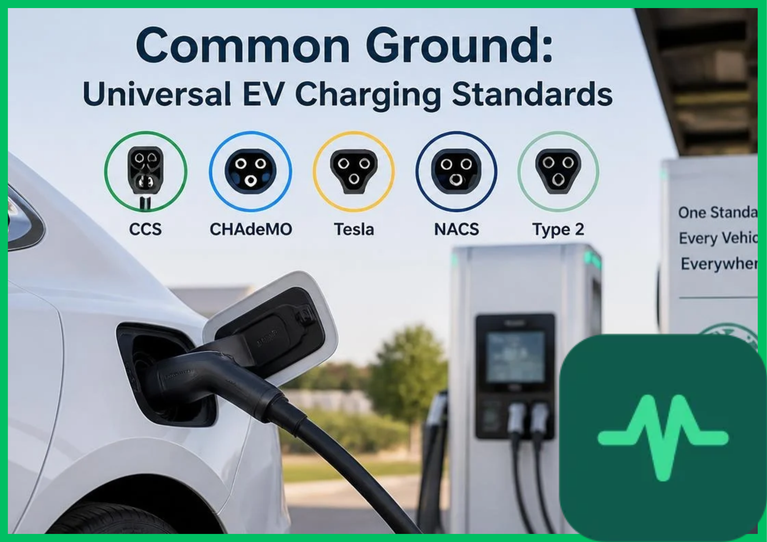
Automotive manufacturers, utility providers, and software developers must establish unified communication standards and robust cybersecurity protocols.
Furthermore, battery warranty concerns must be addressed.
Rigorous academic research demonstrates that smart, controlled V2G cycling causes negligible degradation to modern lithium-ion and LFP cells, provided discharge rates stay within optimized parameters.
As international standards mature and bidirectional charging hardware becomes standard factory equipment, the line between transportation and energy storage will blur entirely.
Electric vehicles are evolving into the dynamic linchpin of our global clean energy future.

Comments (0)
Login to leave a comment.
No comments yet. Be the first to share your thoughts!