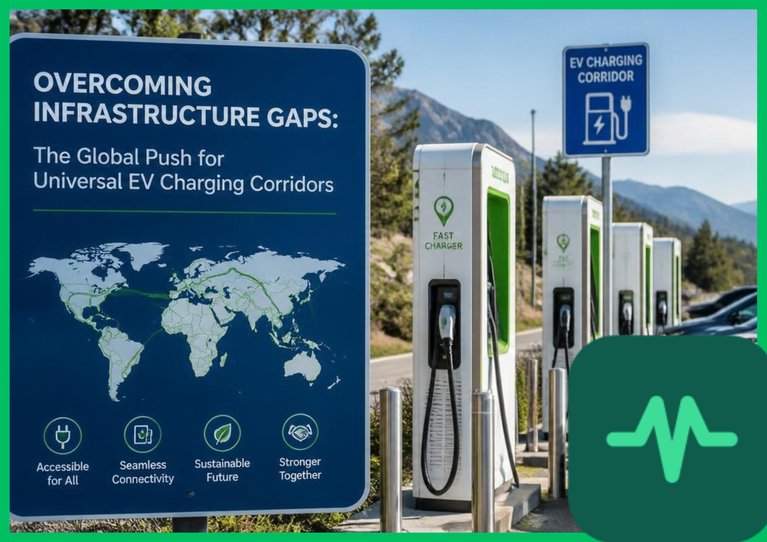
Driving around town on a daily commute is effortless when you plug in overnight at home.
Hitting the open highway for hundreds of miles, however, triggers an old, familiar worry for many drivers: range anxiety.
Will you find an open charger when your battery dips low? Will the charging stall actually work, or will it be broken and unserviceable?
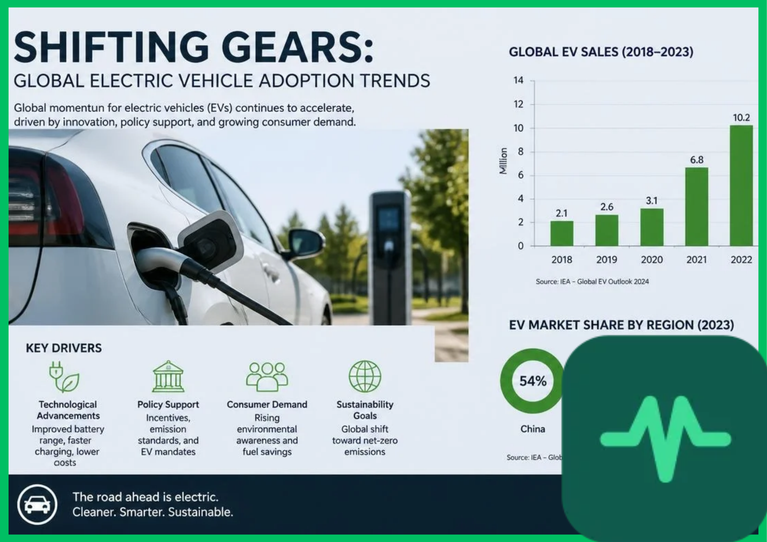
According to tracking data and infrastructure reports from the International Energy Agency (IEA), the bottleneck of the electric vehicle transition has shifted firmly from vehicle manufacturing to public charging deployment.
Building universal, reliable charging corridors across global highways is the final hurdle to achieving mass adoption.
Here is how international transport planners and energy providers are solving the highway charging puzzle.
The Shift From City Streets to Intercity Corridors
To understand the current state of EV charging, you have to look at where infrastructure stands today.
Over the past few years, urban centers and suburban neighborhoods saw a rapid expansion of destination chargers and home hookups.
People living in apartments and houses could easily top off their vehicles locally.
However, long-distance freight routes and cross-country travel corridors lagged behind.
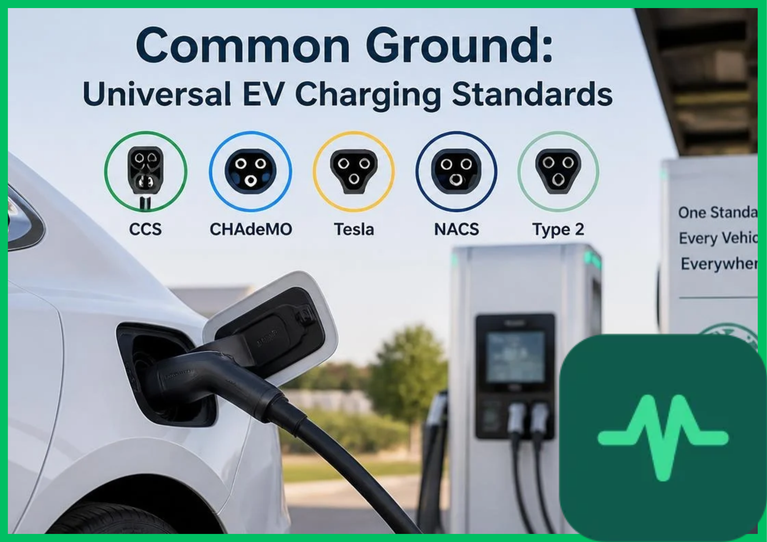
Drivers crossing international borders or traversing remote rural regions often faced sparse charging networks, inconsistent plug standards, and unreliable equipment.
The latest IEA data highlights that while public charger installations are accelerating globally—growing by over 40% annually—geographic distribution remains heavily uneven.
Accelerating the transition requires shifting focus toward high-density highway corridors and remote transit links.
The Technology of Ultra-Fast Highway Hubs
Highways demand a completely different charging experience than residential garages.
When a driver pulls off a major transit route during a road trip, they do not want to wait two hours for a slow replenishment.
They expect a refuel time comparable to traditional combustion vehicles.
This demand drives the deployment of ultra-fast charging hubs capable of delivering 350 kilowatts and higher.
These heavy-duty stations rely on advanced liquid-cooled cables and high-voltage 800-volt architectures.
As explored in recent academic engineering studies, these high-power systems pump hundreds of amperes safely into vehicle battery packs, pushing states of charge from 10% to 80% in roughly 15 minutes.
Integrated battery buffers at remote highway stations store energy locally, preventing high-power demand spikes from overloading rural electrical grids.
Reliability, Interoperability, and Universal Access
Building chargers is only half the battle; ensuring they work every single time a driver plugs in is an even greater challenge.
Global transport frameworks increasingly emphasize strict reliability standards and payment interoperability.
Drivers should not need a dozen different smartphone apps or proprietary network memberships to power up their vehicles.
Universal payment terminals, plug-and-charge cryptographic authentication, and open communication protocols are becoming standard requirements across international markets.
When charging infrastructure matches the seamless reliability of traditional fuel stations, consumer confidence surges.
Universal highway charging corridors turn electric mobility from an urban convenience into a truly borderless, global reality.

Comments (0)
Login to leave a comment.
No comments yet. Be the first to share your thoughts!