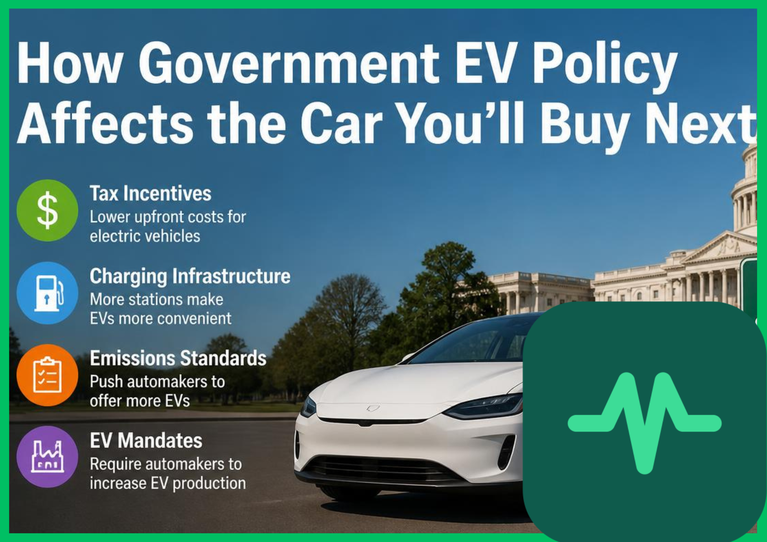
How Government EV Policy Can affect your Car Purchase?
You're shopping for a new car, and you notice something genuinely odd. A specific EV model is widely available in California, but genuinely hard to find in your home state. This isn't random chance. It's government EV policy quietly shaping the entire market.
Let's talk honestly about how these policies actually work, and why they genuinely matter more to your next car purchase than most buyers realize.
Why Government Policy Genuinely Shapes Car Availability
Automakers don't build and distribute cars randomly across the country. They genuinely respond to regulations, incentives, and market signals shaped significantly by government policy at both federal and state levels.
If a state has genuinely strict emissions requirements, automakers prioritize sending more EVs and hybrids there. If a state offers strong purchase incentives, demand genuinely rises, encouraging dealers to stock more inventory to meet that local interest.
Federal Emissions Standards: The Foundation
At the federal level, emissions standards genuinely require automakers to meet certain average fuel efficiency and emissions targets across their entire vehicle lineup, not just individual models.
This creates real incentive for automakers to build and sell more electric and hybrid vehicles, which help offset less efficient models like larger trucks and SUVs within their overall fleet average. This policy genuinely shapes what gets built in the first place, before it ever reaches your local dealership.
Why California Genuinely Leads This Conversation
California holds genuinely unique authority to set its own, often stricter, emissions standards, separate from federal requirements. Several other states have chosen to adopt California's standards too, creating a genuinely significant bloc of the national car market with stricter requirements.
This is exactly why you'll often see more EV availability and selection in California and states following its standards, compared to states sticking with baseline federal requirements alone.
How State-Level Incentives Genuinely Shape Demand
Beyond emissions standards, individual states offer genuinely varying incentives, rebates, tax credits, reduced registration fees, for EV purchases. States with genuinely strong incentives see higher EV demand, which automakers respond to with better availability and selection.
This creates real, visible differences in the car-buying experience depending entirely on where you happen to live, something worth genuinely understanding before you start shopping.
Why Charging Infrastructure Policy Connects Here Too
We covered charging infrastructure funding in an earlier piece, but it genuinely connects to this broader policy conversation too. States with strong charging networks make EV ownership genuinely more practical, which increases demand, which influences what automakers choose to prioritize selling there.
This creates a genuine feedback loop, policy shapes infrastructure, infrastructure shapes demand, demand shapes availability, all connected together in ways that genuinely affect your actual car-buying options.
What This Means If You're Cross-Shopping States
Here's genuinely practical advice worth understanding. If you're considering buying a car in a different state than where you live, perhaps because of better availability or pricing, understand that registration and incentive eligibility genuinely depend on your actual home state, not where you make the purchase.
Research your own state's specific policies before assuming you can simply take advantage of another state's more favorable EV environment.
Why Policy Changes Create Genuine Uncertainty for Buyers
Here's an honest challenge worth understanding. Government EV policy genuinely shifts with new legislation, sometimes significantly, affecting available incentives and requirements sometimes with relatively little advance warning.
This creates genuine uncertainty for buyers trying to time their purchase around available incentives. Check current, up-to-date information before finalizing any purchase decision, rather than relying on outdated information from even just a year or two ago.
The Genuine Business Side Automakers Navigate
It's worth understanding this from the automaker's genuine perspective too. Building cars for fifty different states with varying regulations creates real, genuine complexity and cost for manufacturers.
This is partly why some automakers focus their EV efforts more heavily on states with clearer, stronger policy support, since it genuinely simplifies their business planning and reduces the risk of building inventory that doesn't sell well in less EV-friendly markets.
Why This Matters Beyond Just Availability
Government EV policy doesn't just affect which specific models you can find locally, it genuinely affects pricing too, through incentives that can meaningfully lower your effective purchase price, as we covered in the EV tax credit article.
Understanding your own state's complete policy picture, emissions requirements, incentives, and charging infrastructure investment, gives you a genuinely fuller understanding of what to actually expect when you start shopping.
How to Research Your Own State's Policies
Before shopping for your next car, it's genuinely worth spending a little time researching your specific state's current EV policies. Check for state tax credits or rebates. Look into charging infrastructure investment happening locally.
This research helps you understand honestly what to expect, both in terms of available incentives and genuine model availability, before you walk into a dealership potentially unprepared for these real, significant regional differences.
Common Questions About Government EV Policy
Why is EV availability so different between states?
Different states have different emissions requirements and incentive programs, which genuinely shapes which vehicles automakers prioritize sending and stocking there.
Does California really have special authority over car emissions rules?
Yes, genuinely. California holds unique legal authority to set its own emissions standards, and several other states have chosen to adopt these stricter standards too.
Can I buy an EV in one state and register it in another to get better incentives?
Generally no. Most incentive eligibility depends on your actual home state and where you register the vehicle, not where you purchase it.
How often does government EV policy actually change?
It shifts periodically with new legislation, sometimes significantly, so it's genuinely worth checking current information before making any purchase decisions.
Final Thoughts
Government EV policy operates quietly in the background, but it genuinely, significantly shapes your actual car-buying experience, from which models are available locally to how much you'll genuinely pay after incentives.
Understanding this connection helps you shop more strategically and avoid genuine surprises, whether that means researching available incentives before you shop, or simply understanding why your neighbor in a different state seems to have more EV options than you do.
Comments (0)
Login to leave a comment.
No comments yet. Be the first to share your thoughts!