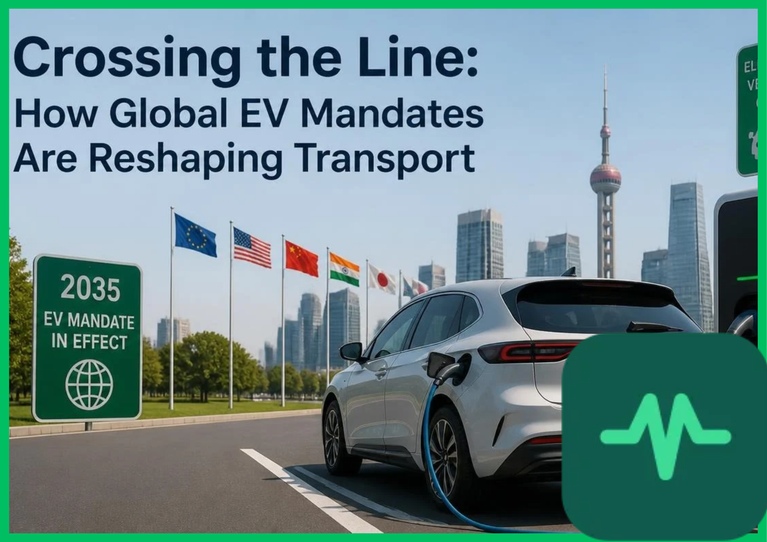
You cough, pulling your jacket collar up against your face.
We grew up accepting that background hum and foul air as the unavoidable price of modern mobility.
For over a century, internal combustion engines ruled our roads. They powered our commerce, connected our cities, and filled our global atmosphere with billions of metric tons of carbon pollution.
That era is drawing to a close.
A quiet legal and industrial shift is sweeping across international transport corridors.
According to global transport tracking from the International Energy Agency (IEA), environmental governance reports from the United Nations Environment Programme (UNEP), efficiency benchmarks from ENERGY STAR, and academic automotive research, global electric vehicle mandates are rewriting the rules of travel.
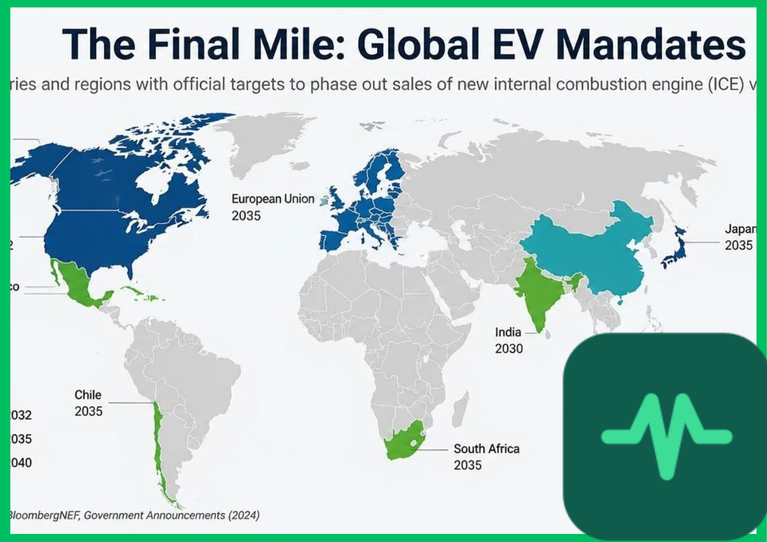
Governments worldwide are setting firm zero-emission transport timelines and ICE vehicle phase-out targets.
Here is how international vehicle mandates work, why legal timelines change manufacturing curves, and how this fleet transition shapes our collective future.
The Turning Point for Global Fleets
To understand why vehicle mandates matter, you have to look at how the automotive industry operates.
Car manufacturers do not change their assembly lines overnight. Designing a new vehicle platform, testing safety systems, and tooling multi-billion-dollar factories takes years of planning.
For decades, automakers invested heavily in traditional gas and diesel technology because consumer demand and legal frameworks supported fossil fuels.
Without a firm destination, the automotive market moved in circles.
Global electric vehicle mandates broke that hesitation.
When international governing bodies establish clear, legally binding dates to end the sale of new internal combustion engine (ICE) vehicles, they send an unambiguous signal to corporate boardrooms.
Uncertainty evaporates.
Automakers realize that investing in fossil fuel engines is a dead end. They redirect their massive engineering budgets, research labs, and factory floors toward electrification.
The mandate acts as a compass, pointing the entire industry down a single, sustainable path.
Setting Clear Zero-Emission Timelines
What do these international policy frameworks actually look like in practice?
Unlike messy, short-term subsidies that change with every political election, long-term zero-emission transport timelines set fixed milestones stretching ten to twenty years into the future.
Governments establish clear phase-out targets.
They declare that by a specific year—often aligned with international climate milestones—every new passenger car and light commercial van sold in their jurisdictions must produce zero tailpipe emissions.
These targets do not ban existing gasoline cars overnight. People can still drive what they own.
Instead, the rules apply directly to new vehicle manufacturing and dealership sales.
As the deadlines approach, the percentage of allowable fossil-fuel sales steps down year by year, forcing a predictable, managed transition across the automotive sector.
Transforming the Global Supply Chain
The ripple effects of these vehicle mandates extend far beyond local car dealerships. They trigger a massive transformation across global supply chains.
Academic automotive research and IEA market tracking show that when major economies commit to zero-emission timelines, raw material suppliers, battery makers, and charging infrastructure developers scale up production with confidence.
Mining companies invest in sustainable mineral extraction.
Gigafactories ramp up cell production, driving manufacturing costs down through sheer economies of scale.
Energy providers upgrade regional power grids to handle millions of new charging connections.
Everything moves in sync because everyone knows the finish line is fixed.
When supply chains align around a shared goal, clean technology becomes cheaper, better, and more accessible than the polluting alternatives it replaces.
Overcoming Skepticism and Industry Resistance
Change is never easy. Whenever new vehicle mandates are proposed, critics argue that the transition is happening too fast.
They claim that electrical grids will collapse, that consumers will reject electric cars, or that charging networks can never support long-distance travel.
Real-world data proves those fears wrong.
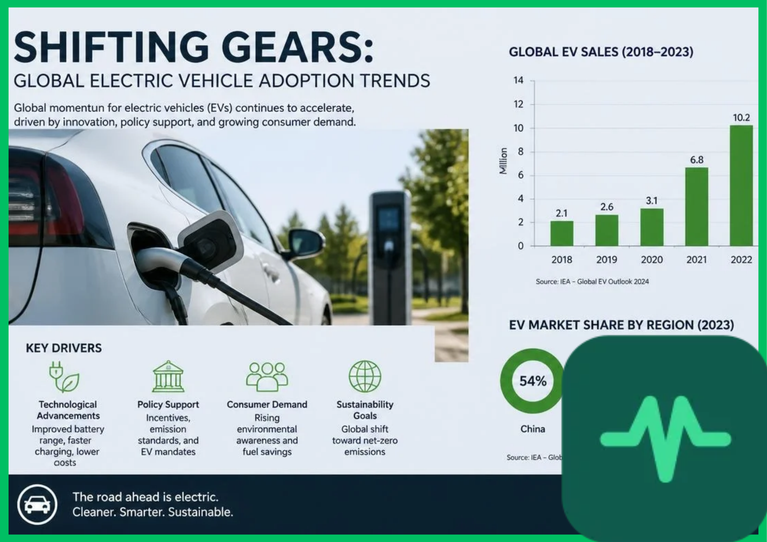
In markets where phase-out targets and supportive infrastructure evolved together, consumer adoption skyrocketed past initial projections.
Drivers discover that electric cars offer superior acceleration, lower maintenance costs, and a remarkably quiet ride.
Once drivers experience electric mobility, they rarely look back.
The mandates simply cleared away the initial market hesitation, proving that the technology was ready long before society gave it permission to shine.
Driving Toward a Clean Horizon
Global electric vehicle mandates prove that collective international resolve can reshape stubborn industrial habits.
We no longer have to accept a future choked by exhaust fumes and heated by carbon pollution.
By establishing clear zero-emission timelines and phasing out internal combustion engines, we guide the global automotive fleet toward a sustainable destiny.
We cross an invisible line, leaving dirty fossil fuels behind.
Through bold policy design, industrial innovation, and unwavering human purpose, we build a clean, breathable, and vibrant transport network for generations to come.

Comments (0)
Login to leave a comment.
No comments yet. Be the first to share your thoughts!