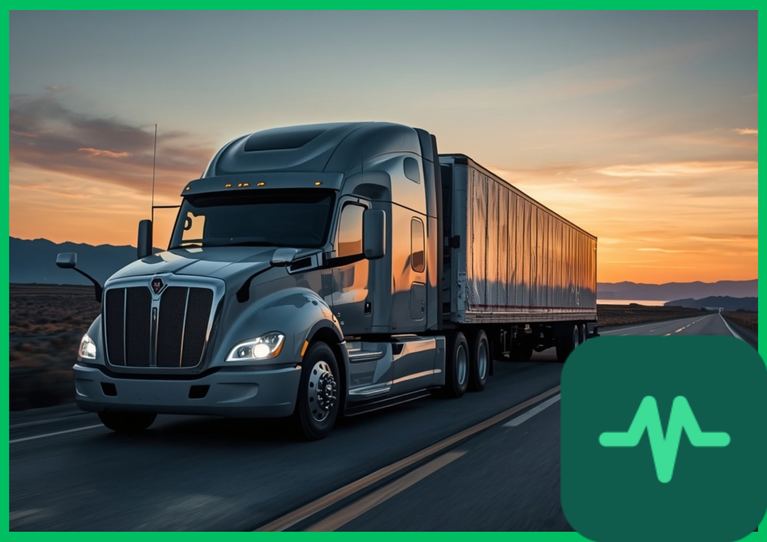
Yet, passenger vehicles represent only one piece of the global transportation puzzle.
Heavy-duty commercial transport—including long-haul freight trucks, delivery vans, municipal buses, and construction vehicles—consumes massive quantities of diesel fuel, generating a disproportionate share of global transport emissions.
Electrifying passenger cars is essential, but achieving true climate targets requires cleaning up the second-largest oil-consuming sector on Earth.
The rapid electrification of global heavy-duty fleets is accelerating.
Here is how electric trucks and commercial transport are scaling up worldwide to establish zero-emission freight networks.
The Heavy Transport Decarbonization Challenge
To understand why heavy-duty electrification is complex, you have to look at the physical demands of commercial freight.
An electric passenger car travels roughly 400 to 500 kilometers (250 to 300 miles) on a battery pack that fits neatly beneath the floorboards.
A heavy-duty freight truck hauling 40 metric tons of cargo across a continent demands immense energy density and continuous high-power delivery.
Early critics argued that heavy trucks were simply too heavy and required batteries too massive to ever electrify effectively.
Engineers proved those critics wrong through advanced battery chemistry, high-voltage architecture, and strategic charging deployment.
Scaling Commercial Fleets Worldwide
Commercial fleet operators are adopting electric trucks for practical economic reasons, not just environmental goals.
Electric powertrains have fewer moving parts than diesel engines, eliminating oil changes, transmission rebuilds, and complex exhaust after-treatment servicing.
The total cost of ownership for electric delivery vans and regional semi-trucks undercuts diesel equivalents over their operating lifespans, particularly as battery manufacturing scales up globally.
Major urban delivery fleets are transitioning to electric vans for last-mile logistics, eliminating tailpipe pollution in congested city centers where air quality impacts human health most directly.
Megawatt Charging Infrastructure for Heavy Freight
Scaling heavy-duty transport requires specialized infrastructure.
Standard home chargers or slow public plugs are useless for a semi-truck that needs to turnaround quickly.
Global logistics corridors are deploying ultra-fast megawatt charging stations specifically engineered for commercial freight.
These heavy-duty chargers deliver massive electrical currents safely through liquid-cooled cables, recharging a commercial truck battery during mandatory driver rest breaks.
By combining advanced heavy-duty batteries with ultra-fast megawatt charging hubs, zero-emission freight networks are transforming global trade from the highway up.


Comments (0)
Login to leave a comment.
No comments yet. Be the first to share your thoughts!