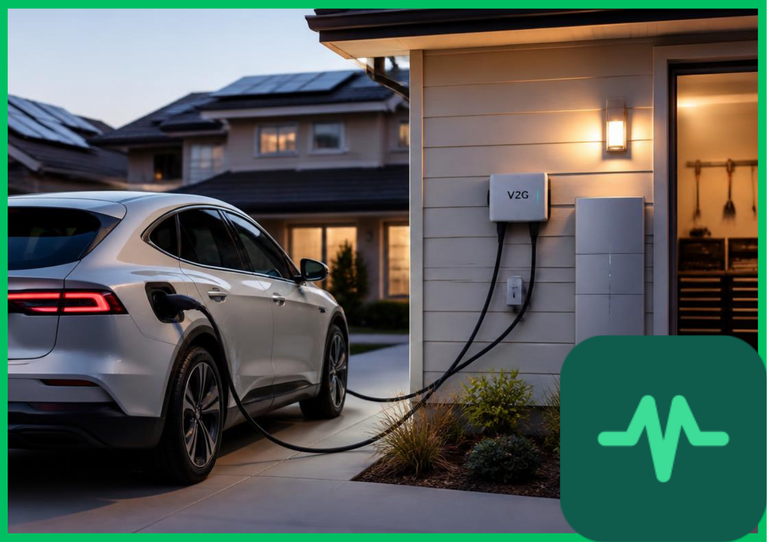
Vehicle-to-grid, commonly called V2G, allows a compatible electric vehicle to exchange electricity with the power grid. Most EV charging works only one way. It simply moves electricity from the grid into the car.
V2G works differently. With the right hardware and software, electricity can move in both directions. The vehicle can charge normally. It can also send electricity back out when needed.
This small shift changes what an EV actually is. It stops being just a consumer of electricity. It starts becoming a genuine energy resource too.
Why Does This Matter?
Electric cars carry real batteries inside them, and those batteries can store a significant amount of electricity. Most cars, though, sit parked for many hours out of every day.
That downtime creates a real opportunity. Instead of using the battery only for transportation, it could provide flexibility to the wider electricity system while the car just sits in a driveway doing nothing.
Think about it this way. A car that drives for one hour a day still has a battery sitting idle for the other twenty-three. V2G asks a simple question: why waste that capacity?
Vehicle-to-Home
A closely related technology is vehicle-to-home, or V2H. This lets an EV battery supply electricity directly to a home, rather than to the wider grid.
A vehicle could charge during the day, when electricity is often cheaper or when solar production is high. Later, it could discharge that stored power straight into the house instead.
This becomes especially useful during a power outage, assuming the system is designed to support backup operation. Suddenly, a parked car in the garage becomes a genuine emergency power source, not just a form of transportation waiting for its next trip.
Bidirectional Charging
Both V2G and V2H rely on something called bidirectional charging equipment. A normal charger only moves electricity in one direction, from the wall into the car.
A bidirectional system can manage electricity flowing both ways instead. This requires more sophisticated hardware on both the vehicle side and the charger side.
Not every EV supports this technology yet. Compatibility varies a lot between manufacturers and models. Check both vehicle and charger compatibility carefully before assuming your setup can actually do this.
EVs as Energy Storage
As more electric cars hit the road, their combined battery capacity starts to add up to something genuinely significant. Millions of EV batteries, taken together, represent a massive potential energy-storage resource for the grid as a whole.
Using that resource for grid services isn't simple, though. It requires real coordination between automakers, utilities, and regulators. Consumers need to be fairly compensated for letting their car's battery serve this extra purpose. Battery use also needs careful management, so the vehicle owner's daily needs always come first.
Could It Reduce Electricity Costs?
Potentially, yes. In some markets, electricity prices shift throughout the day. An EV could charge when prices are low. It could then discharge, and support the home or grid, when prices climb higher.
The actual economics depend heavily on local tariffs, the cost of compatible equipment, and how the battery gets used day to day. V2G isn't automatically profitable everywhere. It works best in markets with real price swings and supportive regulations, not as a universal money-saver for every driver.
Battery Wear
One real concern here is battery degradation. Charging and discharging a battery repeatedly, more often than a typical daily commute would require, can contribute to extra wear over time.
The exact effect depends on the battery's chemistry and how it gets operated in practice. A well-designed V2G program should balance the benefits to the grid against the long-term health of the battery itself. Nobody wants to save a little on electricity bills only to shorten their EV battery's useful life in the process.
What Consumers Should Ask Before Considering V2G
Before getting excited about this technology, ask a few practical questions. Does my EV actually support bidirectional charging? Is compatible equipment available and affordable in my area? Does my local utility offer any V2G or V2H programs at all? What compensation, if any, would I receive for participating?
These questions matter because V2G remains an emerging technology. It isn't yet a standard feature across the EV market, and availability varies enormously by region and manufacturer.
EcoGreenPulse View
Vehicle-to-grid technology could transform the electric car from a simple consumer of electricity into a genuine energy resource, one capable of supporting homes and even entire electricity networks.
Widespread adoption still requires compatible vehicles, compatible chargers, supportive regulations, and electricity-market systems built to handle this two-way flow. The technology is genuinely promising. Still, look carefully at the specific requirements in your own market before investing in it, rather than assuming every EV and every charger can already do this today.
Comments (0)
Login to leave a comment.
No comments yet. Be the first to share your thoughts!