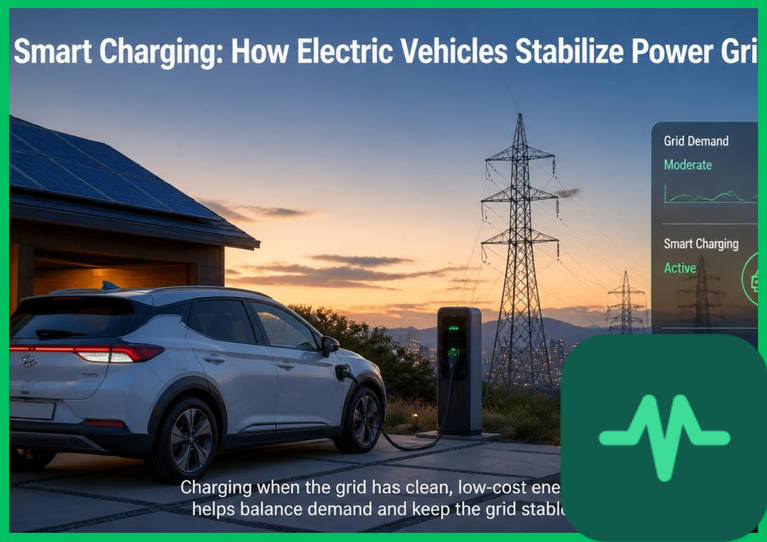
You plug your electric car into the charger, walk inside your home, and settle down for the evening.
You rarely think about what happens across the electrical grid at that exact moment.
Across your neighborhood, millions of other people are doing the exact same thing. They turn on kitchen appliances, switch on lights, and plug in their vehicles all at once.
That sudden surge of electrical demand hits the local power grid like a tidal wave.
For decades, energy planners worried that the mass adoption of electric vehicles would overwhelm power grids, causing rolling blackouts and forcing utilities to burn more fossil fuels to keep the lights on.
That narrative misses a brilliant technological solution.
According to grid integration reports from the International Energy Agency (IEA), energy efficiency frameworks from ENERGY STAR, and academic power systems research, electric cars are not a threat to the grid.
They are its greatest hidden asset.
Through smart EV charging and managed energy schedules, electric vehicles help stabilize power grids, absorb surplus renewable energy, and support clean power networks worldwide.
Here is how smart charging works, why unmanaged power surges create risks, and how connected vehicles transform our energy future.
The Danger of Unmanaged Charging Spikes
To understand why smart charging matters, you have to look at how traditional electricity demand works.
Power grids operate on a strict rule of physics. Electricity generation and consumption must match each other in real time, every second of every day.
If electricity demand suddenly outstrips supply, frequency drops and local transformers overheat.
Historically, daily electricity demand followed a predictable curve. It peaked in the late afternoon and evening when families returned home, cooked dinner, and ran heating or cooling systems.
When millions of drivers plug in their electric cars the moment they get home from work, they stack massive new electrical loads right on top of that existing evening peak.
If every car charges at maximum speed simultaneously, local distribution lines face severe stress.
Utilities would be forced to fire up expensive, polluting peaking power plants just to handle the evening rush.
We needed a smarter way to manage the flow of electrons.
What Is Smart EV Charging?
Smart EV charging replaces the blunt approach of instant, uncontrolled power draws with intelligent, automated communication.
Instead of starting a high-voltage charging session the moment you plug in your car, a smart charging system connects with your home energy hub, your local utility provider, and market price signals.
The system asks a simple question: Does this car need to charge right now, or can it wait?
If your car sits parked overnight for ten hours, but only needs three hours of electricity to fill its battery for your morning commute, charging does not need to happen immediately.
Smart charging software delays the session automatically, shifting your power draw away from expensive, high-demand evening hours.
It pauses and resumes charging flows dynamically, soaking up cheap, abundant electricity during the middle of the night or during daytime hours when solar farms produce surplus energy.
Vehicle-to-Grid Integration and Battery Buffers
Smart charging goes far beyond simple schedule shifting.
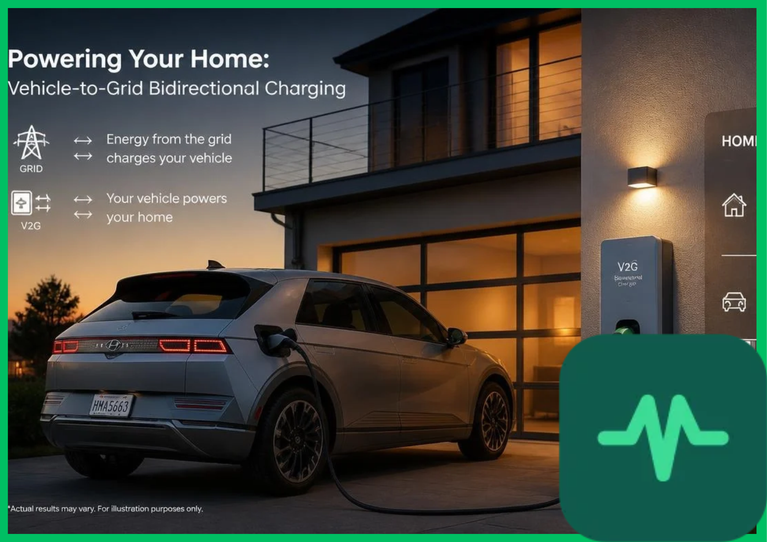
Advanced vehicle-to-grid integration turns electric cars into mobile energy storage batteries for the entire neighborhood.
With bidirectional chargers installed, an electric car parked in your garage does more than consume power. It can send electricity back out.
When regional electricity demand spikes unexpectedly—such as during a sudden heatwave or when wind generation drops—connected electric vehicles can discharge a tiny fraction of their stored battery capacity back into the local grid.
Academic power systems research shows that a parked fleet of electric vehicles represents a massive distributed battery reserve.
Your car helps stabilize the electrical frequency of your community, preventing blackouts and supporting grid resilience.
Once the grid stabilizes, the car resumes normal charging, ensuring you always wake up with a full battery.
Cutting Costs and Environmental Impact
The benefits of smart EV charging extend directly into household budgets.
As wholesale electricity markets evolve, dynamic pricing models reward flexible energy consumption.
When electricity is cheap and clean, smart chargers draw power at low rates. When the grid is strained and electricity is expensive, charging pauses automatically.
According to IEA transition roadmaps, managed charging cuts annual vehicle fueling costs significantly while reducing the need to build costly new fossil-fuel power plants.
Environmental benefits match financial savings.
By aligning vehicle charging with peak wind and solar generation windows, smart charging ensures your car runs on clean renewable electrons rather than coal or gas.
You drive further on sunshine and wind without changing your daily routine.
Powering a Resilient Global Grid
Electric vehicles prove that the transition to clean transport and the evolution of smart power grids go hand in hand.
We do not have to choose between driving electric and keeping our lights on.
By bringing real-time intelligence, managed schedules, and bidirectional energy flows to our vehicles, we transform cars from passive energy consumers into active grid partners.
We are building a flexible, resilient energy network that handles variable renewable power with ease.
Through smart charging science, every vehicle plugged into the wall helps secure a stable, sustainable future for our global community.
Comments (0)
Login to leave a comment.
No comments yet. Be the first to share your thoughts!