The confusing numbers worth understanding
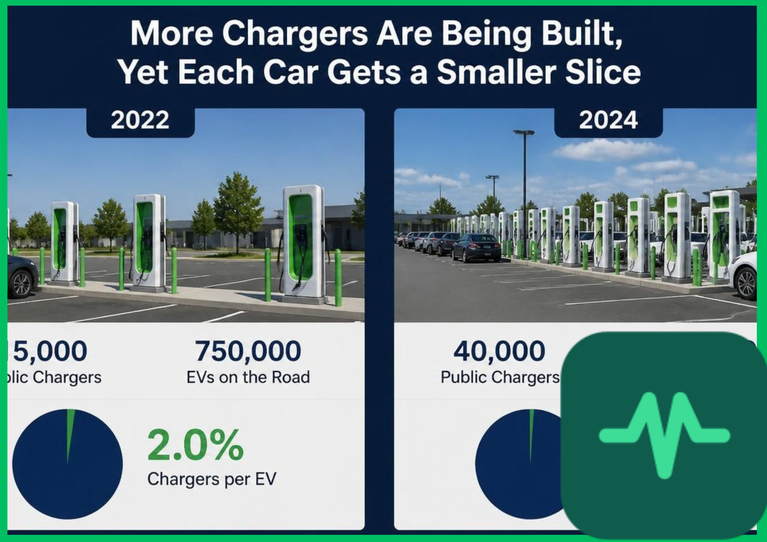
Global data shows public charging infrastructure expanded significantly in a recent year, reaching more than 7 million charging points worldwide. Yet in certain major markets, the actual charging capacity available per electric vehicle sits at just over 1.5 kilowatts per car, a genuinely modest figure that reflects real pressure on the system.
This isn't a mistake in the numbers. It reflects a simple, honest reality. The number of electric cars has been growing even faster than the charging infrastructure meant to serve them.
Why this metric matters more than simply counting chargers
Counting total charging stations tells only part of the story. What actually matters for a genuinely useful comparison is how much charging capacity exists relative to how many electric cars actually need to use it.
Imagine ten public parking spots added to a city, while twenty new cars arrive needing to park there. Simply counting the new parking spots alone would miss the more important, honest reality, the ratio has actually gotten worse, not better, despite genuine expansion happening.
Why electric car growth has outpaced charging expansion
Global electric car sales have grown remarkably fast in recent years, sometimes adding tens of millions of new vehicles within just a handful of years. Building genuinely adequate charging infrastructure to match this pace requires substantial investment, careful planning, and considerable construction time, none of which can simply happen overnight.
This creates a real, honest gap. Charging infrastructure keeps expanding, genuinely and substantially, yet the sheer pace of electric vehicle adoption has been growing even faster in several major markets.
Why this doesn't necessarily mean a genuine crisis
It's worth being clear about an important, honest distinction here. Since most charging happens at home rather than at public stations, as discussed elsewhere, this specific capacity squeeze primarily affects the public charging network rather than everyone's day-to-day charging experience uniformly.
Owners with convenient home charging access may notice this particular tightening considerably less than owners who depend more heavily on public infrastructure for their regular charging needs.
Why fast charging technology helps ease this pressure somewhat
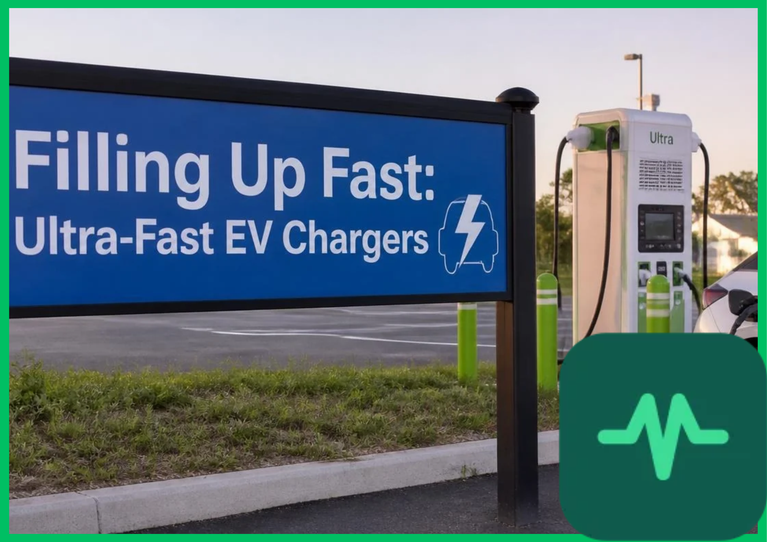
As charging infrastructure continues expanding, more of the new stations being built offer considerably faster charging speeds than older installations. This means even with a lower capacity-per-vehicle ratio, individual charging sessions can often still complete relatively quickly at newer, faster stations.
This partly offsets the honest capacity squeeze, since faster individual charging sessions mean each charging point can genuinely serve more different vehicles throughout a given day, compared to older, slower charging equipment.
Why projections suggest this needs even faster growth ahead
To keep pace with expected electric vehicle growth through the next decade, public charging capacity may need to grow considerably faster than it already has, with some projections suggesting the total number of charging points needs to increase several times over within the next ten years alone.
This suggests the current gap between vehicle growth and charging capacity isn't simply a temporary, easily resolved issue. It represents an ongoing, genuine challenge requiring sustained, accelerating investment for years to come.
Why regional differences matter enormously here too
This capacity squeeze isn't distributed evenly. Some regions have built considerably more charging infrastructure relative to their electric vehicle numbers than others, creating genuinely different experiences depending on where you actually live and drive.
One major manufacturing region currently holds the majority of the world's public charging points, while other significant markets have proportionally less infrastructure relative to their own growing electric vehicle numbers, creating real, honest variation in typical charging experience around the world.
Why this matters for anyone planning a longer trip
If you're planning travel through an area with a tighter charging capacity ratio, it's genuinely worth researching charging availability along your specific route in advance, rather than assuming infrastructure will comfortably keep pace with growing demand everywhere equally.
This kind of practical planning matters more in regions currently experiencing this tighter squeeze, while mattering less in areas where charging infrastructure has expanded more comfortably ahead of local vehicle growth.
Why continued investment remains genuinely essential
Addressing this gap requires sustained investment in both the total number of charging points and their individual charging speed and reliability. Simply adding more of the same, older, slower charging technology wouldn't adequately address a growing fleet's actual practical needs.
This is why many charging infrastructure plans increasingly emphasize genuinely higher-powered charging technology, not just raw station counts alone, recognizing that both factors together determine whether charging capacity truly keeps pace with real-world demand.
What this means for the broader electric vehicle transition
This honest capacity gap doesn't suggest electric vehicles are somehow failing or unworkable. It reflects the genuine, practical challenge of building substantial new infrastructure fast enough to match remarkably rapid vehicle adoption, a genuinely difficult logistical challenge regardless of how good the underlying technology itself may be.
The bottom line
Public charging infrastructure has expanded substantially in recent years, yet electric car numbers have grown even faster in several major markets, meaning the actual charging capacity available per vehicle has, in some places, genuinely declined rather than improved.
This doesn't reflect a hidden problem with charging technology itself. It reflects the honest, practical challenge of building sufficient infrastructure fast enough to match truly rapid vehicle growth, a challenge requiring continued, accelerating investment over the coming decade to properly close this gap.
Comments (0)
Login to leave a comment.
No comments yet. Be the first to share your thoughts!