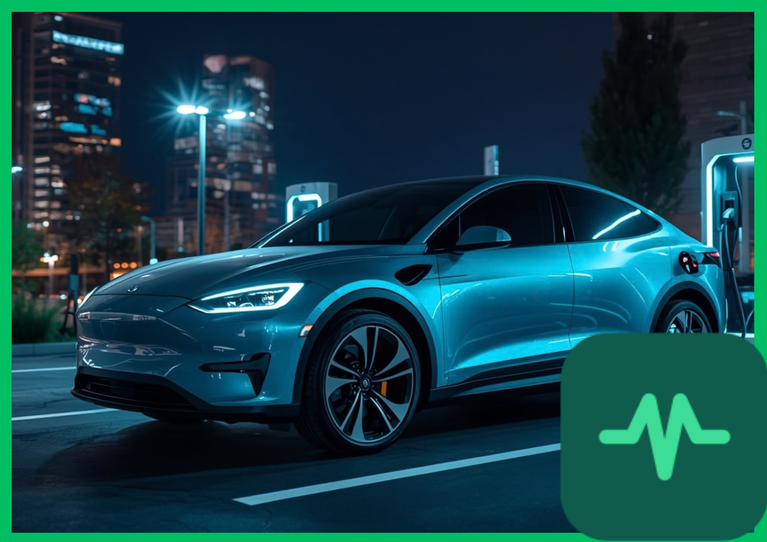
Years ago, filling an electric car meant plugging in and walking away for an hour or two. It felt like an anchor holding back long-distance travel.
Today, that experience is changing dramatically.
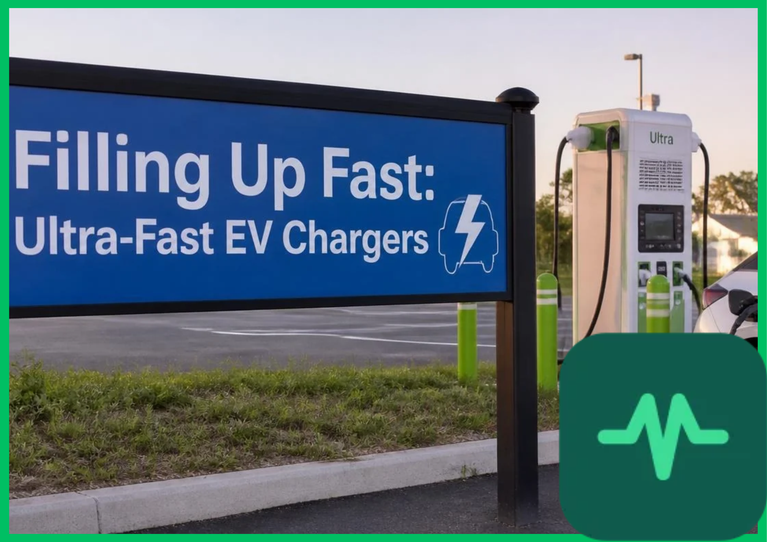
Ultra-fast charging stations delivering power outputs of 350 kilowatts and higher are transforming how we travel. They slash charging stops down to the time it takes to grab a cup of coffee.
Yet, pumping that much electricity into a car in mere minutes sounds like an engineering impossibility.
Here is a look inside the thermal management and power electronics behind ultra-fast DC fast chargers.
The Power Challenge of 350kW Stations
To understand why 350kW charging is an engineering marvel, you have to look at simple electrical physics.
Electrical power is calculated by multiplying voltage by current.
If a charging station wants to deliver 350 kilowatts of power, it can do so by pushing massive amounts of electrical current through a cable, or by raising the voltage of the vehicle's battery architecture.
Pushing ultra-high currents—say, 500 amps or more—creates immense electrical resistance. In the physical world, electrical resistance generates intense heat.
If you tried to push 500 amps through a traditional, uncooled copper charging cable, the cable would literally melt.
Engineers had to rethink cable design and battery architecture from the ground up to solve this thermal bottleneck.
Liquid-Cooled Cables and High-Voltage Architecture
Modern ultra-fast charging stations rely on sophisticated liquid-cooled cables.
Inside the thick, flexible charging cable, a continuous loop of specialized coolant—a mixture of water and glycol—circulates actively. This liquid loop pumps heat away from the copper conductors in real time, keeping the exterior cable cool to the touch even while handling extreme power loads of 800 volts at over 430 amps.
On the vehicle side, cars built to accept 350kW speeds use high-voltage battery architectures operating around 800 volts.
By doubling the voltage from legacy 400-volt systems, engineers can deliver massive power levels using lower current. Lower current means less internal resistance heat, thinner internal wiring, and faster, safer energy transfer.
Dynamic Power Allocation and Charging Curves
An ultra-fast charging station is not just a dumb power pipe. It is an intelligent computer network.
Many modern 350kW stations use dynamic power allocation. If a single charging cabinet serves multiple vehicles simultaneously, its internal software calculates each car's precise battery state of charge and thermal limits, splitting and adjusting power delivery dynamically to maximize efficiency.
Furthermore, cars do not accept maximum power indefinitely.
When you plug in with a depleted battery, your car accepts a massive surge of power. As the battery fills past 80% capacity, the vehicle's battery management system commands the station to taper off power to protect the chemical cells from overstress.
Understanding these power curves helps drivers optimize their stops.
Eliminating Range Anxiety
The deployment of ultra-fast charging infrastructure along major travel corridors is rewriting the rules of personal mobility.
By reducing charging stops to 15 minutes, high-power technology bridges the gap between electric driving and traditional refueling convenience.
When technology makes clean driving effortless, mass adoption follows naturally.
Comments (0)
Login to leave a comment.
No comments yet. Be the first to share your thoughts!