
Market Price Distortion and Externalized Environmental Costs
The foundational economic failure of fossil fuel subsidies is the systemic distortion of market clearing prices, which prevents energy commodities from reflecting their true economic and environmental costs. In a functioning free market, the retail price of fossil fuels should integrate extraction capital expenditures, refining energy penalties, distribution logistics, and the social cost of carbon ( ) associated with unmitigated greenhouse gas emissions.
When governments implement consumption subsidies—such as capping retail gasoline, diesel, or natural gas prices—consumers and industrial operators receive false economic signals regarding resource scarcity. This price suppression drives excessive energy intensity across manufacturing, residential space conditioning, and freight transportation sectors. Furthermore, subsidies externalize environmental damages, forcing society to absorb the costs of air pollution, respiratory illness caused by fine particulate matter ( and
 ), and climate change degradation. Academic energy economics literature confirms that removing consumer-side price supports corrects market signals instantly, reducing global carbon dioxide emissions by 10% to 15% while reallocating sovereign capital toward productive public investments.
Consumer Support Estimates Versus Producer Extraction Subsidies
Quantifying global fossil fuel financial support requires distinguishing between consumer price support mechanisms and upstream producer extraction subsidies. International energy agencies categorize government financial interventions into distinct analytical classifications:
- Consumer-Side Price Supports: Occur when retail prices are regulated below international market reference prices, requiring state-owned utilities or national oil companies to absorb refining and import cost differentials. These mechanisms dominate developing and emerging energy markets, disproportionately benefiting high-income households that consume larger volumes of petroleum and electricity.
- Upstream Producer Subsidies: Comprise targeted tax provisions, accelerated depreciation allowances for exploration drilling, royalty holidays, and government-backed loan guarantees for oil and gas field development. These fiscal privileges reduce the marginal cost of fossil fuel extraction, encouraging capital allocation toward long-lived hydrocarbon reserves that risk becoming stranded assets under aggressive global climate targets.
Eliminating upstream producer subsidies removes artificial financial buffers for high-cost extraction projects, realigning investor capital toward clean energy technologies such as offshore wind, solar photovoltaics, and battery storage systems.
Technical Data Specifications of Subsidy Reform Parameters
| Fiscal & Energy Economic Parameter | Global Market Baseline Standard |
|---|---|
| Global Fossil Fuel Subsidy Magnitude | Multi-hundred billion USD annual aggregate valuation |
Estimated  Reduction via Reform | 10% to 15% global emissions suppression metric |
| Primary Subsidy Classification Sectors | Petroleum refining, natural gas distribution, coal-fired power |
| Externalized Cost Factor Integration | Social cost of carbon ( ) and air pollution health damages |
| Price Elasticity of Demand (Short-Run) |  to  industrial/transport responsiveness |
| Fiscal Revenue Reallocation Target | Clean energy R&D, grid modernization, social safety nets |
| International Governance Framework | IEA and UNEP fiscal restructuring benchmarks |
Macroeconomic Transition Adjustments and Price Elasticity
Executing comprehensive fossil fuel subsidy reform requires navigating complex macroeconomic transition adjustments, particularly regarding short-run price elasticity of demand. Because fossil fuels are essential inputs for baseline electricity generation, industrial manufacturing, and agricultural transport, short-run demand elasticity is inelastic (ranging from  to
 ). When retail energy prices adjust upward toward true market parity following subsidy removal, consumers cannot immediately curtail consumption without experiencing short-term cost-of-living increases.
To prevent regressive economic hardships among low-income populations, macroeconomic stabilization strategies couple subsidy phase-out schedules with targeted cash transfers, universal basic income adjustments, or direct investments in public mass transit and residential energy efficiency retrofits. Reallocating state revenues previously trapped in fossil fuel support mechanisms toward public healthcare, education, and renewable energy deployment converts regressive price distortions into progressive, growth-enhancing fiscal frameworks.
Fiscal Space Expansion and Clean Energy Capital Reallocation
Reforming global fossil fuel subsidies expands national fiscal space, liberating sovereign capital for critical investments in the clean energy transition. According to IEA energy investment reports, achieving net-zero emission pathways requires doubling global clean energy capital expenditures over the decade. However, sovereign balance sheets burdened by massive annual subsidy outlays face severe borrowing constraints.
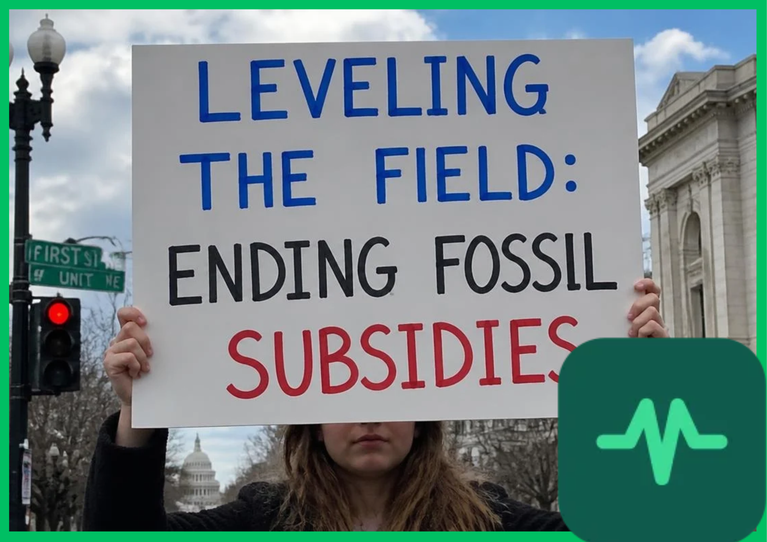
Phasing out inefficient fossil fuel supports recovers substantial public funds that can be immediately reinvested into high-voltage direct current (HVDC) transmission grids, green hydrogen bunkering facilities, and long-duration energy storage systems. Furthermore, eliminating producer-side tax breaks removes the artificial profitability premium enjoyed by incumbent fossil fuel extractors, leveling the competitive playing field for emerging clean technologies and accelerating market-driven decarbonization across industrial supply chains.
The Final Take
Mastering fossil fuel subsidy phase out economic impact transforms global energy markets by correcting artificial price distortions and reallocating sovereign capital toward sustainable infrastructure. Citing IEA and UNEP fiscal assessments, removing consumer price supports and upstream extraction subsidies slashes greenhouse gas emissions while expanding vital fiscal space. By replacing market-suppressing interventions with targeted social safety nets and clean energy investments, global economic restructuring establishes an indispensable foundation for long-term climate stability.

Comments (0)
Login to leave a comment.
No comments yet. Be the first to share your thoughts!