 ) emissions across international energy systems by mid-century. According to International Energy Agency (IEA) net-zero emissions scenarios and United Nations Environment Programme (UNEP) environmental assessments, limiting global temperature increases to
 (
 ) above pre-industrial levels demands an unprecedented restructuring of primary energy supply, transmission grids, industrial manufacturing, and end-use consumption sectors. Executing these comprehensive decarbonization pathways requires aligning quantitative capital expenditure benchmarks, material supply chains, and thermodynamic efficiency metrics to prevent catastrophic climate tipping points.
Carbon Budgets and Global Warming Trajectories
The scientific foundation of global energy transition roadmaps rests upon remaining global carbon budgets. Cumulative  emissions dictate atmospheric temperature responses governed by the transient climate response to cumulative carbon emissions (TCRE). Academic climate research establishes that every 1,000 gigatons of
 emitted drives an average global surface warming of
 (
 ).
To maintain a 67% statistical probability of restricting global warming to  (
 ), the remaining carbon budget is severely constrained, standing at less than 350 gigatons of
 from the start of the current decade. At current global anthropogenic emission rates of approximately 37 gigatons of
 per year, unmitigated fossil fuel combustion exhausts this remaining budget within a decade. Transition roadmaps quantify the exact annual emission reduction rates necessary—requiring global greenhouse gas emissions to drop by 7% to 8% year-on-year—to achieve net-zero status by 2050.
Primary Energy Supply Restructuring and Renewable Scaling
Decarbonizing the global primary energy supply requires displacing unabated fossil fuel combustion (coal, oil, and natural gas) with variable and dispatchable zero-carbon generation technologies. IEA net-zero pathways project that global electricity generation must triple by 2050, driven by widespread electrification of transport, space heating, and industrial process heat.
- Solar Photovoltaic (PV) Expansion: Annual solar manufacturing and deployment capacity must scale to multi-terawatt levels, supplying over 50% of global electricity generation.
- Wind Energy Deployment: Onshore and offshore wind installations must expand by a factor of six, capturing high-capacity offshore wind resources exceeding 45% capacity factors.
- Nuclear Power Integration: Baseload nuclear generation capacity must double by 2050, providing high-availability inertia and thermal energy for hydrogen production.
- Hydropower and Marine Renewables: Existing hydroelectric facilities require modernization, while marine energy conversion systems scale up to support coastal microgrids.
This rapid generation expansion requires transforming transmission infrastructure. Global high-voltage direct current (HVDC) transmission line installations must exceed 3 million kilometers ( ) by 2030 to interconnect remote renewable generation sites with urban demand centers.
Industrial Decarbonization and Process Heat Electrification
Heavy industrial sectors—including steel, iron, cement, chemical manufacturing, and petrochemical refining—account for over 30% of global greenhouse gas emissions. These sectors rely heavily on high-temperature process heat exceeding  (
 ), historically supplied by burning coal and natural gas.
Transition roadmaps dictate replacing fossil-fuel industrial furnaces with direct electrification technologies and clean hydrogen feedstock:
- Green Steel Production: Transitioning from blast furnace-basic oxygen furnace (BF-BOF) routes releasing
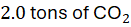 per ton of steel to direct reduced iron (DRI) processes utilizing green hydrogen (
 ) as a reducing agent, or electric arc furnaces (EAF) powered by zero-carbon electricity.
- Cement Calcination Mitigation: Implementing carbon capture and storage (CCS) systems directly on cement kilns to capture unavoidable process emissions released during the thermal decomposition of calcium carbonate (
 ).
- High-Temperature Heat Pumps: Deploying industrial mechanical vapor recompression and high-temperature heat pump systems to supply low-to-medium process heat up to
 (
 ).
Transport Electrification and Efficiency Mandates
The transport sector accounts for nearly a quarter of global energy-related  emissions. Net-zero roadmaps mandate the complete electrification of passenger vehicles, light-duty commercial fleets, and regional rail networks, alongside zero-emission mandates for heavy-duty freight trucks and maritime shipping.
By 2035, internal combustion engine (ICE) vehicle sales must phase out globally. Battery electric vehicles (BEVs) and fuel cell electric vehicles (FCEVs) replace liquid fossil fuels, raising transport energy efficiency by a factor of three due to the superior thermodynamic conversion efficiency of electric motors (exceeding 90%) compared to internal combustion engines (averaging 20% to 35%). For aviation and long-haul maritime shipping, transition roadmaps rely on sustainable aviation fuels (SAFs) synthesized from captured carbon dioxide and green hydrogen, bypassing fossil-derived kerosene.
Critical Mineral Demands and Supply Chain Vulnerabilities
A major structural challenge identified in global energy transition roadmaps is the massive surge in critical mineral demand required to manufacture clean energy technologies. Constructing electric vehicle batteries, wind turbine generators, solar panels, and grid-scale storage systems requires unprecedented volumes of refined raw materials.
- Lithium: Demand increases by a factor of 40 compared to baseline production levels.
- Cobalt and Nickel: Requirements expand by 20 to 30 times to support high-energy-density cathode chemistries.
- Copper: Electrical wiring and grid expansion drive copper demand to levels exceeding historical mining output capacity.
- Rare Earth Elements: Permanent magnets utilized in wind turbine direct-drive generators require secure supplies of neodymium, dysprosium, and praseodymium.
UNEP resource governance frameworks emphasize that scaling primary mining must be paired with strict environmental regulations, closed-loop recycling infrastructure, and circular material accounting to prevent severe ecological degradation and geopolitical supply chain bottlenecks.
Macroeconomic Investment Realities and Financial Capital Allocation
Achieving global net-zero emissions targets requires a massive reallocation of capital expenditure across international financial markets. According to IEA benchmarking data, global clean energy investment must scale from historical levels of under  annually to over
 per year by 2030.
This capital influx requires de-risking investments in emerging economies, establishing transparent carbon pricing mechanisms, and phasing out inefficient fossil fuel subsidies that currently distort energy market economics. Transition roadmaps highlight that while upfront capital expenditures (CapEx) for renewable energy and grid modernization are high, operational expenditures (OpEx) remain near-zero due to the elimination of volatile fuel commodity costs. Over multi-decade operating lifespans, accelerated clean energy deployment reduces global energy expenditure burdens, shielding consumers from fossil fuel price shocks while securing long-term economic stability.




Comments (0)
Login to leave a comment.
No comments yet. Be the first to share your thoughts!