You take a deep breath of fresh air.
Then you look up at the pale sky and wonder what kind of world we are leaving behind for our children.
For over a century, human progress ran on a simple, destructive bargain.
We burned coal, oil, and gas to power our homes, light our cities, and drive our cars.
That energy built modern civilization.
It also pushed our global climate toward a dangerous warming edge.
Every continent now faces rising seas, scorching heatwaves, and erratic weather that destroys harvests and displaces communities.
We cannot solve a global crisis with fragmented local actions.
When one country cleans up its power grid while another builds dirty coal plants next door, the atmosphere suffers everywhere.
Pollution knows no borders.
How do we unite nearly two hundred nations around a single, shared goal to save our shared biosphere?
You need a clear target.
A quiet, massive diplomatic revolution is setting the rules for our energy future.
According to global energy transition reports from the International Energy Agency (IEA), resource protection frameworks from the United Nations Environment Programme (UNEP), efficiency benchmarks from ENERGY STAR, and academic climate research, international energy transition targets are changing our world.
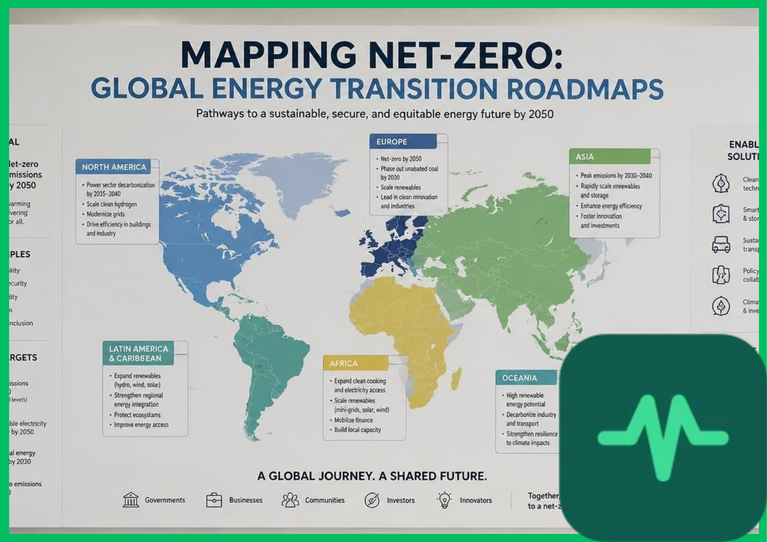
By following synchronized global milestones and multi-decade climate roadmaps, we phase out fossil fuels systematically while building a secure, 100% clean power grid.
Here is how international energy targets work, why global policy alignment changes industrial growth, and how setting the bar secures our sustainable future.
The Danger of Fragmented Climate Action
To understand why international energy targets matter so much, you have to look at the chaos of uncoordinated climate policy.
If every nation invents its own rules and timeline, global progress stalls.
Industrial companies get confused by conflicting regulations.
If one country imposes strict carbon limits while a neighboring state welcomes dirty fossil fuels, polluting factories simply pack up and move across the border.
That regulatory loophole lets global emissions keep climbing.
Early environmental talks often ended in frustration.
Wealthy nations blamed developing economies, while developing nations argued that they deserved the same cheap fossil-fuel energy that fueled western industrialization.
Scientists warned that arguing over borders while the planet warmed was like rearranging deck chairs on a sinking ship.
We needed a universal compass.
We needed rigorous international energy targets backed by hard science.
What Is an International Energy Target?
An international energy transition target is a science-backed, multi-lateral policy benchmark established by global agencies and intergovernmental climate pacts that mandates specific timelines for phasing out fossil fuels, scaling up renewable energy, and doubling energy efficiency worldwide.
Instead of vague promises, these targets set hard numerical milestones:
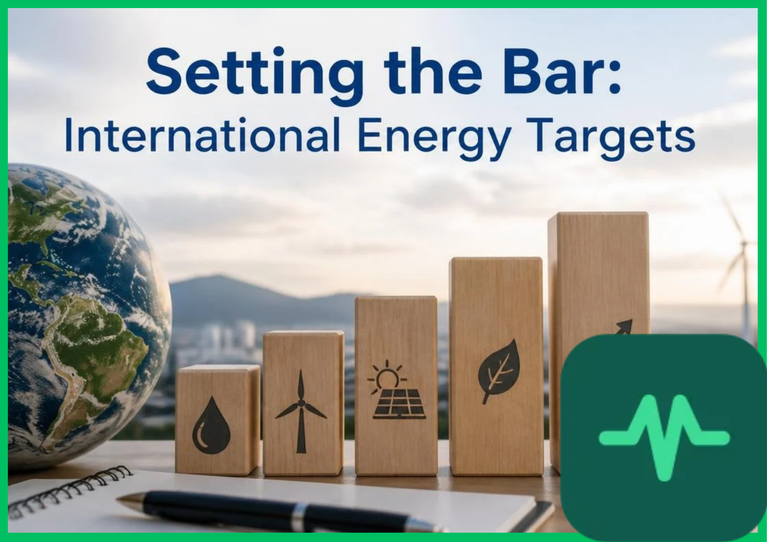
- Net-Zero Timelines: Achieving net-zero global carbon emissions by mid-century to keep global temperature increases below critical tipping points.
- Renewable Capacity Goals: Tripling global renewable energy generation capacity from solar and wind farms within a single decade.
- Efficiency Benchmarks: Doubling global energy efficiency improvements across buildings, transport, and heavy manufacturing by 2030.
These milestones give governments, utility operators, and international financial institutions a synchronized roadmap for building our clean energy future.
The Science of Global Modeling and Milestone Tracking
How do international agencies calculate what the entire planet must achieve year by year to keep global warming in check?
It comes down to complex atmospheric modeling and carbon budget math.
Academic climate research shows that Earth has a strict finite carbon budget—a maximum total volume of greenhouse gases we can emit before triggering runaway climate destabilization.
Energy transition models simulate every sector of the global economy, calculating the exact speed at which coal plants must shut down, electric vehicles must replace gas cars, and insulation must be installed in homes.
If one region falls behind its clean energy target, other nations must accelerate their deployment to keep the global average on track.
According to ENERGY STAR and international industrial efficiency evaluations, meeting synchronized energy targets saves trillions of dollars in avoided climate disaster damages and prevents costly grid over-building.
Science provides the roadmap; international cooperation provides the engine.
Environmental Integrity and Global Equity
As international energy targets guide global investments, maintaining social equity and fairness is an absolute priority.
The clean energy transition must not leave developing nations behind or create new economic injustices.
According to UNEP resource governance frameworks, global targets include dedicated financial and technical support funds, ensuring that emerging nations can leapfrog the heavy smog and oil dependency of wealthier nations.
When developing countries receive low-cost capital and clean technology transfers, they build modern, solar-powered grids right from the start.
According to IEA clean energy roadmaps, achieving universal net-zero targets requires unprecedented international solidarity, ensuring that clean electricity reaches every rural village and urban center equally.
Overcoming Political and Implementation Realties
Meeting global energy targets involves navigating real-world political and economic hurdles.
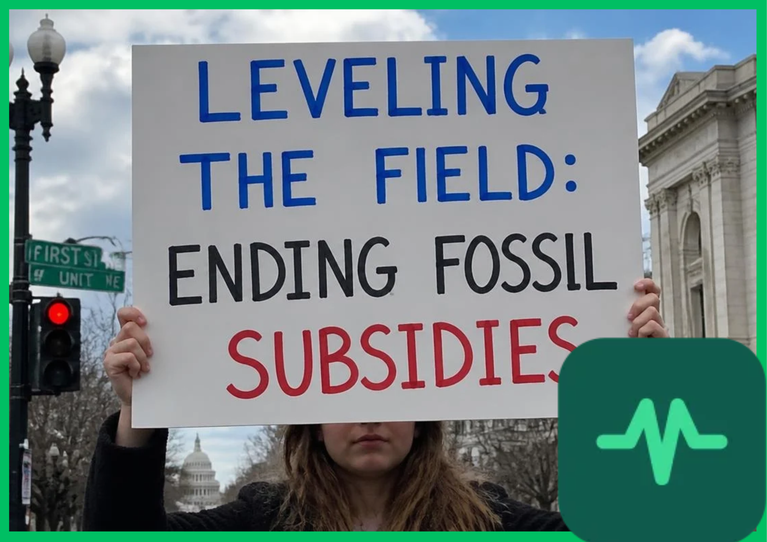
Powerful fossil fuel lobbies fight fiercely to protect subsidies and delay policy changes.
Governments and international planning bodies work constantly to overcome bureaucratic red tape, streamline renewable energy zoning approvals, and support workers transitioning from coal mines to clean energy jobs.
As public demand for clean air and cheap renewable power grows stronger every single year, political resistance fades away.
Setting Our Bar Toward a Sustainable Future
International energy targets prove that humanity can unite across borders to solve planetary crises.
We no longer have to wander blindly through an uncoordinated energy transition.
By following clear, science-backed milestones for wind, solar, storage, and efficiency, we phase out fossil fuels systematically.
We step away from energy uncertainty, embracing a planned, secure, and enduring standard of global power generation.
Through brilliant climate modeling, international policy alignment, and deep respect for our planetary home, setting the bar secures a clean, bright, and sustainable future for every person on Earth.


Comments (0)
Login to leave a comment.
No comments yet. Be the first to share your thoughts!