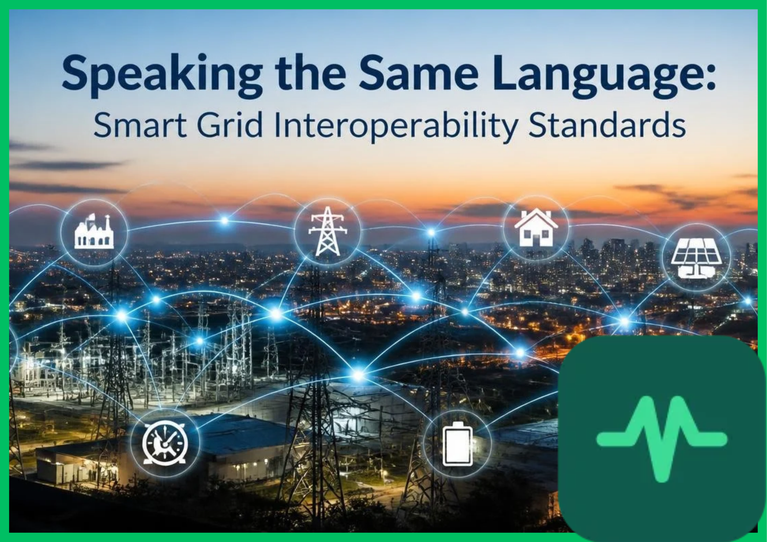
The sun rises over your roof. Your solar panels wake up and start generating clean electricity.
Out in your garage, your electric car charges quietly using that fresh solar power. Down in the basement, your smart water heater turns on to store thermal energy before peak electricity rates kick in later that afternoon.
Everything works together seamlessly.
Behind that effortless daily routine lies a massive invisible challenge.
For over a century, electrical grids operated like isolated islands. Power plants generated electricity in one direction, pushing it down high-voltage wires straight to homes and businesses that consumed it passively.
Today, our energy landscape looks completely different.
Millions of homes feature rooftop solar panels. Electric vehicles plug into residential chargers. Neighborhoods run local battery banks and wind turbines.
Energy flows in every direction, bouncing back and forth across regional networks.
If all those devices come from different manufacturers, speak different digital languages, and cannot communicate, the power grid descends into chaos.
We cannot build a clean energy future out of disconnected parts.
A quiet digital revolution is connecting our electrical infrastructure.
According to global energy reports from the International Energy Agency (IEA), resource tracking from the United Nations Environment Programme (UNEP), efficiency metrics from ENERGY STAR, and academic power systems research, smart grid interoperability standards are transforming how our electrical systems operate.
By enforcing universal communication protocols, decentralized grid standards, and automated utility integration, we ensure every clean energy device speaks the exact same language.
Here is how smart grid interoperability works, why decentralized protocols prevent grid blackouts, and how digital unity secures our sustainable future.
The Tower of Babel on the Modern Grid
To understand why interoperability standards are essential, you have to look at what happens when clean energy hardware lacks coordination.
Imagine buying a solar inverter from one manufacturer, a home battery system from a second company, a smart electric vehicle charger from a third, and a heat pump from a fourth.
You plug them all into your home electrical system.
If none of those devices share a common communication standard, they operate in blind isolation.
The solar inverter does not know when the home battery is full. The electric vehicle charger draws maximum power at the exact same moment your heat pump kicks on, overloading your home circuit breaker.
Multiply that confusion across millions of homes on a regional power grid, and grid operators face a nightmare.
When a sudden surge in demand hits the local network, the utility cannot signal smart devices to pause their power consumption or discharge stored battery energy to stabilize the system.
Without a universal language, decentralized green technology creates grid instability instead of resilience.
We needed a digital translator. We needed binding global standards that force every piece of clean energy equipment to communicate fluently.
What Are Smart Grid Interoperability Standards?
Smart grid interoperability standards are universal technical protocols that allow diverse electrical devices, software platforms, and utility systems to talk to each other securely and instantly.
Think of them like the internet protocol suite that allows any computer, phone, or tablet anywhere on Earth to connect to any website regardless of who manufactured the hardware.
On a smart grid, interoperability ensures that:
- Solar Inverters share real-time generation data with home energy management apps and utility control centers.
- Electric Vehicle Chargers adjust their charging speeds automatically based on dynamic grid pricing signals or local transformer capacity.
- Smart Appliances coordinate their power usage cycles to avoid drawing heavy electricity during peak evening hours.
When every device follows the same communication rules, the entire electrical grid functions like a single, intelligent organism.
Decentralized Grid Protocols and Real-Time Control
The true power of interoperability lies in managing decentralized power generation.
Traditional grids relied on a handful of massive, centralized coal or gas power plants. Operators picked up a phone or sent manual control signals to adjust generation.
A modern renewable grid consists of millions of small, scattered generation sources—rooftop solar panels, backyard wind turbines, and residential battery banks.
Academic power systems research shows that manual control is physically impossible across millions of decentralized endpoints.
Smart grid interoperability standards enable automated utility integration.
When local electricity demand spikes unexpectedly, automated software protocols flash a digital signal across the grid.
In milliseconds, thousands of smart home batteries discharge stored energy, and electric vehicle chargers pause their power draw.
The grid stabilizes itself instantly before a blackout can even begin.
According to IEA smart grid assessments, interoperable digital networks allow regional grids to absorb record-high shares of variable wind and solar power without risking stability.
Saving Energy and Lowering Costs
Interoperability does more than keep the lights on. It saves money and eliminates massive amounts of energy waste.
When appliances and heating systems communicate with smart utility meters, they operate only when clean energy is abundant and cheap.
According to ENERGY STAR efficiency evaluations, homes equipped with interoperable smart energy management systems cut their annual electricity consumption and carbon footprint significantly.
UNEP sustainable development frameworks highlight that digital grid standards prevent the need to build expensive, polluting peak-load power plants.
Instead of firing up a dirty fossil-fuel plant for one hour of peak evening demand, utilities simply tap into the collective, distributed storage of millions of interoperable home batteries and electric vehicles.
Everyone wins. Consumers enjoy lower utility bills, utilities maintain grid stability, and our atmosphere stays clean.
Speaking the Same Language for a Sustainable Future
Smart grid interoperability standards prove that digital unity is just as important as physical hardware in the fight against climate change.
We no longer have to manage a chaotic, disconnected collection of green tech gadgets.
By enforcing universal communication protocols, decentralized grid standards, and automated utility integration, we create a smart electrical network that anticipates our needs.
We step away from rigid, centralized fossil-fuel grids, embracing a flexible and resilient digital ecosystem.
Through technical innovation, international cooperation, and shared communication standards, the smart grid speaks one clear language, lighting our way toward a sustainable future.


Comments (0)
Login to leave a comment.
No comments yet. Be the first to share your thoughts!