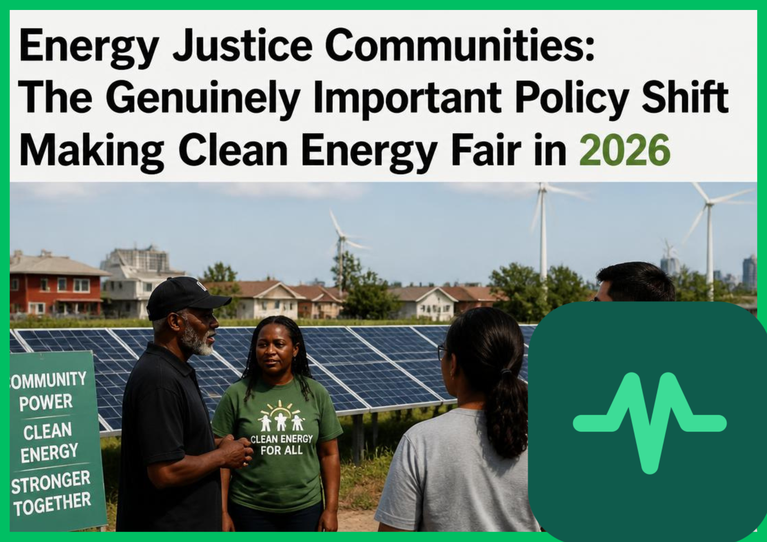
Let's talk simply about why this matters.
Why Clean Energy Wasn't Fair Before
Solar panels genuinely need a roof you own. They genuinely cost real money upfront. Renters genuinely couldn't get them. Poor families genuinely couldn't afford them.
This left many people behind. Energy justice communities policy genuinely tries to fix this real problem.
What This Policy Actually Does
These programs genuinely focus on neighborhoods that got left out before. This genuinely means shared solar access. It genuinely means help paying for efficient homes. It also genuinely means job training.
The goal is simple. Everyone should genuinely benefit from clean energy, not just people who already had money.
Why 2026 Has Brought Real Progress
More states have genuinely grown these programs this year. More money has genuinely gone toward poor and forgotten neighborhoods. This genuine growth shows real progress toward fairness.
Why This Matters Beyond Just Being Fair
Poor families often genuinely pay a bigger share of their income on power bills. Energy justice communities policy genuinely helps lower this burden through efficiency and clean energy access.
Why This Feels Like a Real, Honest Fix
There's something genuinely important about admitting the old system wasn't fair. This policy genuinely shows real responsibility, not just a nice gesture.
For families genuinely struggling with high bills, this offers real relief.
Why Job Training Matters Here Too
Many programs genuinely include training for clean energy jobs. This genuinely helps communities join the growing industry, not just receive help from outside.
The Honest Challenges Still Worth Knowing
Let's be fair. These programs genuinely need real input from the people they help. Just handing out solutions genuinely without asking often fails.
Why Community Input Makes This Work Better
The best energy justice communities programs genuinely ask residents what they actually need first. This genuine step matters more than people expect.
Why This Connects to Community Solar
We've genuinely talked about community solar before. This policy often genuinely puts these shared solar programs first in neighborhoods without roof access.
What Comes Next
Expect these programs to genuinely grow through 2026 as more places genuinely see why fair clean energy access matters.
Common Questions
Why did clean energy genuinely favor rich people before?
Solar panels genuinely needed a roof and real money upfront. Many renters and poor families genuinely couldn't get either.
Does this policy genuinely include job training?
Yes. Many programs genuinely help people learn skills for clean energy jobs.
Has funding genuinely grown in 2026?
Yes. More states have genuinely put more money into these neighborhoods this year.
Final Thoughts
Energy justice communities policy in 2026 genuinely fixes a real, honest wrong. This shift deserves real credit as part of a fairer clean energy future.
Comments (0)
Login to leave a comment.
No comments yet. Be the first to share your thoughts!