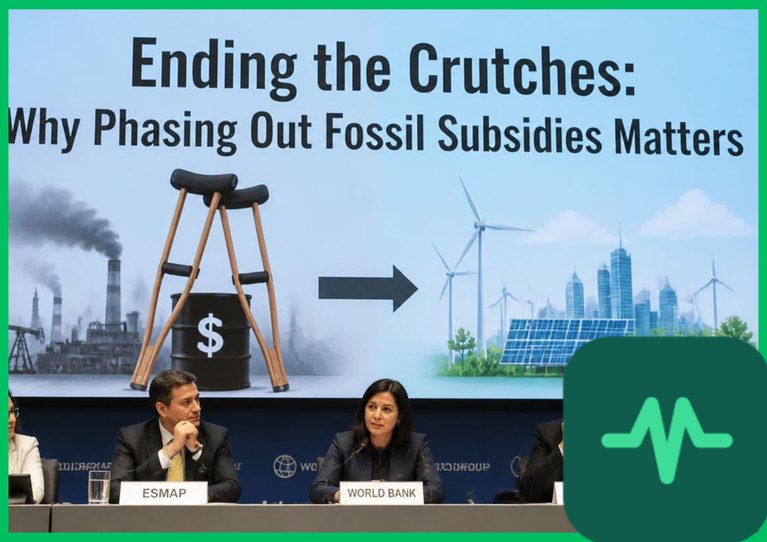
You hear leaders talk about investing in clean energy, building modern power grids, and protecting the atmosphere.
Then you look closer at the balance sheet.
Even as the world pours money into renewable power and sustainable technology, governments continue to inject massive financial support into oil, gas, and coal.
For decades, artificial financial props kept fossil fuels artificially cheap.
These consumption supports were originally designed to protect everyday consumers from volatile price spikes.
Over time, they turned into a heavy financial anchor dragging down global progress.
According to tracking data and economic analyses from the International Energy Agency (IEA), the International Monetary Fund (IMF), and academic economic research, keeping these financial crutches alive harms both our economies and our climate.
Phasing out inefficient fossil fuel subsidies is one of the most urgent economic and environmental imperatives of our time.
Here is why ending fossil fuel support matters and how reforming global market pricing unlocks a truly sustainable future.
The Hidden Trillion-Dollar Prop
To understand the scale of the problem, you have to look at the numbers.
According to IEA energy tracking reports, global consumption subsidies for fossil fuels regularly surge past USD 1 trillion during periods of market volatility.
Governments use public tax revenues to artificially lower the retail price of gasoline, diesel, natural gas, and electricity generated from coal.
On the surface, this looks like help for everyday people trying to pay their monthly utility bills.
In reality, broad untargeted subsidies fail to protect the most vulnerable populations.
The wealthy consume more energy, meaning they capture the vast majority of subsidy benefits.
Meanwhile, billions of public dollars that could have funded hospitals, schools, clean public transit, or residential energy-efficiency upgrades get burned away keeping fossil fuels artificially competitive.
Artificial price props distort the entire global energy market.
How Subsidies Block the Clean Energy Transition
Economic markets rely on transparent signals to function efficiently.
When a product carries its true environmental and production cost, consumers and corporations naturally gravitate toward cheaper, cleaner, more efficient alternatives.
Fossil fuel subsidies short-circuit that natural market feedback loop.
As academic economic studies and IEA policy assessments point out, artificially cheap oil and gas punish clean energy technologies.
Why would a freight company invest in expensive electric trucks or a manufacturer switch to electric arc furnaces when diesel and natural gas are propped up by government intervention?
Subsidies make polluting legacy systems look artificially affordable, slowing down the adoption of solar power, wind generation, battery storage, and energy efficiency upgrades.
They create an uneven playing field where clean technology has to fight uphill against state-supported pollution.
Re-Directing Funds Toward Real Solutions
Phasing out inefficient fossil fuel subsidies does not mean leaving vulnerable households out in the cold.
Reform must be smart, equitable, and carefully targeted.
Instead of spending trillions of dollars lowering the price of oil and gas for everyone—regardless of income—governments can redirect those massive public funds directly to the people who need assistance most.
Targeted cash transfers, direct utility vouchers, and grants for home insulation protect low-income families from energy poverty without distorting market economics.
Furthermore, redirecting even a fraction of former fossil subsidies toward clean energy deployment builds long-term resilience.
When public funds help finance heat pumps, rooftop solar, and building envelope sealing, households achieve permanent energy independence. Their utility bills drop forever, freeing them from the mercy of volatile global oil markets.
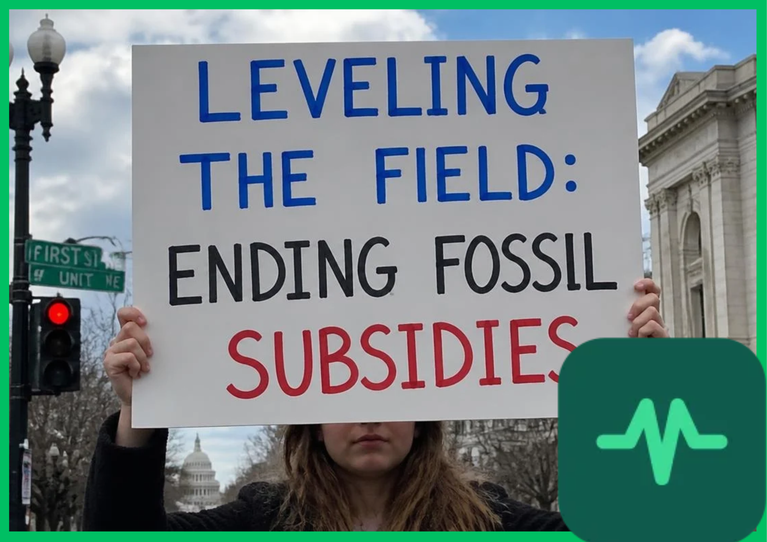
Leveling the Global Economic Playing Field
A fair, transparent global economy requires removing government distortion from core commodities.
When nations phase out fossil fuel supports, energy prices reflect true economic and environmental realities.
Investors gain the confidence required to pour trillions of dollars into clean infrastructure, secure in the knowledge that renewable assets compete on merit rather than policy bias.
Academic research confirms that subsidy reform reduces national debt burdens, accelerates industrial decarbonization, and curbs premature deaths caused by toxic local air pollution.
It aligns fiscal policy with planetary survival.
Stepping Into a Self-Sustaining Future
Removing the crutches of fossil fuel subsidies feels daunting, but it is a necessary step of maturity for our global society.
We cannot build a sustainable future on a foundation of artificial pollution props.
By dismantling inefficient subsidies, protecting vulnerable consumers through direct, targeted support, and reallocating public wealth into clean infrastructure, we create a thriving, self-sustaining energy economy.
It is time to let clean energy stand tall on its own merits, securing a prosperous, resilient planet for all.

Comments (0)
Login to leave a comment.
No comments yet. Be the first to share your thoughts!