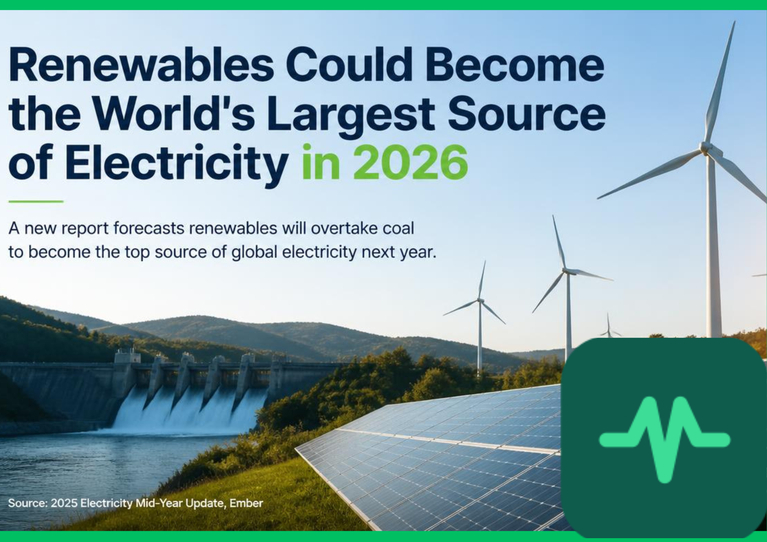
The International Energy Agency expects renewable electricity generation to grow by more than 8% in 2026. Renewable electricity generation is projected to rise from about 33% of the global share in 2025 to 37% by 2027. This change reflects years of heavy investment. Solar, wind, and hydropower all played a role.
2025 Was Already a Major Turning Point
In 2025, renewable electricity generation made up about 34% of the global total. That is up from 32% in 2024. It is up from just 23% a decade earlier. The pace of change keeps speeding up.
When nuclear power gets added in, low-emissions sources reached 43% of global electricity generation. That is the highest level in about five decades. Solar and wind mattered most here. Together, they produced around 17% of the world's electricity in 2025. Meanwhile, fossil-fuel generation actually declined slightly, even as overall demand kept growing.
Solar Is Changing the Pace of the Transition
Solar PV deserves special attention in this story. Solar generation increased by about 620 TWh in 2025. That was the largest year-on-year jump among all electricity technologies.
This matters because demand is shifting too. Data centers use more power now. So do air conditioners, electric vehicles, and industrial electrification. This creates a real race. How fast can demand grow? How fast can renewable electricity generation keep up? Right now, the data suggests renewables are winning a growing share of that race.
Why This Matters for Energy Markets
As renewable electricity generation takes up more of the grid, energy markets must adapt. Solar and wind behave differently than coal or gas plants. Their output shifts with the weather. This creates real demand for new tools.
Battery storage matters more now. So does flexible generation. Stronger transmission networks matter too. Interconnected grids help a lot. Demand-response technology and digital grid management round out the list. Growing renewable electricity generation is not just swapping one technology for another. It is building an entirely new market around power itself.
The Opportunity for Emerging Markets
This global shift also creates real opportunity for developing economies. Countries with strong sun or wind resources can boost their own electricity supply. They can also cut reliance on imported fuel.
Still, building capacity is only part of the job. Transmission networks matter. So does distribution infrastructure. Financing matters. Skilled workers matter. Good market design matters too. All of these shape whether renewable electricity generation actually reaches people reliably, especially in regions where access remains limited today.
The Risk of Looking Only at Capacity
Here is an easy mistake to make. Many reports focus only on how many gigawatts of solar or wind get installed. That number alone does not tell the full story.
Capacity does not equal electricity actually delivered to homes. A country can add huge amounts of renewable electricity generation and still face reliability problems. This happens if the grid cannot move or balance that power properly. The next stage of this transition needs to focus on whole systems. It cannot focus on individual technologies alone.
EcoGreenPulse View
Renewable electricity generation becoming the world's top power source would be a real milestone. Still, this should not be seen as the finish line. It is closer to a new beginning.
The first phase was about building renewable technology at scale. The next phase looks different. It is about weaving that technology into systems that can handle rising demand. These systems must stay reliable. They must stay affordable too.
This means batteries matter. Grids matter. Software matters. Flexible demand and storage technology matter too. All of these could become just as important as the solar panels and wind turbines themselves.
For readers watching this space, the key question is changing. It is no longer just "how much renewable electricity generation are we installing?" It is becoming something bigger: can our electricity systems actually use all of it well?
Source: International Energy Agency, Global Energy Review 2026 and Electricity 2026.
Comments (0)
Login to leave a comment.
No comments yet. Be the first to share your thoughts!