You step out of the cabin. Instead of reaching for a heavy charging cable, opening a dusty port, or fumbling with a frozen plug in winter weather, you simply walk away.
Your car rests quietly over a flat pad embedded in the concrete floor.
Invisible energy flows effortlessly through the air, silently replenishing your battery pack overnight.
For the vast majority of drivers, plugging in a vehicle becomes second nature. It remains an extra step, however—a physical reminder that electric transport still mimics the tethered habits of older fossil-fuel infrastructure.
What if electric vehicles never needed to be plugged in at all? What if highways and parking spaces refueled cars while they drove?
A quiet technological revolution is taking place in advanced engineering laboratories and test tracks around the world.
According to transport outlooks from the International Energy Agency (IEA), resource efficiency guidelines from the United Nations Environment Programme (UNEP), efficiency benchmarks from ENERGY STAR, and academic electrical engineering research, wireless electric vehicle charging is changing the horizon of mobility.
By utilizing inductive power transfer and dynamic roadway charging, we can keep electric vehicles charged continuously on the move.
Here is how wireless power transfer works, why dynamic highway charging eliminates range anxiety, and what challenges engineers must solve to electrify our roads.
The Tethered Limit of Modern Mobility
To understand why wireless charging represents such a powerful leap forward, you have to look at the practical friction of traditional EV ownership.
While public charging networks expand rapidly across the globe, drivers still face familiar frustrations.
Cables are heavy, dirty, and difficult to manage in bad weather. Public chargers occasionally suffer from vandalism or mechanical maintenance delays.
Furthermore, the physical necessity of stopping to recharge forces heavy-duty transport and long-distance commuters to factor downtime into every trip.
Battery packs must be built large enough to store hundreds of miles of range, adding substantial weight, consuming scarce lithium and cobalt resources, and driving up manufacturing costs.
If vehicles could charge continuously while moving at highway speeds, battery packs could shrink significantly.
Smaller batteries mean lighter vehicles, less raw material extraction, lower purchase costs, and absolute freedom from stationary charging wait times.
What Is Inductive Power Transfer?
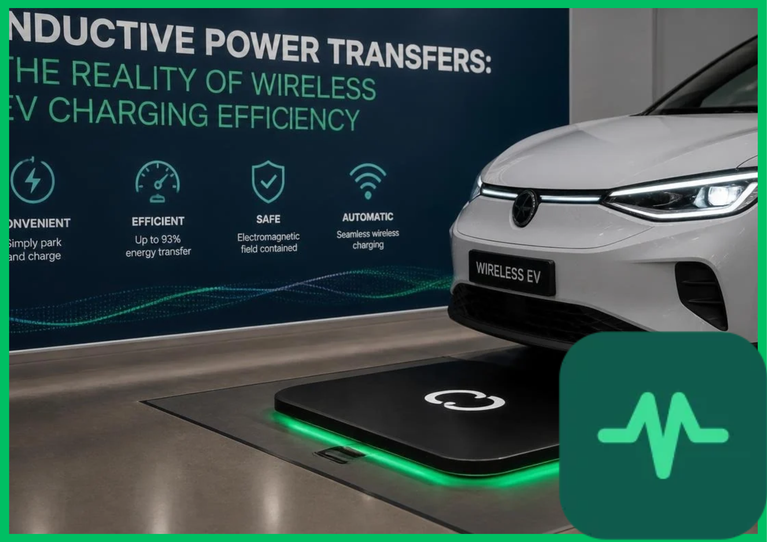
Wireless EV charging relies on a proven scientific principle known as inductive power transfer, or magnetic resonance coupling.
The physics behind the technology are elegant and straightforward.
A wireless charging system consists of two primary components: a transmitter coil embedded beneath the pavement or garage floor, and a receiver coil mounted securely on the underside of the electric vehicle.
When alternating electrical current flows through the underground transmitter coil, it generates an invisible, oscillating magnetic field.
As long as the vehicle's receiver coil sits within that magnetic field, energy transfers wirelessly through the air gap across the space between the road and the car chassis.
Inside the vehicle, a specialized power converter transforms that received magnetic energy back into smooth direct current (DC) electricity, safely filling the battery pack.
There are no exposed metal contacts, no physical wires, and zero risk of electrical shock, even in heavy rain or deep standing water.
Static Wireless Pads Versus Dynamic Highway Charging
Wireless charging generally operates in two distinct formats: static pads and dynamic systems.
1. Static Wireless Charging
Static chargers function much like traditional parking spaces or garage floors. A driver parks their car over a designated charging pad at a home garage, a grocery store parking lot, or a taxi waiting stand. The vehicle aligns automatically using smart sensors, and charging begins instantly without driver intervention. This approach eliminates garage clutter and makes daily EV top-ups completely effortless.
2. Dynamic Wireless Charging
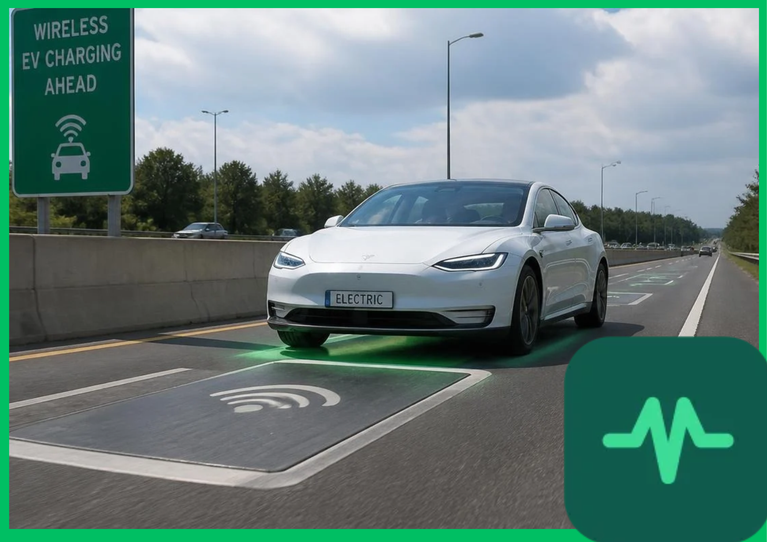
Dynamic charging is where the true transformation happens. Instead of stationary pads, engineers embed long strips of inductive transmitter coils directly beneath specific lanes of public asphalt. As an electric car or freight truck drives over the highway lane, it draws electricity wirelessly on the fly.
Academic electrical engineering research shows that dynamic highway charging allows vehicles to maintain a 100% state of charge while driving at standard highway speeds.
You drive across the country, and your battery never drains.
Overcoming Infrastructure and Efficiency Hurdles
If wireless power transfer offers such an alluring vision, why isn't every highway electrified today?
The transition faces steep engineering and economic hurdles.
The primary challenge is installation cost and infrastructure disruption. Tearing up thousands of miles of asphalt to bury heavy copper coils and high-frequency power electronics requires massive public investments and extensive construction planning.
Furthermore, energy transfer efficiency is a critical metric.
While stationary wireless systems achieve efficiency ratings of 90% to 93%—closely matching traditional plug-in chargers—dynamic highway systems lose some efficiency due to slight misalignments between fast-moving vehicles and embedded road coils.
Researchers and ENERGY STAR efficiency analysts continue optimizing coil geometries, shielding materials, and high-frequency inverter designs to close that efficiency gap.
Pilot projects deployed across test tracks in multiple nations prove the technology works reliably under real-world traffic loads. Scaling those corridors to national highway networks remains the final frontier.
Powering the Future of Frictionless Transport
Wireless EV charging proves that human ingenuity can remove friction from everyday technology.
We no longer have to accept that electric transport requires heavy cables and stationary waiting times.
By combining inductive power transfer, automated alignment, and dynamic roadway charging, we unlock a future where cars refuel themselves invisibly as they move.
UNEP resource efficiency frameworks highlight that shrinking battery sizes through continuous in-motion charging drastically reduces global mining pressures and material waste.
We step away from tethered routines, embracing a frictionless transit network powered entirely by clean electricity.
Through smart engineering and visionary infrastructure development, wireless charging anchors a truly seamless electric mobility future for our planet.

Comments (0)
Login to leave a comment.
No comments yet. Be the first to share your thoughts!