You check your watch, walk away to grab a coffee, and return twenty or thirty minutes later.
For everyday driving, that routine works fine. When you face a long cross-country trip, waiting for a battery to replenish can test your patience.
You find yourself wishing for a different reality. You want an electric car that refuels as fast as an old gas vehicle and travels 1,000 kilometers (approx. 620 miles) on a single charge without taking up extra space or adding heavy weight.
Traditional lithium-ion batteries brought us this far. They sparked a massive global revolution in clean transport.
They also carry inherent chemical limits.
They rely on volatile, flammable liquid electrolytes to shuttle electrical ions back and forth. Those liquids restrict how fast energy can move and cap how much power fits inside a given space.
A quiet transformation is happening inside advanced chemistry laboratories and clean-tech manufacturing plants.
According to transport outlooks from the International Energy Agency (IEA), resource efficiency frameworks from the United Nations Environment Programme (UNEP), efficiency benchmarks from ENERGY STAR, and academic materials research, solid-state EV batteries represent the next great frontier for electric mobility.
By swapping liquid chemicals for solid materials, next-generation cells promise to reshape global transport.
Here is how solid-state physics work, why fast-charging battery tech changes everything, and what challenges engineers must overcome to bring these revolutionary power packs to the open road.
The Flaw in Conventional Liquid Cells
To understand why solid-state technology matters so much, you have to look closely at what happens inside a standard lithium-ion battery.
A traditional battery cell contains a positive cathode, a negative anode, a porous plastic separator, and a liquid organic solvent acting as the electrolyte.
Lithium ions swim through that liquid solution every time you charge or discharge the battery.
That liquid system works well, but it has physical vulnerabilities.
Organic liquid electrolytes are flammable. If a battery suffers severe physical damage or internal short circuits, rapid overheating can lead to thermal runaway and fires.
Furthermore, liquid cells hit a strict chemical ceiling regarding energy density.
To squeeze more driving range into an electric car using standard liquid tech, manufacturers must build heavier, bulkier battery packs.
That extra weight works against vehicle efficiency.
We needed a completely new architectural approach.
What Is a Solid-State Battery?
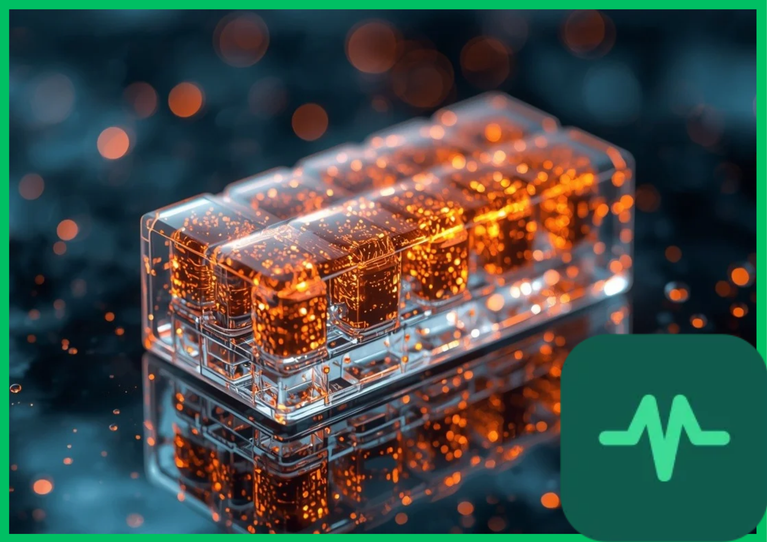
A solid-state battery replaces the volatile liquid electrolyte with a solid material—typically a specialized ceramic, glass, sulfide, or solid polymer compound.
This single substitution changes the entire physics of energy storage.
Instead of swimming through a flammable liquid, lithium ions travel directly through a stable solid lattice.
That solid barrier acts as both the ion conductor and the physical separator between the anode and cathode.
Because solid electrolytes are chemically stable and completely non-flammable, the risk of thermal runaway drops to zero.
You can puncture, crush, or overheat a solid-state cell without triggering a catastrophic fire.
Safety is just the beginning of the advantage.
Unlocking Massive Energy Density and Fast Charging
The true magic of solid-state architecture lies in what it allows engineers to change at the anode.
Conventional lithium-ion batteries use graphite anodes because liquid electrolytes cannot safely handle pure lithium metal.
Solid electrolytes, however, are strong enough to block lithium dendrites—microscopic metal fibers that traditionally cause short circuits.
This stability allows engineers to use pure lithium-metal anodes.
Lithium metal holds roughly ten times more energy per unit weight than traditional graphite.
Academic materials research and IEA technology assessments show that solid-state cells can achieve energy densities of 400 to 500+ watt-hours per kilogram, compared to 250 to 300 watt-hours for standard liquid cells.
In practical terms, an electric car equipped with a solid-state pack can travel 1,000 kilometers (approx. 620 miles) or more on a single charge without adding extra weight or taking up more physical space.
Furthermore, because solid structures tolerate rapid ionic movement, vehicles equipped with fast-charging battery tech can recharge from low capacity to near full in 10 to 15 minutes.
Overcoming Manufacturing and Interfacial Hurdles
If solid-state batteries are so superior, why are they not in every new car today?
The answer lies in the brutal realities of industrial manufacturing and materials engineering.
Building solid-state cells is remarkably difficult.
Unlike liquid electrolytes that flow easily into every microscopic pore of a battery cell during production, solid materials are rigid.
Keeping a solid electrolyte in perfect, uninterrupted contact with expanding and contracting electrodes across thousands of charge-discharge cycles is a massive scientific challenge.
If tiny gaps form at the interface, internal resistance spikes and performance drops.
Furthermore, manufacturing thin, defect-free solid layers at gigafactory scale requires entirely new industrial tooling, pristine dry-room environments, and expensive raw material processing.
While pilot production lines and vehicle prototype testing are accelerating across the globe, scaling affordable solid-state batteries for mass-market vehicles remains an ongoing engineering race.
Driving Toward an Advanced Energy Future
Solid-state batteries represent the holy grail of electrochemical research.
They bridge the gap between imagination and physical reality, pointing the way toward an era of ultra-safe, incredibly dense energy storage.
As academic researchers, material scientists, and industrial engineers refine production techniques, the transition from liquid to solid electrolytes moves closer to completion.
We are leaving behind the chemical limits of the past.
Through solid-state innovation, clean transport and energy storage are evolving into safer, lighter, and more powerful foundations for a sustainable global future.
Comments (0)
Login to leave a comment.
No comments yet. Be the first to share your thoughts!