The sun dips below the horizon, painting the sky in shades of deep orange and purple.
Parked right outside your front door is your electric vehicle.
It sits quietly, fully charged after your daily commute.
Inside your house, the lights are on, the refrigerator hums, and the air conditioner works hard to cool the rooms.
Across your neighborhood, thousands of families are returning home, turning on appliances, and pushing the local electrical grid to its absolute limit.
Historically, your car was a passive consumer of energy.
You plugged it in, it drank electricity from the grid, and it sat there as dead weight all night long.
Today, that relationship is turning completely upside down.
Beneath the floorboards of your car sits a massive lithium battery pack.
That battery holds enough stored electricity to power an average home for days.
What if your car did not just take power from the grid?
What if it could give power back when your community needs it most?
A quiet, brilliant technological shift is transforming parked cars into mobile power stations.
According to global energy reports from the International Energy Agency (IEA), resource protection frameworks from the United Nations Environment Programme (UNEP), efficiency benchmarks from ENERGY STAR, and academic smart grid research, vehicle-to-grid power transfer technology is changing our energy future.
By allowing electric vehicles to discharge stored energy back into homes and power grids, we turn everyday cars into active grid stabilizers.
Here is how bidirectional charging works, why two-way power flow changes household economics, and how mobile batteries secure our sustainable future.
The Hidden Power Plant Sitting in Your Driveway
To understand why vehicle-to-grid technology matters so much, you have to look at how personal vehicles spend their time.
Most cars sit parked and idle for 95% of their operational lifespan.
They sit in office parking lots during the day. They sit in home driveways all night long.
Inside every modern electric vehicle is a massive battery pack storing anywhere from 50 to 100 kilowatt-hours of electrical energy.
That is a staggering amount of power.
When millions of electric cars sit plugged into chargers overnight, they represent a colossal collective reservoir of stored energy.
Traditional power grids treated cars as a burden, worrying that millions of plug-in vehicles would overload transformers during evening peak hours.
Smart engineers looked at those parked cars and saw an incredible opportunity.
Instead of building expensive new fossil-fuel peaker plants to handle short evening demand spikes, why not tap into the batteries already parked in residential driveways?
That single realization birthed the concept of bidirectional energy flow.
What Is Vehicle-to-Grid Power Transfer Technology?
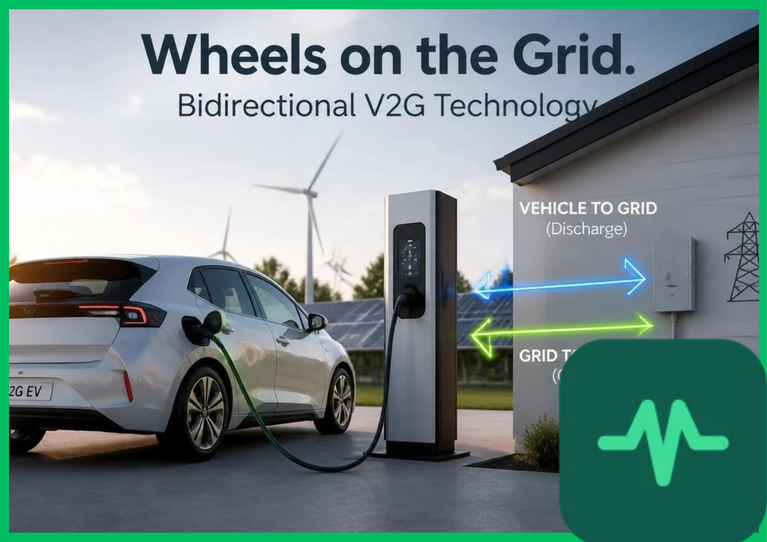
Vehicle-to-grid (V2G) power transfer technology is an advanced electrical system that allows electricity to flow in two directions between an electric vehicle's battery and a home or utility grid.
Traditional chargers work like a one-way street, flowing electricity from the wall outlet into the car.
A bidirectional V2G charger acts like a two-lane highway.
When electricity is cheap and clean—such as during a sunny midday when rooftop solar panels are flooding the grid—the car drinks power and charges up.
When the sun goes down, electricity demand spikes, and fossil-fuel power plants ramp up their output, the process reverses.
Your car sends clean electricity backward through the charger, powering your home appliances or feeding energy back into the local distribution grid.
You drive to work the next morning with a full battery, having helped keep your neighborhood lights on without burning a single drop of coal or gas.
The Science of Bidirectional Inverters and Power Conversion
How can a car battery send electricity backward through a charging cable safely without frying your home's electrical wiring?
It comes down to advanced power electronics and bidirectional inverter design.
Academic smart grid research shows that car batteries store direct current (DC) electricity, while home appliances and power grids run on alternating current (AC).
A bidirectional V2G system uses sophisticated semiconductor microchips and inverter hardware to convert DC battery power into synchronized AC power that matches the exact frequency and voltage of your local utility grid.
The system communicates with your home energy dashboard in milliseconds.
If a sudden summer storm knocks out local power lines, your car isolates your home from the main grid automatically, acting as an emergency backup generator that keeps your refrigerator running and your lights on.
According to ENERGY STAR and international appliance efficiency evaluations, modern bidirectional chargers achieve high conversion efficiencies, losing less than 5% of energy during the two-way transfer process.
Environmental Integrity and Renewable Grid Stabilization
The benefits of vehicle-to-grid technology extend far beyond emergency backup or individual home savings.
They provide the ultimate balancing mechanism for high-penetration renewable energy grids.
As cities build more wind and solar farms, grid operators face the daily challenge of matching supply and demand when weather conditions change.
Millions of electric vehicles parked worldwide acting as a decentralized battery fleet can absorb surplus wind energy during windy nights and discharge it during calm evenings.
According to UNEP resource circularity frameworks, utilizing existing EV batteries for grid stabilization avoids the need to manufacture thousands of dedicated stationary storage containers, saving raw mineral resources.
According to IEA clean energy roadmaps, V2G integration accelerates the complete retirement of fossil-fuel peaker plants by providing flexible, rapid-response capacity wherever cars are parked.
Overcoming Infrastructure and Battery Health Realties
Deploying V2G technology on a global scale involves navigating real-world operational questions.
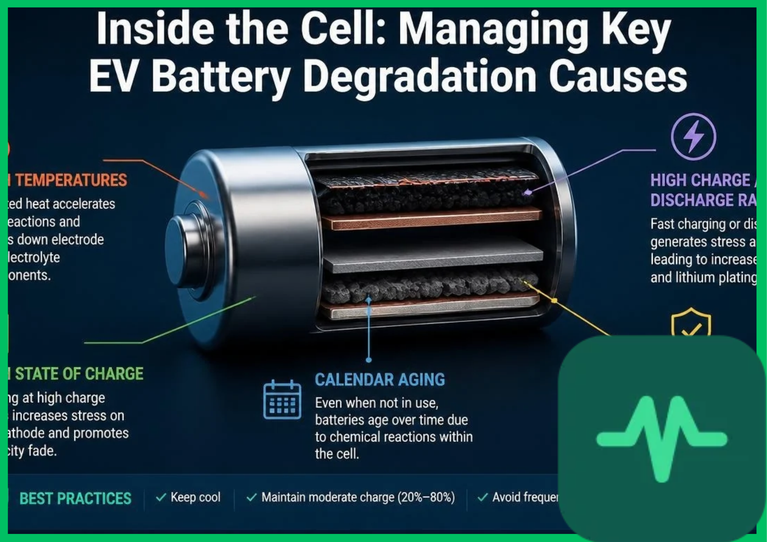
Early critics worried that discharging car batteries to power homes might accelerate battery wear and tear.
Academic electrochemistry studies show that intelligent V2G software manages charge and discharge thresholds carefully, ensuring that vehicle batteries experience negligible degradation while earning financial credits for their owners.
Automotive manufacturers are updating vehicle warranties to support bidirectional charging, while international electrical standards bodies harmonize safety protocols to ensure seamless plug-and-play compatibility across all global markets.
As smart chargers become standard equipment in homes and workplaces, the transition accelerates.
Wheels on the Grid Toward a Sustainable Future
Vehicle-to-grid power transfer technology proves that our transportation and energy systems are no longer separate silos.
We no longer have to accept that electric cars are just passive commuters sitting idle in our driveways.
By turning parked vehicles into mobile energy storage units, we build a resilient, flexible, and interconnected clean power grid.
We step away from fossil-fuel dependence, embracing a smart, cooperative, and enduring standard of energy management.
Through brilliant electrical engineering, bidirectional power electronics, and deep respect for our planetary climate, wheels on the grid secure a clean, bright, and sustainable future for our world.
Comments (0)
Login to leave a comment.
No comments yet. Be the first to share your thoughts!