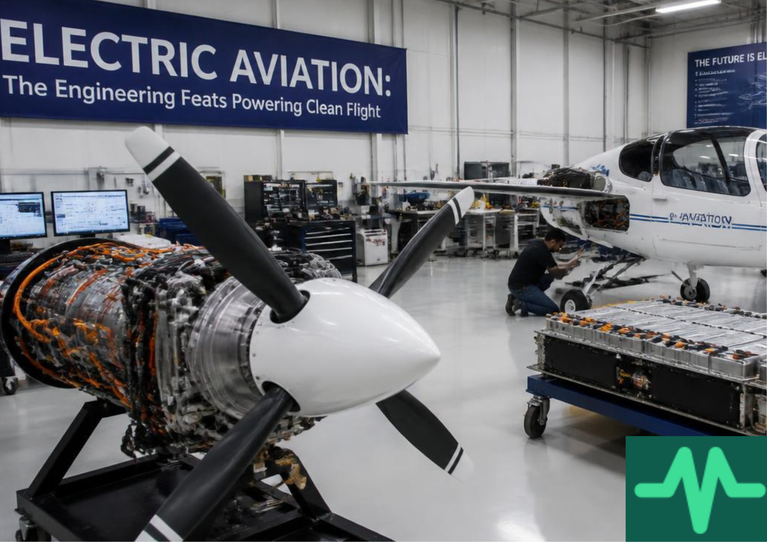
Cars went electric fairly easily. Batteries got better. Motors got smaller. Charging networks grew. Planes face a much harder challenge. Weight matters more in the sky than almost anywhere else. Every extra pound makes takeoff harder and flight less efficient.
This is exactly why electric aviation took longer to get moving. Batteries are heavy. Jet fuel is not. In this guide, we will explore how electric aviation actually works. We will look at the clever motor designs making it possible. We will also look at where this technology is already taking off, quite literally. By the end, you will understand why so many engineers feel genuinely excited about clean flight.
Why Flying Is So Hard to Electrify
Let's start with the core problem. Jet fuel packs an enormous amount of energy into very little weight. Batteries simply cannot match this yet. In fact, jet fuel holds roughly forty times more energy per pound than today's best lithium-ion batteries.
Think about what this means for a big commercial plane. To carry enough battery power for a full-size airliner, the batteries alone would weigh far too much. The plane would never even leave the runway. This is the harsh physical wall electric aviation has faced from the very beginning.
Cars can carry heavy batteries without much trouble. The road holds the weight. The sky offers no such help. Every ounce matters when you are trying to lift something off the ground and keep it there. This single fact shaped the entire direction of electric aviation research for years.
Why Engineers Did Not Give Up
Faced with this weight problem, engineers had two real choices. They could wait for perfect batteries to arrive someday. Or they could shrink their ambitions and solve a smaller, more realistic problem first. Thankfully, most chose the second path.
Instead of trying to electrify massive international jets right away, engineers turned their attention to smaller planes. Short regional flights. Small urban air taxis. These smaller targets needed far less energy, making electric aviation actually achievable with today's battery technology.
This shift in thinking mattered enormously. Electric aviation did not need to solve every flying challenge at once. It just needed to solve the right challenge first, one that current technology could actually handle.
The Motor Breakthrough Making This Possible
Batteries were not the only hurdle standing in the way. Motors mattered too. Traditional electric motors, the kind found in electric cars, are simply too heavy and bulky for flight. Every bit of extra motor weight eats directly into how much battery power a plane can carry instead.
This is where a clever redesign made a real difference. Engineers turned to something called axial-flux motors. Regular motors push magnetic force sideways, across the shaft. Axial-flux motors push that force in a different direction, running parallel along the shaft instead.
This change might sound small, but it makes a huge difference. Axial-flux motors can be built as a flat, thin disc instead of a bulky cylinder. This design cuts the motor's size by up to half. It also slashes its weight significantly, all while still delivering strong, immediate power.
Why This Motor Design Matters So Much
For electric aviation, every saved pound counts twice. A lighter motor means more room for batteries. More battery capacity means longer range and more usable power. This ripple effect makes the axial-flux breakthrough one of the most important pieces of the entire electric aviation puzzle.
These compact motors also deliver excellent torque. This matters enormously for aircraft, since propellers and rotors need strong, immediate power to lift a plane off the ground and keep it steady in the air. Axial-flux motors handle this demand impressively well, all while staying remarkably light.
Without this motor innovation, electric aviation might have stalled out entirely, stuck waiting for battery technology to somehow catch up to jet fuel's energy density. Instead, smarter motor design helped close much of that gap on its own.
Starting Small: Why Regional Flights Make Sense
Given the current limits of battery weight, electric aviation developers are not chasing long international flights just yet. Instead, they are targeting short regional routes, typically under 250 miles.
This might sound like a modest goal, but it carries real impact. Short-hop flights actually make up nearly half of all commercial flight departures worldwide. Cleaning up this huge slice of the aviation industry represents a genuinely meaningful step toward reducing global flight emissions.
Planes built specifically for electric aviation, like the Eviation Alice, reflect this focused strategy. These aircraft are designed from scratch around electric propulsion, rather than simply swapping batteries into an old airplane design. This fresh approach allows engineers to optimize every part of the aircraft specifically for electric flight.
Rethinking the Whole Aircraft, Not Just the Engine
One of the most exciting parts of electric aviation involves rethinking aircraft design completely. Instead of placing one large engine at the front or under each wing, many electric aircraft spread several smaller motors along the wing's edge instead.
This distributed motor layout offers real aerodynamic benefits. It improves airflow across the wing surface, boosting lift efficiency in ways a traditional single-engine design simply cannot match. This clever redesign helps electric aviation squeeze every possible bit of performance out of limited battery power.
This kind of complete redesign feels genuinely refreshing. Rather than forcing old airplane designs to awkwardly fit new electric technology, engineers are building electric aviation aircraft the right way from the very beginning.
The Rise of Urban Air Taxis
Beyond regional flights, electric aviation is also fueling an entirely new category of transportation: electric vertical takeoff and landing aircraft, often called eVTOLs. These are essentially clean, quiet air taxis, designed to move people across busy cities without ever touching gridlocked streets below.
Picture skipping a long, frustrating commute by hopping into a small aircraft instead, one that lifts straight up from a rooftop pad and flies directly to your destination. This vision feels almost like science fiction, yet electric aviation is actively bringing it closer to reality right now.
eVTOLs rely heavily on the same lightweight motor and battery advances driving regional electric planes. Their vertical takeoff ability adds extra engineering complexity, but the core technology remains closely tied to the broader progress happening across electric aviation as a whole.
Safety: A Non-Negotiable Priority
Whenever new technology touches aviation, safety must come first, without exception. Electric aviation is no different. Battery fires, though rare, represent a genuine concern that engineers have worked hard to address directly.
To handle this risk, aircraft designers are building thermal runaway containment structures directly into aircraft wings. This means that if a battery cell were ever to overheat dangerously, the surrounding structure is specifically engineered to contain that heat safely, protecting the rest of the aircraft and its passengers.
This kind of careful, built-in safety engineering reflects just how seriously the aviation industry treats passenger safety. Electric aviation cannot simply borrow safety standards from electric cars. It must meet the extraordinarily high bar aviation has always demanded, and engineers are rising to meet that challenge directly.
Why This Technology Feels So Exciting
There is something genuinely thrilling about watching an industry as massive and stubborn as aviation start to shift toward clean power. For years, flying felt like one of the hardest emissions problems to solve. Electric aviation proves real progress is finally possible.
This matters enormously for the planet. Aviation emissions occur high in the atmosphere, where their climate impact can be especially significant. Every regional flight successfully electrified represents real, measurable progress in the fight against climate change.
For passengers, electric aviation also promises real everyday benefits. Quieter cabins. Smoother rides. Lower operating costs, which could eventually translate into cheaper tickets for short regional trips. This combination of environmental and practical benefits helps explain why so many people feel genuinely hopeful about this technology's future.
The Challenges Still Ahead
It would be dishonest to pretend electric aviation has already solved every problem. Battery energy density remains the single biggest hurdle standing between today's technology and truly long-range electric flight.
Charging infrastructure at airports also needs significant development. Electric planes need reliable, fast charging systems built specifically for aviation use, something that barely exists today at most regional airports. Building out this infrastructure will take real investment and coordinated planning across the industry.
Regulatory approval adds another layer of complexity too. Aviation authorities move carefully and deliberately when certifying new aircraft technology, and rightly so, given the safety stakes involved. This careful process takes time, even when the underlying technology performs well in testing.
What the Future Holds for Electric Aviation
Looking ahead, the outlook for electric aviation appears genuinely promising. As battery technology continues improving steadily, the range and capability of electric aircraft should keep expanding right alongside it.
Motor technology will likely keep advancing too, building on the success of axial-flux designs to squeeze out even more efficiency and power in the years ahead. Combined with smarter aerodynamic designs, these improvements should help electric aviation gradually take on longer and more demanding routes over time.
Infrastructure investment is also expected to grow, as airports and regulators recognize the genuine momentum building behind electric aviation. Each successful regional route and eVTOL demonstration adds real credibility, helping pave the way for wider adoption across the broader aviation industry.
Common Questions About Electric Aviation
Why can't electric aviation power large international flights yet? Current batteries are far too heavy compared to jet fuel's energy density, making long-haul electric flight impractical with today's technology.
What makes axial-flux motors so important for electric aviation? They are significantly lighter and more compact than traditional motors, freeing up more weight capacity for batteries while still delivering strong power.
Are eVTOL air taxis part of electric aviation? Yes. eVTOLs rely on the same core motor and battery technology driving regional electric planes, adapted specifically for vertical takeoff and urban travel.
How is safety being addressed in electric aviation design? Engineers are building thermal containment structures directly into aircraft wings to safely manage any potential battery overheating risks.
What This Means for Airlines Financially
Beyond the environmental story, electric aviation carries real financial appeal for regional airlines too. Electric motors have far fewer moving parts than traditional jet engines, which typically means lower maintenance costs over time. Fewer parts breaking down translates into fewer expensive repairs and less aircraft downtime.
Fuel costs also shift dramatically with electric aviation. Electricity generally costs less per mile than jet fuel, especially as more renewable power comes online across the grid. For airlines operating short regional routes, this cost difference could add up significantly over thousands of flights each year.
Airlines are watching these numbers closely, recognizing that electric aviation could eventually offer a genuine competitive advantage on short routes. Lower operating costs could allow airlines to offer more affordable regional tickets, potentially making short-haul flying more accessible for everyday travelers. This financial incentive, layered on top of the environmental benefits, helps explain why so many airlines and investors are paying close attention to electric aviation right now, rather than dismissing it as a purely idealistic experiment.
Final Thoughts
Electric aviation represents one of the most exciting engineering challenges of our time, tackling a problem that once felt nearly impossible to solve. By reimagining motors, batteries, and entire aircraft designs, engineers are proving that clean flight is genuinely achievable, at least for the routes that matter most right now.
Real challenges remain, particularly around battery range and charging infrastructure. Yet these feel like solvable engineering problems, not permanent roadblocks. Just as early electric cars once faced skepticism before becoming common on our roads, electric aviation is steadily working through its own growing pains today.
As battery and motor technology continue advancing, expect electric aviation to expand its reach, covering more regional routes and welcoming more eVTOL air taxis into busy city skies. This technology offers something the aviation industry has needed for years: a genuine path toward cleaner, quieter flight.
In the end, electric aviation reminds us that even the toughest transportation challenges can find real solutions with enough creativity and persistence. The sky, once ruled entirely by burning fuel, is finally starting to welcome cleaner wings.


Comments (0)
Login to leave a comment.
No comments yet. Be the first to share your thoughts!