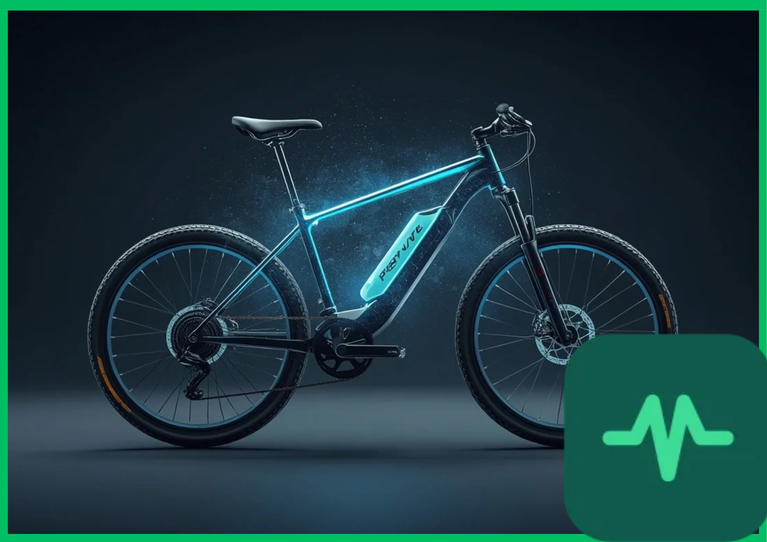
Lithium-Ion Cell Degradation Mechanisms and SEI Layer Growth
The degradation of e-bike battery cells—predominantly lithium nickel manganese cobalt oxide ( , or NMC) and lithium iron phosphate (
 , or LFP) chemistries—stems from multiple parasitic side reactions occurring simultaneously at the anode and cathode interfaces.
The primary driver of capacity loss during early operational cycles is the continuous growth of the solid-electrolyte interphase (SEI) layer on the graphite anode surface. During initial charging cycles, electrolyte solvents reduce electrochemically at the graphite surface, forming a passivating SEI film composed of lithium carbonate ( ), lithium fluoride (
 ), and alkyl carbonates. While a stable SEI layer is necessary to prevent continuous electrolyte decomposition, ongoing mechanical expansion and contraction of graphite particles during intercalation and de-intercalation of lithium ions (
 ) cracks the SEI film. Fresh graphite surfaces are exposed to the liquid electrolyte, consuming active lithium ions irreversibly and escalating internal cell resistance (
 ).
At high states of charge, structural degradation accelerates at the transition metal oxide cathode. High positive potentials induce oxygen evolution, transition metal dissolution (such as manganese ions dissolving into the electrolyte), and micro-cracking along primary and secondary crystal grain boundaries. These dissolved transition metal ions migrate across the separator membrane and deposit onto the negative anode, catalyzing further SEI decomposition and accelerating total capacity fade.
State of Charge (SoC) Management and Electrochemical Stress
State of charge (SoC) management plays a vital role in slowing down calendar aging and electrochemical stress. Operating or storing lithium-ion cells at extreme states of charge—either fully charged at 100% SoC or fully depleted near 0% SoC—creates severe chemical stress gradients within the electrode crystal lattices.
When a battery cell is charged to its maximum upper voltage limit (typically  per cell for NMC chemistry), the chemical activity of lithium ions inside the delithiated cathode reaches extreme levels. This high potential accelerates electrolyte oxidation and promotes lithium plating on the graphite anode surface, particularly during high-current charging in cold ambient conditions. Lithium plating occurs when lithium ions reduce into metallic lithium dendrites rather than intercalating into the graphite lattice layer gaps, increasing internal short-circuit risks and permanently depleting active cyclable lithium inventory.
To achieve optimal e-bike battery life span optimization, advanced battery management systems (BMS) restrict operating windows. Limiting maximum charging voltage to  per cell (corresponding to approximately 80% to 85% SoC) and avoiding deep discharges below 20% SoC reduces thermodynamic stress, extending cycle life by 50% to 100% compared to full 0% to 100% cycling regimes.
Thermal Battery Stress and Arrhenius Kinetics
Thermal environment represents an external physical parameter governing battery degradation rates. Battery aging processes follow Arrhenius chemical reaction kinetics, where degradation rates double for every  (
 ) rise in operating temperature.
The optimal operating temperature window for lithium-ion e-bike batteries ranges between  and
 (
 to
 ). Operating or charging battery packs at elevated temperatures exceeding
 (
 ) accelerates parasitic side reactions, electrolyte decomposition, and separator shrinkage. Conversely, operating at sub-zero temperatures below
 (
 ) dramatically increases internal ionic resistance and fluid viscosity, precipitating lithium plating during regenerative braking or high-torque hill climbing.
Technical Data Specifications of E-Bike Battery Parameters
| Technical Parameter | Engineering Specification Range |
|---|---|
| Nominal Operating Temperature |  to  (  to  ) |
| Critical High Temperature Limit | Above  (  ) (accelerates Arrhenius aging) |
| Cell Upper Voltage Limit (NMC) |  to  per cell max charge |
| Cell Cutoff Voltage (Discharge) |  to  per cell lower limit |
| Optimal Storage State of Charge | 40% to 60% SoC at  to  (  to  ) |
| Standard Cycle Life (80% SoH) | 500 to 1,000 equivalent full cycles |
Coulomb Efficiency Metrics and State of Health (SoH) Tracking
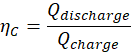
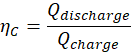
Quantifying battery degradation in real time requires precise tracking of coulomb efficiency (CE) and state of health (SoH). Coulomb efficiency is defined as the ratio of total extracted discharge capacity to total inserted charge capacity during a single complete cycle:
High-performance lithium-ion cells exhibit initial coulomb efficiencies exceeding 99.0% during early cycles, rising above 99.9% in stable operating ranges. A low coulomb efficiency—indicating that a fraction of charge is consumed by side reactions rather than reversible lithium intercalation—serves as an early diagnostic indicator of rapid capacity fade.
Battery management systems monitor state of health (SoH) by combining coulomb counting algorithms with electrochemical impedance spectroscopy (EIS). By injecting high-frequency alternating current test signals into the battery terminals, the BMS measures internal resistance and polarization impedance ( ). As degradation accumulates via SEI thickening and lithium inventory loss, internal resistance increases, signaling advanced aging and reduced peak power delivery capability.
Preventative Engineering Protocols for Battery Longevity
Implementing structured preventative engineering protocols preserves energy storage assets across multi-year operational lifespans. Storing e-bike battery packs for extended periods—such as during winter months—requires maintaining a partial state of charge between 40% and 60% in a temperature-controlled environment ranging from  to
 (
 to
 ). Storing packs at 100% SoC accelerates parasitic SEI growth, while storing at 0% SoC risks dropping below critical voltage thresholds due to self-discharge, triggering permanent low-voltage lockout by the BMS safety circuit.
Furthermore, utilizing smart chargers with adjustable current limits protects cells from thermal stress. Charging at moderate rates ( to
 current rates) minimizes internal Joule heating (
 losses) compared to ultra-fast charging protocols. As demonstrated in energy storage life-cycle assessments published by academic research consortia, adhering to strict thermal and voltage management protocols extends total battery operational longevity, reducing raw material consumption and supporting sustainable global micro-mobility infrastructure.




Comments (0)
Login to leave a comment.
No comments yet. Be the first to share your thoughts!