You rest your foot on the pedal and push down.
Suddenly, a quiet hum fills the air. A surge of electric power kicks in behind you, gently lifting you forward down the street.
You feel like you have superpowers.
For a brief moment, you wonder how the machine knew exactly when you wanted to move.
How did a bicycle figure out your intentions?
The secret lies hidden inside the bottom bracket, right where your pedals connect to the frame.
Electric bikes changed how millions of people commute, run errands, and explore their neighborhoods.
They turn grueling uphill climbs into effortless joyrides.
Yet not all electric bikes ride the same way.
If you test two different models, one might feel jerky and unpredictable, lunging forward whenever your feet spin.
Another might feel completely natural, matching your exact leg strength as if the motor were an extension of your own muscles.
The difference comes down to the brains of the bicycle.
According to global sustainable transport reports from the International Energy Agency (IEA), resource governance frameworks from the United Nations Environment Programme (UNEP), efficiency benchmarks from ENERGY STAR, and academic transport research, choosing the right sensing technology transforms how humans experience mobility.
By understanding how electric bike pedal assist systems read your movements, you can find a ride that feels alive.
Here is how motor response sensors work, why your pedaling style changes battery efficiency, and how sensor technology shapes the future of personal transit.
The Jerky Lurch of Basic Electric Bikes
To understand why sensor technology matters so much, you have to look at early-generation electric bicycles.
When e-bikes first entered the mainstream market, many manufacturers used the simplest possible method to control the motor.
They installed a basic rotation counter.
When your feet spun the cranks, magnets on the chainring triggered a sensor.
The motor received a binary command.
Either it was off, or it was pushed to maximum power.
That design created a frustrating riding experience.
You would start pedaling casually, and a split second later, the motor would kick in violently, shooting you forward at 25 km/h or 15 mph before you were ready.
When you stopped pedaling to navigate a tight corner, the motor kept spinning for another full rotation, creating a dangerous lag.
Skeptics argued that electric bikes were clumsy toys that stripped away the pure human joy of cycling.
Engineers and bicycle designers refused to accept that limitation.
They realized that if electric bikes were going to replace cars for daily commuting, they had to respond to human muscle with absolute grace.
What Is a Cadence Sensor?
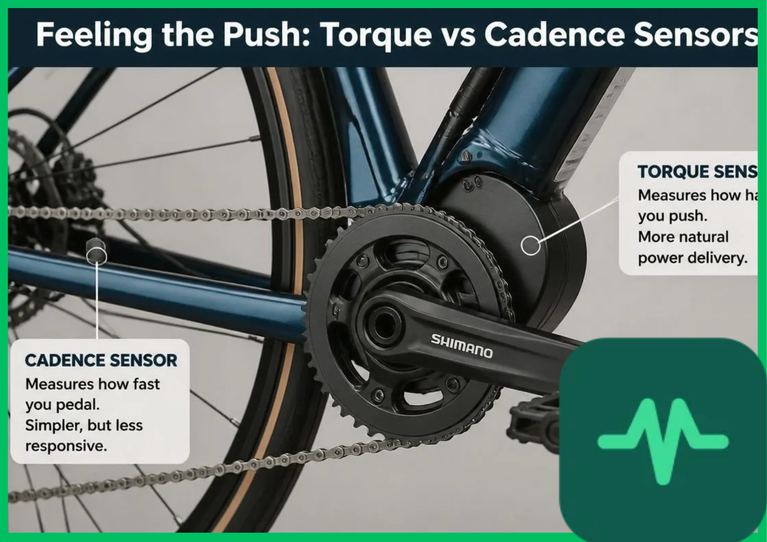
A cadence sensor is an electronic rotation detector mounted near the pedal cranks of an electric bike that measures how fast you are spinning your pedals, signaling the motor to activate whenever the cranks turn.
It does not care how hard you push.
It only cares whether your feet are moving in a circle.
If you spin your legs lazily with zero resistance, the motor still delivers full power.
That makes cadence systems feel less like a bicycle and more like an electric scooter with pedals attached.
Yet cadence sensors have one major advantage.
They are simple, rugged, and inexpensive.
Budget-friendly electric bikes rely on cadence setups to keep purchase prices low, making clean transport accessible to riders around the world.
When you want a reliable commuter bike for flat city streets and care more about upfront cost than refined handling, a cadence system gets the job done.
What Is a Torque Sensor?
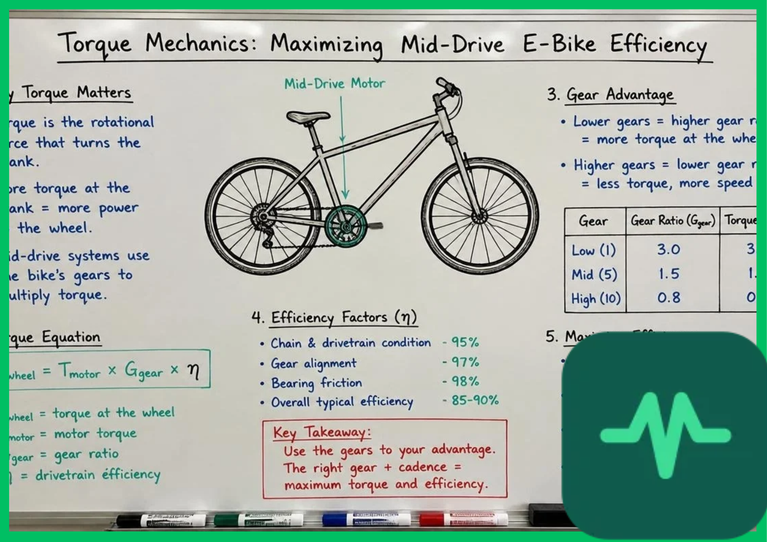
A torque sensor is a precision strain gauge integrated into the bicycle drivetrain that measures the exact physical force you apply to the pedals, delivering proportional motor power that mirrors your human muscle effort in real time.
When you push down hard to climb a steep hill, the sensor detects that heavy load instantly.
The motor responds with deep, powerful assistance.
When you ease off your pressure to cruise on a flat path, the motor dials back its output immediately.
There is zero lag. There is no sudden lurching.
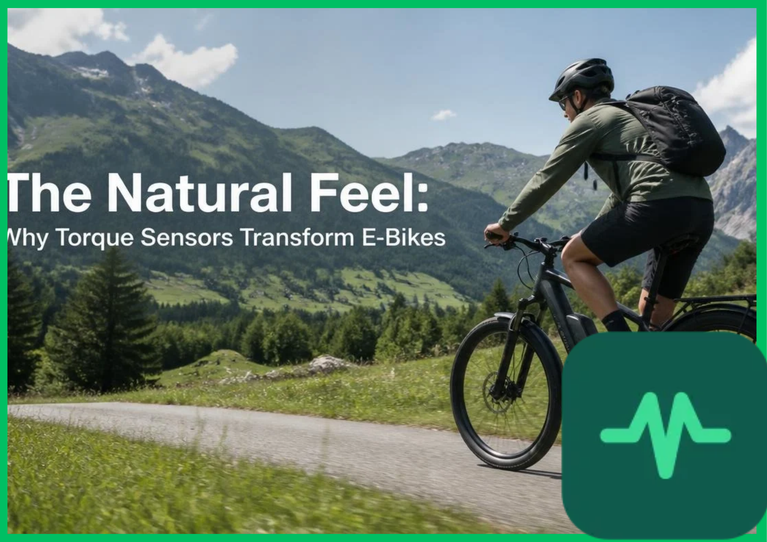
The bicycle reads your physical effort and amplifies it smoothly, creating a natural riding feel e-bikes are famous for.
It feels as though you suddenly gained Olympic-level leg strength.
You remain in complete control of the machine at every single second of the journey.
The Science of Motor Response and Battery Efficiency
How does measuring pedal pressure change the battery range and overall energy efficiency of an electric bicycle?
It comes down to human-machine collaboration and electrical load management.
Academic transport research shows that torque-sensing systems draw significantly less electrical energy from the battery pack during casual riding.
Because the motor only supplies power when you actually push hard, it avoids wasting electricity when you are just coasting or spinning your legs lightly.
By encouraging efficient e-bike pedaling, torque systems extend battery range by up to 20% to 30% per charge compared to aggressive cadence motors running at fixed output levels.
According to ENERGY STAR and international appliance efficiency evaluations, precise electronic motor controllers reduce power conversion losses by regulating electrical current smoothly across varying terrain.
Every watt of battery energy goes directly toward moving you forward.
Environmental Integrity and Global Accessibility
The benefits of advanced motor response sensors extend far beyond personal comfort or extended battery range.
They encourage millions of everyday citizens to leave their gas-guzzling cars behind.
According to UNEP resource circularity frameworks, shifting urban commutes from private automobiles to electric bicycles slashes city air pollution, reduces traffic congestion, and cuts greenhouse gas emissions dramatically.
When an e-bike feels natural, safe, and intuitive to ride, people of all ages and fitness levels feel confident using it for daily transport.
According to IEA clean transport roadmaps, expanding lightweight electric mobility is an essential pillar to decarbonize urban transportation worldwide.
When human power and clean electricity work together seamlessly, sustainable travel becomes a joy rather than a chore.
Choosing Your Ride
Deciding between a torque sensor vs cadence sensor e-bike comes down to how you ride and what you value most.
If you want an affordable, straightforward commuter for flat roads where you can spin your pedals casually without exerting heavy force, a cadence sensor offers reliable utility at a lower price point.
If you crave responsive handling, smooth hill climbing, intuitive control, and maximum battery efficiency for varied terrain, investing in a torque sensor changes everything.
As manufacturing techniques improve and electronic components become more refined, high-end sensor technology is trickling down into accessible bicycle models across the globe.
Feeling the Push Toward a Sustainable Future
Electric bicycles prove that human-scale transport can be both thrilling and environmentally responsible.
We no longer have to accept that getting around our cities requires burning fossil fuels or wrestling with clumsy machinery.
By designing responsive motor sensors that honor human effort, we bridge the gap between muscle power and clean electricity.
We step away from clumsy transport, embracing a smart, intuitive, and enduring standard of personal mobility.
Through brilliant electrical engineering, rigorous academic research, and a deep respect for our shared environment, feeling the push secures a clean, active, and sustainable future for every traveler on Earth.

Comments (0)
Login to leave a comment.
No comments yet. Be the first to share your thoughts!