You grip the handlebars, push your foot against the pedal, and feel a sudden surge of smooth power push you forward.
Hills flatten out. Headwinds disappear.
An electric bike transforms your relationship with travel. It turns a grueling uphill climb into an effortless cruise.
When you start shopping for an e-bike, you run into a major technical choice.
Where should the motor live?
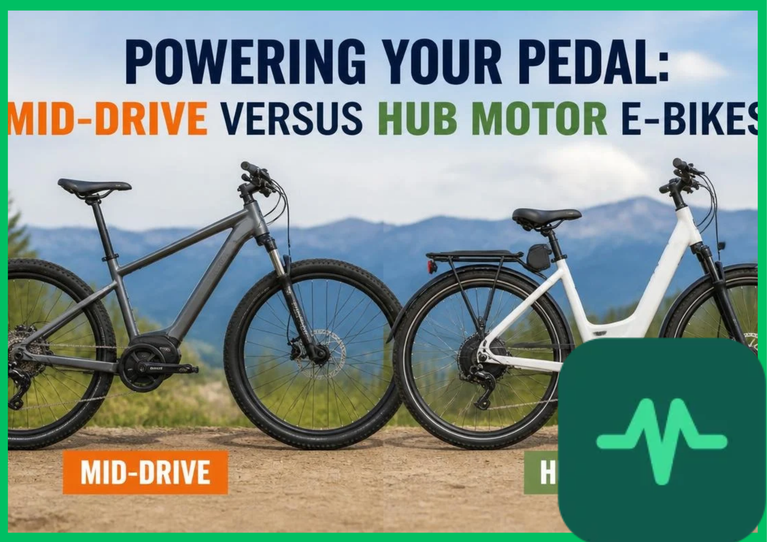
Some electric bikes hide a small motor inside the center of the wheel. Others place a compact motor right between your pedals.
That single design choice changes how the bike feels, how it climbs steep hills, and how long your battery lasts on a single charge.
Choosing the right setup matters.
According to global clean transport reports from the International Energy Agency (IEA), resource efficiency guidelines from the United Nations Environment Programme (UNEP), appliance efficiency benchmarks from ENERGY STAR, and academic drivetrain research, understanding motor mechanics helps you find the perfect ride.
By comparing how mid-drive and hub motor e-bikes operate, you can choose a machine that matches your cycling style and terrain.
Here is how electric bicycle motor types work, why torque-sensing mid-drives conquer steep hills, and how drivetrain efficiency shapes the future of personal transport.
The Two Worlds of E-Bike Motors
To understand the difference between these two systems, you have to look at where the physical power enters your drivetrain.
An electric bicycle needs three core elements to assist your pedal stroke: a battery, a controller, and an electric motor.
How that motor delivers power to your wheels splits the market into two distinct design philosophies.
Hub motors live directly inside the center of either the front or rear wheel.
Mid-drive motors sit snugly down at the bottom bracket of the frame, right between your cranks where your pedals meet the bike.
Both systems give you electric assistance. Both systems use the same battery pack.
The physical experience of riding them, however, feels completely different.
To choose the right bike, you need to look at how each system handles power, weight, and mechanics.
Hub Motors: Simple, Direct, and Affordable
Hub motor e-bikes represent the traditional entry point for electric cycling.
If you look at the rear wheel of a hub-drive bike, you see a slightly enlarged metal casing nestled in the center hub.
That casing houses a compact electric motor.
When you pedal, the motor spins the wheel directly, pushing you forward independent of your bicycle chain.
The mechanics are wonderfully simple.
Because the motor applies force straight to the wheel, your chain and gears experience zero extra tension from the motor's power.
That simplicity keeps manufacturing costs low, making hub motor e-bikes affordable for everyday commuters.
Hub motors also excel on flat city streets. You press a throttle or turn the pedals, and the bike glides forward smoothly with a steady, scooter-like acceleration.
When you hit a steep, challenging hill, however, hub motors reveal their physical limits.
Mid-Drive Motors: Balanced Power and Mechanical Synergy
Mid-drive motors take a completely different approach to propulsion.
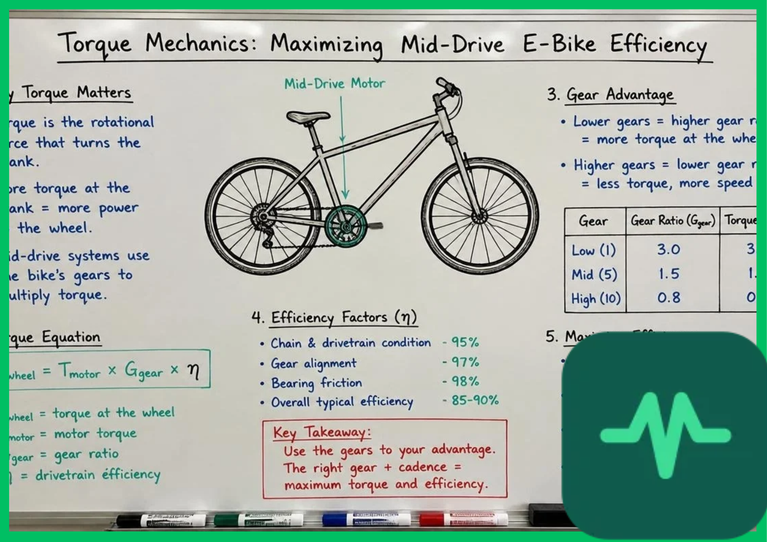
Instead of pushing the wheel directly, a mid-drive motor applies power straight to your crankset—the very cranks your feet push every time you pedal.
When you put pressure on the pedals, the mid-drive motor amplifies your human effort before that power flows through your bicycle chain, rear cassette, and gears.
That synergy changes everything.
Because the motor utilizes your bike's existing gear ratios, it can shift gears just like you do.
If you approach a steep mountain incline, you drop your bike into an easy climbing gear. The mid-drive motor spins at its optimal, high-efficiency RPM while turning the rear wheel slowly with immense twisting force.
Academic drivetrain studies show that mid-drive systems maintain superior hill-climbing e-bike performance without overheating or wasting battery energy.
Furthermore, because the motor sits low and centered in the frame, weight distribution is perfectly balanced, making the bike handle just like a traditional bicycle.
Torque-Sensing Versus Cadence-Sensing Power
The way these motors read your pedal input defines your ride quality.
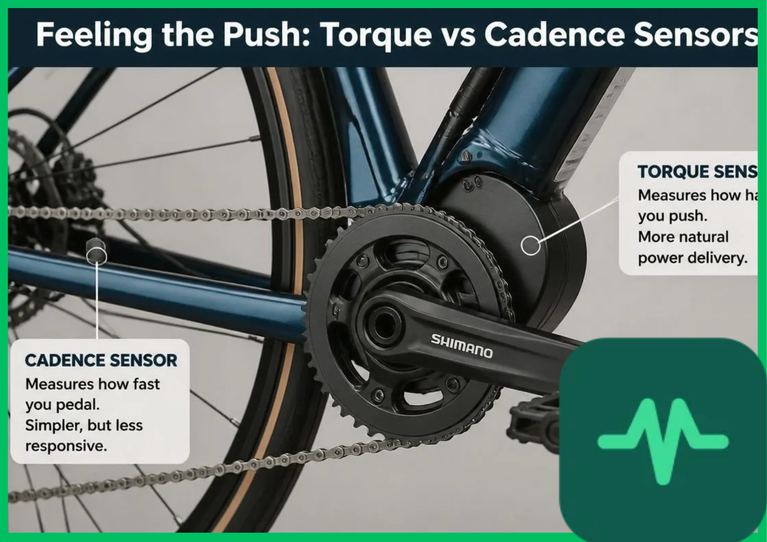
Many hub motor bikes rely on basic cadence sensors. A cadence sensor acts like an on-off switch. It detects whether your pedals are spinning, and if they are, it kicks the motor on at a preset power level.
That can feel jerky, as if someone gave you a sudden push from behind.
Mid-drive systems almost universally pair with advanced torque sensors.
A torque sensor measures exactly how hard you are pushing against the pedals.
If you press lightly on a flat stretch, the motor adds a gentle whisper of help. If you mash hard on the pedals to climb a steep hill, the motor matches your effort instantly, delivering smooth, proportional power.
According to ENERGY STAR efficiency metrics and academic research, torque-sensing mid-drives waste less energy, providing longer battery range because the motor only delivers power when the rider genuinely needs assistance.
Choosing Your Ride for a Sustainable Future
Which system fits your daily life?
If your daily commute consists of flat city streets, smooth bike paths, and short trips to the market, a rear hub motor offers reliable, affordable, and maintenance-free transportation.
If your routes feature steep hills, heavy cargo loads, long-distance touring, or rugged trail riding, a mid-drive system delivers unmatched hill-climbing performance and natural ride feel.
According to UNEP sustainable transport frameworks, choosing an e-bike tailored to your specific terrain encourages you to leave your car behind more often, cutting urban carbon emissions.
IEA clean mobility reports highlight that replacing short car journeys with electric bicycles scales up global energy efficiency rapidly.
Whether you choose a simple hub motor or an advanced mid-drive, you are participating in a quiet transport revolution.
Through smart engineering, efficient drivetrains, and joyful human-powered movement, e-bikes secure a cleaner, more sustainable future for our world.

Comments (0)
Login to leave a comment.
No comments yet. Be the first to share your thoughts!