Electric bikes have transformed how we move. They turn grueling uphill climbs into effortless cruises. They make daily commuting fun again.
Yet, when you start shopping for an e-bike, you run into a major technical fork in the road: the motor.
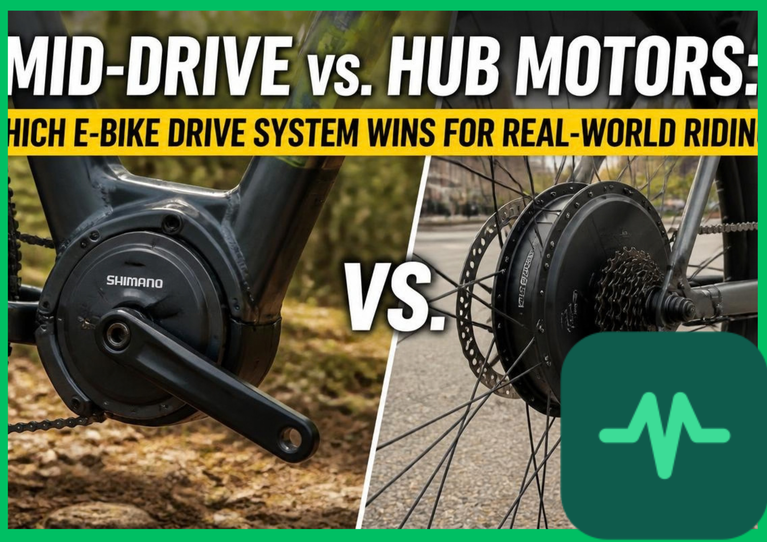
Some bikes hide their motors in the center of the frame, right between your pedals. Others tuck electric motors directly into the center of the front or rear wheel.
That single design choice changes everything.
Mid-drive vs hub motor e-bike decisions dictate how your ride feels, how your bike climbs hills, and how efficiently you use your battery power.
Here is how these two drive systems work and how to choose the right one for your riding style.
Understanding the Hub Motor
The hub motor is the veteran of the electric bike world.
In a hub motor setup, the electric motor is built directly into the center hub of either the front wheel or the rear wheel. When you activate the motor, it spins the wheel directly, independent of your bicycle chain and gears.
Think of it like a miniature washing machine motor embedded right inside your wheel axle.
Hub motors are popular for a reason. They operate independently of your drivetrain. You can pedal hard, snap your chain, and the motor will still drive the wheel forward.
They also tend to be mechanically simple and budget-friendly.
However, hub motors have physical limitations. Because they sit dead weight in the wheel, they alter the balance of your bicycle, making the front or rear end feel heavy.
They also lack mechanical leverage. A rear hub motor spins the wheel at a fixed gear ratio relative to the motor's internal speed, meaning it can struggle or overheat when hauling heavy loads up steep mountain grades.
Understanding the Mid-Drive Motor
Mid-drive motors take a completely different approach.
Instead of sitting in the wheel, a mid-drive motor is mounted right in the center of the bicycle frame, nestled between your crank arms where the bottom bracket sits.
When you push on the pedals, the mid-drive motor applies power directly to your bicycle’s chain and crankset.
That means the motor uses your bike's mechanical gear system.
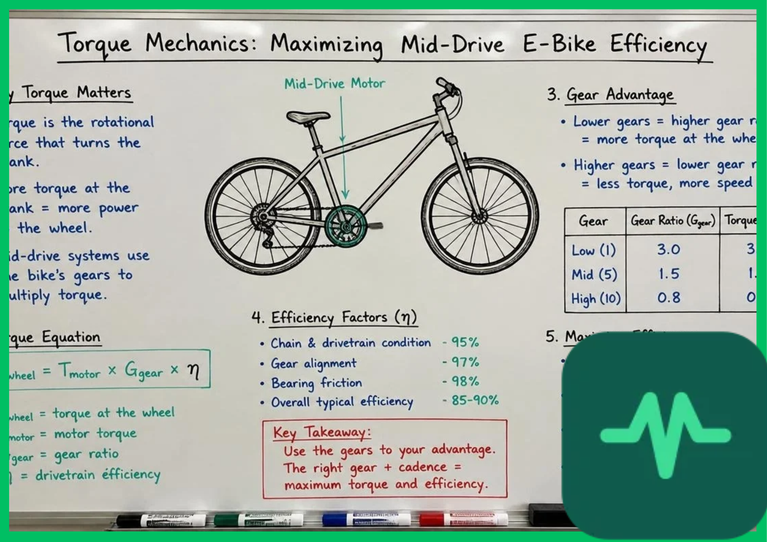
When you shift your bicycle into a low climbing gear, the mid-drive motor benefits from that mechanical leverage just like your legs do. The motor spins at its optimal RPM, while your gears multiply its torque to conquer steep hills effortlessly.
Furthermore, mid-drive systems center the weight of the motor right in the middle of the bicycle frame. This creates balanced, natural handling that feels almost identical to riding a traditional bicycle.
Comparing Hill Climbing and Torque Sensors
If you live in a flat city with smooth bike paths, a hub motor performs admirably. It gives you steady, smooth propulsion with minimal maintenance.
If your daily ride involves rolling hills, steep grades, or hauling heavy cargo panniers, the dynamic shifts entirely toward mid-drive efficiency.
Hill-climbing e-bike power relies heavily on mechanical advantage. A mid-drive motor paired with a wide-range cassette can scale steep mountain roads without breaking a sweat, whereas a hub motor on the exact same grade can bog down, overheat, and drain your battery rapidly.
Another major difference lies in how these motors read your pedaling input.
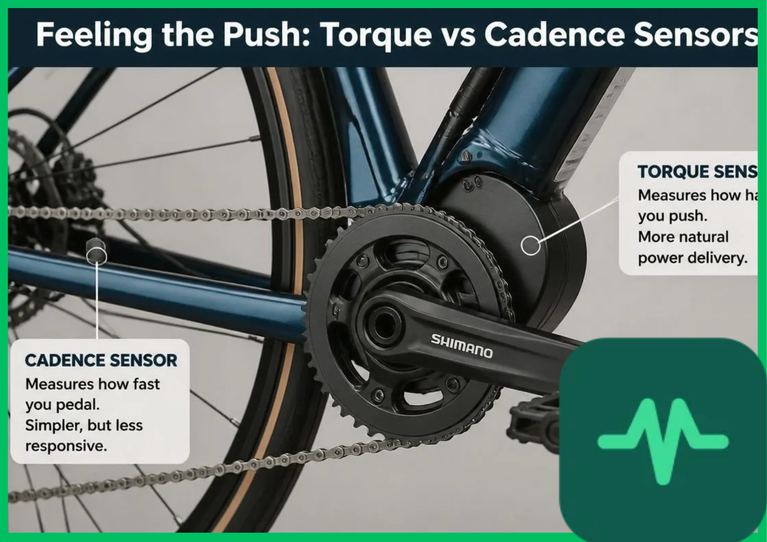
Many hub-motor e-bikes use cadence sensors. These act like a simple on-off switch: when your pedals spin, the motor kicks in at a preset power level.
Mid-drive systems almost universally use torque sensors. A torque sensor measures how hard you are pushing down on the pedals in real time, matching your muscular effort with proportional electrical assistance.
That creates a smooth, intuitive ride where the bike feels like a natural extension of your own body.
Maintenance and Long-Term Efficiency
Every mechanical system requires maintenance over time, and e-drive systems are no exception.
Because hub motors drive the wheel directly through internal planetary gears, they keep your bicycle chain and cassette free from motor stress. Your chain only handles human pedaling force, meaning drivetrain components last longer.
Mid-drive motors channel both human leg power and electrical motor power through the exact same chain. That extra load accelerates wear and tear on your chainrings, chain, and rear cassette. You will need to clean, lubricate, and replace your drivetrain components more frequently.
However, mid-drive systems make changing tires remarkably easy. If you get a flat tire on a rear wheel with a hub motor, disconnecting the heavy electrical wires and removing the axle can be a frustrating roadside chore. With a mid-drive, removing a wheel is just as simple as it is on an ordinary bicycle.
Making Your Choice
Choosing between a mid-drive and a hub motor comes down to where you ride and what you value.
If you want a reliable, low-maintenance commuter bike for flat urban streets and prefer a lower price tag, a rear hub motor is a fantastic, practical choice.
If you demand superior hill-climbing performance, natural frame balance, and advanced torque sensitivity for off-road trails or hilly terrain, a mid-drive system wins every time.
Understand your terrain, test ride both options, and choose the drive system that matches your real-world riding adventures.

Comments (0)
Login to leave a comment.
No comments yet. Be the first to share your thoughts!