You're finally ready to buy an e-bike. Then you see it. "Class 1." "Class 2." "Class 3." Suddenly, something exciting feels genuinely confusing.
Take a breath. This isn't complicated once someone actually explains it plainly. Let's walk through e-bike classes together, honestly and simply.
Why Classes Even Exist
E-bike classes exist for one real reason. Safety. Different bikes have different speeds and different levels of motor assistance. Trail systems, bike lanes, and city streets each need clear rules to keep everyone genuinely safe.
Without this system, nobody would know where a specific e-bike is legally allowed to ride. That confusion could genuinely cause real accidents.
Class 1: The Gentle Starting Point
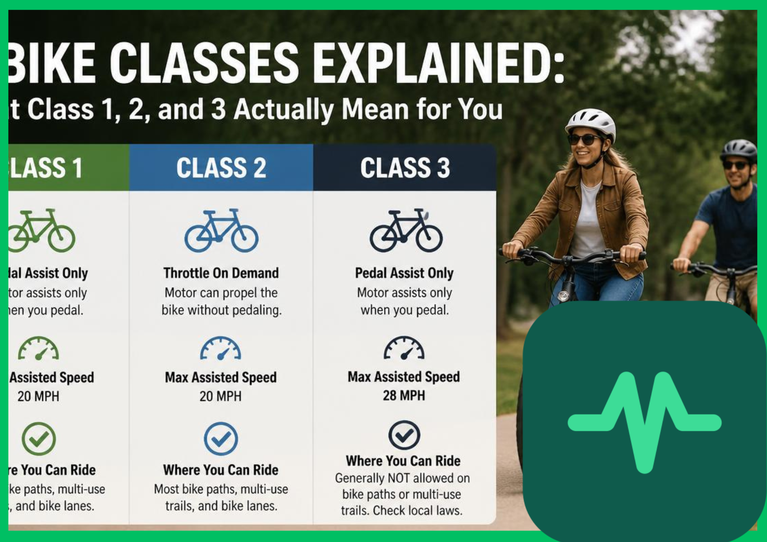
A Class 1 e-bike only assists you while you're actually pedaling. No throttle. No motor kicking in on its own. It simply helps you pedal easier, up to 20 mph.
This is genuinely the most widely accepted type. Most bike trails welcome Class 1 bikes without hesitation. If you want the simplest, most trail-friendly option, this is genuinely your safest bet.
Class 2: Throttle Power, Same Speed Limit
Class 2 e-bikes add something genuinely different, a throttle. Push a button, and the motor moves you forward, even without pedaling at all.
Top speed still caps at 20 mph, same as Class 1. This class genuinely helps riders who want rest breaks from pedaling, or who have physical limitations making constant pedaling genuinely difficult.
Class 3: Built for Speed
Class 3 e-bikes push assistance up to 28 mph, genuinely faster than the other two classes. Most require pedaling to activate the motor, similar to Class 1, but with a higher top speed.
This class genuinely suits commuters covering longer distances, people who want their e-bike to feel more like a genuinely fast, efficient alternative to driving.
Why This Actually Matters for Where You Can Ride
Here's the honest, practical part. Many trails restrict Class 3 bikes specifically, worried about higher speeds around pedestrians and cyclists. Class 1 bikes, meanwhile, often get welcomed nearly everywhere.
Before buying, genuinely check your local trail and bike lane rules. Nothing feels worse than buying an exciting new e-bike, only to discover you can't legally ride it where you actually wanted to.
The Emotional Side of Getting This Right
Buying an e-bike is genuinely exciting. It represents freedom, cheaper commutes, fresh air, real independence from traffic and gas prices. Getting the class wrong, though, can genuinely deflate that excitement fast.
Imagine buying a Class 3 bike, then discovering your favorite local trail bans it. That disappointment is genuinely avoidable, with just a little upfront research.
Which Class Fits You?
Ask yourself honestly. Do you mostly ride trails? Class 1 genuinely fits best. Do you want throttle power for tired legs or physical limitations? Class 2 genuinely helps. Do you need speed for a longer commute? Class 3 genuinely delivers that.
There's no universally "best" class. There's genuinely only the best class for your own specific life and riding habits.
Common Questions about E-bike Classes
Do I need a license for any of the e-bike classes?
Generally no, though rules genuinely vary by state. Always check local requirements before riding.
Can I convert a Class 2 bike into Class 3?
Sometimes, though this can genuinely void warranties and create legal gray areas. Buy the class you actually want from the start.
Are Class 3 e-bikes genuinely more dangerous?
They travel faster, so riders genuinely need more caution and awareness, especially around pedestrians.
Final Thoughts
E-bike classes aren't genuinely complicated once explained simply. They exist to keep you, and everyone around you, safe. Take a few honest minutes to understand which class fits your life, and your excitement about riding will stay genuinely intact, all the way to your very first ride.
Comments (0)
Login to leave a comment.
No comments yet. Be the first to share your thoughts!