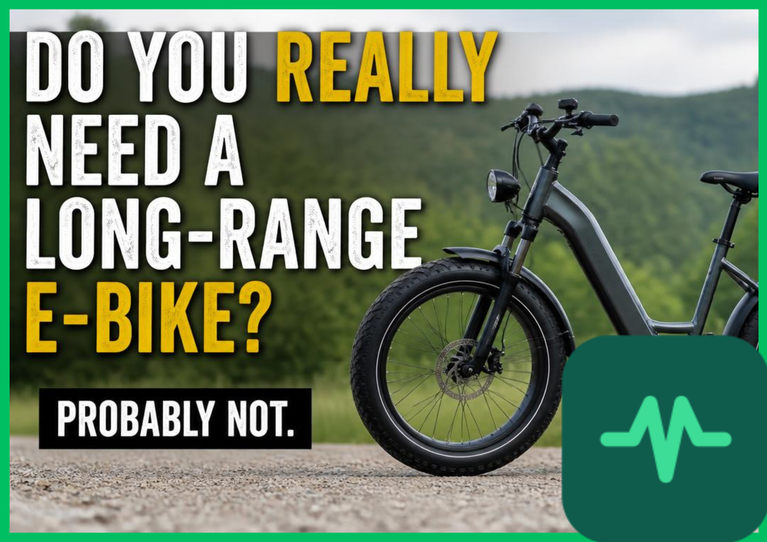
It's an understandable marketing strategy. Bigger numbers sell. But here's an honest question worth asking before you spend extra money chasing one. Do you actually need all that range?
The honest truth about how far people actually ride
Most people don't ride their e-bike for hours on end every single day. Daily commutes, errands, and casual rides typically cover a modest distance, well within what a smaller, more affordable battery comfortably provides.
The gap between marketed maximum range and genuinely typical daily use is often larger than most buyers realize until they actually own the bike and start tracking their own habits.
Why the industry keeps chasing bigger numbers anyway
Bigger range numbers make for an easy, attention-grabbing headline. It's a simple, quotable spec that's easy to compare across brands, even if it doesn't reflect how most people genuinely use their bike day to day.
There's nothing wrong with offering more range as an option. The issue arises when buyers assume they need the maximum available range, and end up paying considerably more for capacity they'll rarely, if ever, actually use.
What genuinely determines how much range you need
Think honestly about your typical trip length. If your daily commute or usual errands cover a modest distance each way, a smaller battery handles that comfortably, with room to spare.
Consider how often you'd realistically ride longer distances. Occasional longer trips don't necessarily justify buying a bike built around maximum range as its primary feature, especially if those longer rides happen rarely.
Factor in charging convenience too. If you can easily charge your e-bike at home each night, you don't need enormous range to cover multiple days without a recharge.
The real tradeoffs of oversized batteries
Bigger batteries add genuine, noticeable weight to an e-bike. That extra weight affects handling, makes the bike harder to carry up stairs or lift onto a rack, and can even affect how enjoyable the ride feels overall.
Bigger batteries also cost more, sometimes significantly more, for range you may end up rarely using in practice. That's money that could go toward other genuinely useful upgrades, or simply stay in your pocket.
When a longer range genuinely makes sense
This isn't a blanket argument against bigger batteries entirely. Some riders genuinely benefit from extended range.
Long daily commutes covering a significant distance each way are a legitimate reason to prioritize a bigger battery. Frequent longer recreational rides, where returning home to recharge mid-trip isn't practical, are another honest, valid use case.
Delivery riders and others using their e-bike heavily throughout the day also have genuine, practical reasons to want more range than an occasional casual rider would need.
A simple way to figure out what you actually need
Track your typical trips for a week or two before buying, even using a regular bicycle or simply estimating based on your usual routine. This gives you a genuinely realistic sense of your actual daily distance, rather than guessing based on marketing numbers.
Add a reasonable buffer for occasional longer days, then compare that realistic number against what different battery sizes actually offer. You'll likely find a comfortably sized battery covers your real needs with room to spare, without paying extra for range you'll rarely use.
The emotional pull of bigger numbers
There's a real, understandable psychological pull toward buying the bigger, more capable-sounding option, even when it doesn't match your actual needs. Nobody wants to feel like they settled for less.
But genuinely smart buying means matching the purchase to your real life, not to an impressive spec sheet number designed primarily to catch your attention in an online listing.
The honest bottom line
Most riders genuinely don't need the longest-range e-bike on the market. A well-matched, moderately sized battery covers real, everyday riding comfortably, without the extra weight and cost of capacity you'll rarely tap into.
Before chasing the biggest number available, take an honest look at how you'll actually use the bike. Chances are, a smaller, lighter, more affordable option serves your real life just as well, if not better.

Comments (0)
Login to leave a comment.
No comments yet. Be the first to share your thoughts!