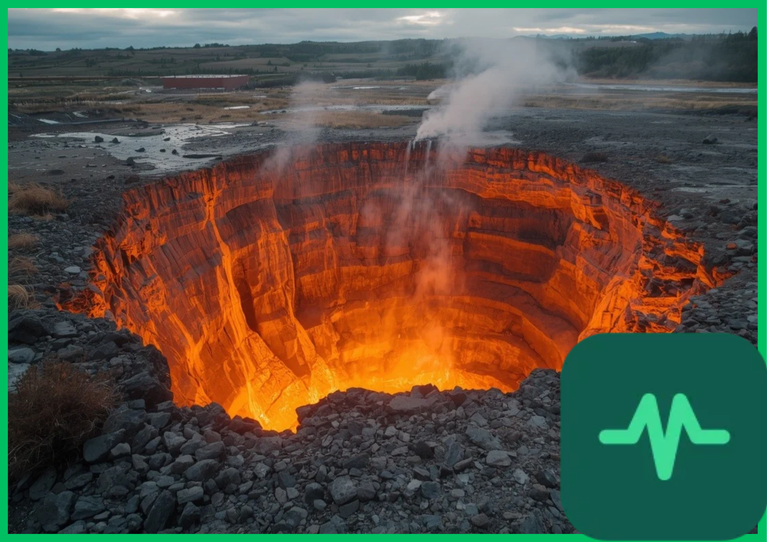
Around you, green forests stretch toward the sky. There are no spinning wind turbines here, no fields of solar panels, and no smoking industrial stacks.
Yet, deep underground, an immense, invisible fire burns constantly.
For over a century, humanity relied on fossil fuels to provide steady, reliable baseload power when the sun went down and the wind stopped blowing.
We burned coal and gas because traditional renewable energy sources fluctuate with the weather.
We accepted that clean energy had to be intermittent.
That old compromise forced us to keep dirty fossil-fuel power plants running as backup safety nets.
What if we could tap into a clean, limitless source of heat that sits directly beneath our feet, available twenty-four hours a day, regardless of the weather?
A quiet, high-tech drilling revolution is opening up the earth's crust.
According to global energy reports from the International Energy Agency (IEA), environmental governance frameworks from the United Nations Environment Programme (UNEP), efficiency metrics from ENERGY STAR, and advanced academic geosciences research, enhanced geothermal systems are transforming clean energy.
By drilling deep into hot underground rock and pumping water through artificial reservoirs, we can generate steady baseload power anywhere on Earth.
Here is how enhanced geothermal systems work, why deep underground heat mining changes power generation, and how closed-loop thermal energy secures our sustainable future.
The Limitations of Traditional Geothermal Energy
To understand why enhanced geothermal systems represent such a breakthrough, you have to look at the limits of traditional geothermal power.
For decades, geothermal energy was restricted to a few lucky places on Earth.
Places like Iceland, New Zealand, or parts of western North America sit directly over shallow volcanic hotspots or tectonic fault lines.
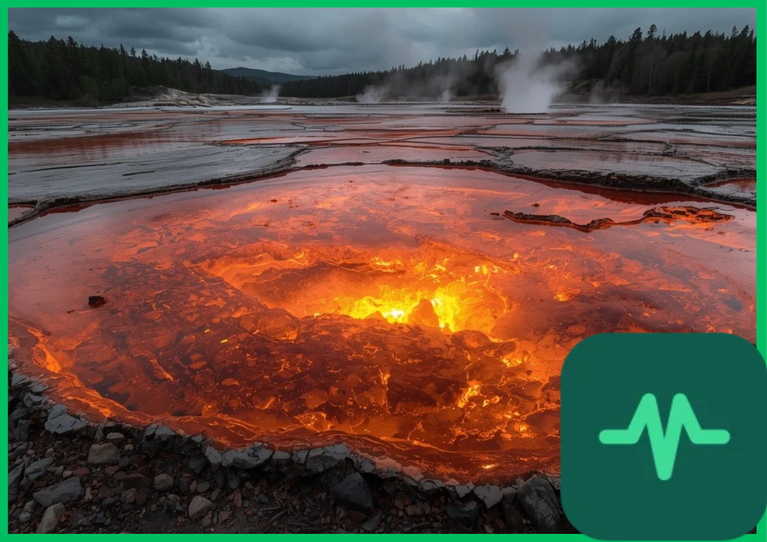
In those unique regions, natural underground water boils into steam close to the surface.
Energy companies simply drilled shallow wells, collected the natural steam, spun a turbine, and generated electricity.
If you lived almost anywhere else, however, traditional geothermal was useless.
Beneath normal crustal rock, the earth is hot, but it is completely dry. There are no natural underground steam geysers or water reservoirs to tap into.
Skeptics argued that geothermal energy could never become a global energy solution.
They assumed you could only harness earth's heat where nature conveniently provided hot water close to the surface.
Engineering pioneers refused to accept that restriction. They realized that heat exists everywhere underground if you drill deep enough.
What Is an Enhanced Geothermal System?
An enhanced geothermal system (EGS) bypasses the need for natural underground water reservoirs.
Instead of waiting for nature to provide steam, engineers manufacture their own underground heat exchanger.
The process begins by drilling deep holes thousands of meters or feet straight down into dense, hot basement rock, reaching depths where temperatures soar past 150°C to 300°C (approx. 302°F to 572°F).
Once the drill reaches the hot zone, engineers use high-pressure water injection to gently crack open microscopic fractures in the rock, creating an artificial underground reservoir.
This process is known as hydraulic stimulation.
Water is pumped down through an injection well, rushing through the hot rock network where it absorbs immense thermal energy.
The superheated water is then pushed back up to the surface through a separate production well.
At the surface, that heat runs a power plant turbine, generating clean electricity before the water is cooled and cycled right back down into the earth in a closed loop.
You put water and mechanical pressure in. You pull endless, zero-emission baseload electricity out.
The Power of Baseload Clean Energy
The true beauty of enhanced geothermal systems lies in their reliability.
Wind and solar farms generate phenomenal amounts of clean power, but they depend entirely on weather conditions.
Batteries bridge short hourly gaps, but keeping a modern industrial grid stable through weeks of calm, cloudy weather requires continuous baseload power.
Academic geosciences research shows that geothermal plants run twenty-four hours a day, 365 days a year, with a capacity factor routinely exceeding 90%.
They do not care if it is night. They do not care if the wind stops blowing.
The earth's core acts as a massive, everlasting thermal battery, heated by radioactive decay and leftover primordial energy from the formation of our planet.
According to IEA clean energy roadmaps, deploying EGS technology globally provides the firm, dispatchable baseload power needed to eliminate fossil fuels from electrical grids entirely.
Overcoming Drilling Challenges and Scaling Up
If enhanced geothermal energy offers such an incredible promise, why isn't every city powered by underground heat today?
The transition faces steep engineering hurdles.
Drilling deep into hard, abrasive crystalline rock at extreme temperatures is expensive and technically demanding.
Borrowing advanced techniques from the oil and gas sector—like steerable drill bits, high-temperature sensors, and rapid rock-cutting machinery—drilling companies are driving down costs and improving well creation speeds.
Furthermore, managing subsurface fluid flow requires precise geological modeling to ensure water circulates efficiently without leaking or triggering minor seismic tremors.
UNEP environmental guidelines highlight that modern EGS projects utilize closed-loop systems that recycle 100% of the working fluid underground, preventing surface water contamination and keeping emissions at absolute zero.
As drilling technology advances and project financing scales up, enhanced geothermal is transforming from a high-risk experimental science into a mainstream commercial energy source.
Tapping the Infinite Power Beneath Our Feet
Enhanced geothermal systems prove that human innovation can unlock clean energy resources anywhere on Earth.
We no longer have to accept that reliable baseload power requires burning coal, oil, or natural gas.
By drilling deep into hot underground rock, engineering artificial reservoirs, and harnessing closed-loop thermal energy, we tap directly into the infinite heat of the earth's core.
We step away from fossil combustion, embracing a steady, weather-independent source of clean electricity.
Through scientific persistence, advanced drilling engineering, and global vision, enhanced geothermal energy anchors a resilient, thriving, and fully sustainable future for our planet.
Comments (0)
Login to leave a comment.
No comments yet. Be the first to share your thoughts!