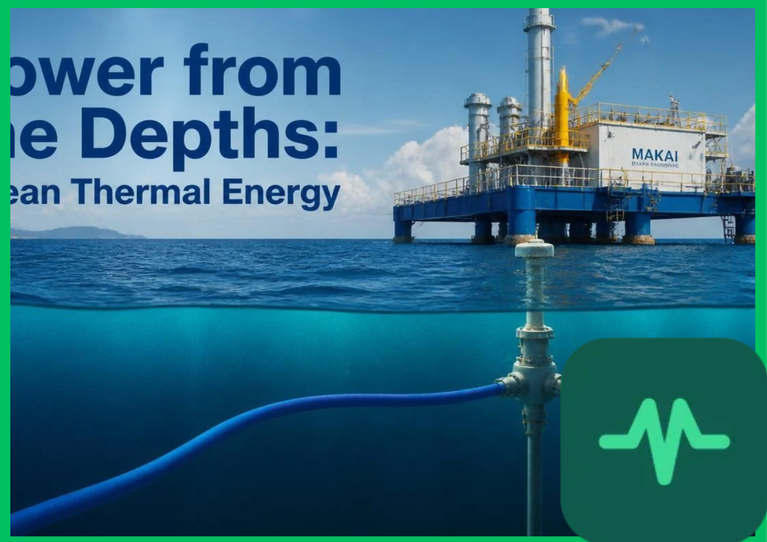
You look out across the sparkling turquoise water.
The sun beats down warmly on your shoulders, heating the surface waves to a comfortable, inviting warmth.
Beneath that sunny surface lies a hidden world of deep, silent cold.
For generations, humanity looked at the ocean as a place for sailing, fishing, and swimming.
We built wind turbines on coastal hills and laid solar panels across sunny fields.
We rarely looked straight down into the water column itself to find an endless engine of clean power.
Traditional marine energy relied on crashing waves, strong tides, or rushing river currents.
Those energy sources fluctuate wildly with the weather and the tides.
When the wind stops blowing and the ocean goes flat, wave generators sit idle.
We cannot build a resilient, 100% clean power grid by relying on surface weather alone.
What if the ocean itself contained a massive, year-round thermal battery?
What if the temperature difference between the sun-baked surface water and the freezing deep sea could power entire coastal nations?
A quiet, brilliant marine energy revolution is reaching down into the deep blue.
According to global clean energy reports from the International Energy Agency (IEA), resource protection frameworks from the United Nations Environment Programme (UNEP), efficiency benchmarks from ENERGY STAR, and academic marine research, ocean thermal energy conversion technology is changing our energy horizon.
By harnessing deep ocean temperature gradients to drive continuous thermodynamic turbines, we generate reliable, round-the-clock clean electricity without burning a drop of fuel.
Here is how ocean thermal energy works, why deep sea temperature differences change tropical power grids, and how power from the depths secures our sustainable future.
The Hidden Power of the Water Column
To understand why ocean thermal energy matters so much, you have to look at how solar energy distributes heat across our planet.
Earth's oceans act as the largest solar collector in existence.
Tropical surface waters absorb direct sunlight year-round, reaching temperatures of 25°C to 28°C or roughly 77°F to 82°F.
Just a few thousand feet or meters below, water rushing down from polar ice sheets sits in perpetual darkness, chilling at a bitter 4°C or 39°F.
That creates a permanent, massive temperature difference between the surface and the deep sea.
For over a century, brilliant physicists realized that this thermal gap could run a heat engine.
Early pioneers built experimental test rigs, but fossil fuels were cheap, and deep-sea engineering was difficult.
Scientists and marine engineers refused to give up.
They knew that if we could pump warm surface water and icy deep water together through a closed thermodynamic cycle, we could unlock an unfailing source of continuous baseload electricity.
What Is Ocean Thermal Energy Conversion?
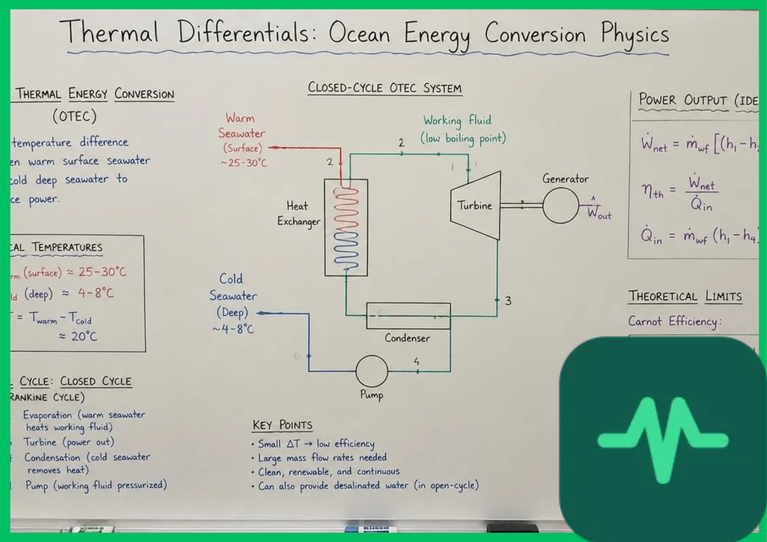
Ocean thermal energy conversion—widely known as OTEC—is an advanced marine renewable energy technology that uses the temperature difference between warm tropical surface water and cold deep-ocean water to run a power-generating thermodynamic cycle.
An OTEC power plant operates using a clever fluid loop:
- The Evaporator: Warm surface water flows over a heat exchanger filled with a working fluid—such as ammonia—that boils at a very low temperature, turning into high-pressure vapor.
- The Turbine: That expanding vapor rushes past a turbine generator, spinning it to produce clean electricity.
- The Condenser: Cold water pumped up from the deep ocean flows through a second heat exchanger, cooling the vapor back into a liquid so the cycle can repeat endlessly.
The system runs twenty-four hours a day, three hundred sixty-five days a year, unaffected by clouds, storms, or the setting sun.
The Science of Thermodynamic Gradients and Baseload Power
How can a modest temperature difference of 20°C or 36°F generate enough electricity to power homes and water treatment plants?
It comes down to fundamental thermodynamics and continuous heat exchange.
Academic marine research shows that OTEC systems provide a rare and valuable gift to tropical island nations and coastal communities.
Most tropical islands rely heavily on importing expensive, polluting diesel fuel shipped in tankers across thousands of miles of ocean to run their power grids.
OTEC replaces that dirty diesel with clean, local power drawn straight from the sea surrounding their shores.
Furthermore, OTEC plants produce valuable freshwater as a natural byproduct.
In closed-cycle designs, desalinating seawater happens cleanly within the system, providing drinking water alongside electricity.
According to ENERGY STAR and international marine efficiency evaluations, OTEC facilities operate with high capacity factors, delivering steady, reliable power that stabilizes local grids without requiring massive battery storage arrays.
Environmental Integrity and Marine Stewardship
The environmental benefits of ocean thermal energy conversion extend far beyond replacing diesel generators or providing clean electricity.
They harmonize with marine ecosystems when engineered responsibly.
According to UNEP resource governance frameworks, OTEC facilities must incorporate careful intake and discharge designs, ensuring that deep-sea water return pipes release water at depths matching its natural temperature and nutrient profile.
This prevents thermal disruption and protects delicate marine life.
In fact, bringing nutrient-rich deep ocean water to the surface opens up exciting opportunities for sustainable aquaculture and coastal agriculture, fostering thriving marine environments.
According to IEA clean energy roadmaps, expanding marine renewable energy is an essential pillar to support remote island economies in achieving complete energy independence.
When tropical nations harness the power of their surrounding waters, local communities thrive.
Overcoming Deep-Sea Engineering Realties
Deploying ocean thermal energy conversion systems at commercial scale involves navigating real-world engineering hurdles.
Dropping giant pipes down 1,000 meters or 3,300 feet into the ocean abyss requires ultra-strong, lightweight composite materials that can withstand deep-sea pressures and ocean currents.
Marine engineers and academic institutions are testing large-diameter flexible risers and floating offshore platform designs that ride out tropical storms safely.
As manufacturing techniques improve and offshore construction costs fall, OTEC is transitioning from coastal pilot projects into reliable commercial power generation.
Powering Our Future From the Depths
Ocean thermal energy conversion proves that human ingenuity can find clean, reliable power hidden within natural planetary cycles.
We no longer have to rely on burning imported diesel or waiting for the wind to blow to keep tropical lights shining.
By harnessing the temperature gap between the warm surface and the freezing deep sea, we unlock an unending engine of clean electricity.
We step away from fossil fuel dependence, embracing a secure, regenerative, and enduring standard of marine power generation.
Through brilliant marine engineering, thermodynamics, and a deep respect for our planetary waters, power from the depths secures a clean, bright, and sustainable future for every island and coast on Earth.


Comments (0)
Login to leave a comment.
No comments yet. Be the first to share your thoughts!