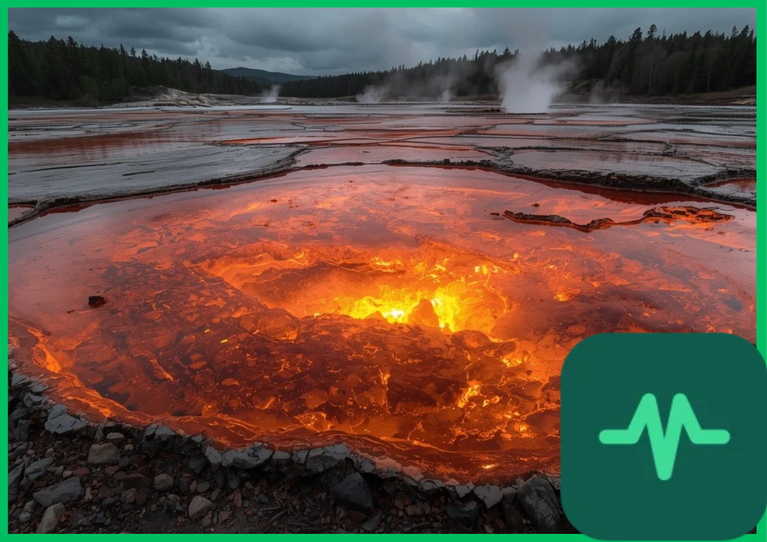
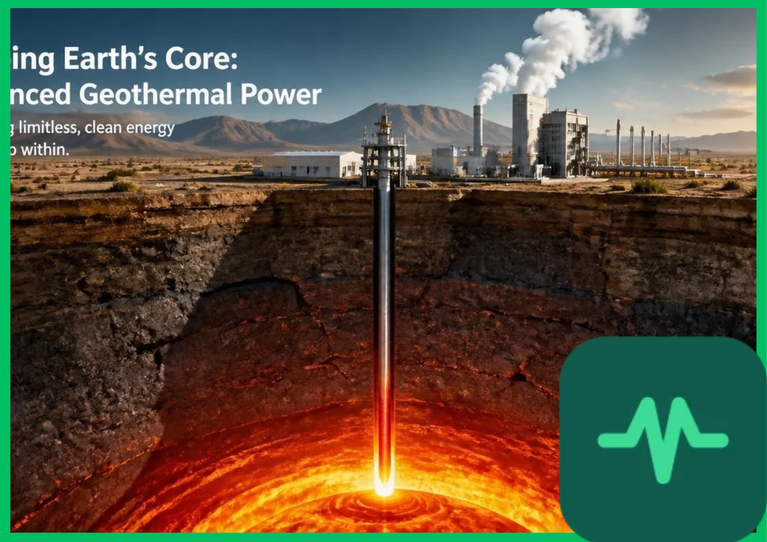
Enhanced geothermal systems engineering unlocks baseload renewable electricity by artificially creating subterranean reservoirs within impermeable hot crystalline rock formations. According to International Energy Agency (IEA) renewable energy roadmaps and academic geothermal research, conventional hydrothermal systems are geographically restricted to naturally occurring hydrothermal aquifers characterized by high permeability, elevated porosity, and trapped hot water. In contrast, enhanced geothermal systems (EGS) deploy advanced hydraulic stimulation techniques to engineer artificial fluid pathways in dry basement rock, expanding global geothermal resource potential by orders of magnitude. Extracting thermal energy from depths exceeding $3\text{ km}$ to $5\text{ km}$ ($9,840\text{ ft}$ to $16,400\text{ ft}$) requires rigorous control over deep subsurface rock fracturing, high-pressure fluid circulation mechanics, thermal drawdown rates, and binary cycle power plant conversion efficiencies.
Subsurface Geothermal Gradients and Thermodynamic Potential
The fundamental thermodynamic driver of any geothermal energy system is the terrestrial heat flow originating from planetary core radioactive decay and residual mantle thermal energy. The rate of temperature increase with depth is defined as the geothermal gradient, which averages approximately $25^\circ\text{C}$ to $35^\circ\text{C}$ per kilometer of depth ($72.5^\circ\text{F}$ to $101.5^\circ\text{F}$ per mile) in standard continental crust, though tectonic rift zones and volcanic margins exhibit significantly steeper gradients.
At depths of $4\text{ km}$ ($13,120\text{ ft}$), ambient rock temperatures within crystalline basement formations—such as granite, gneiss, and basalt—frequently reach $150^\circ\text{C}$ to $250^\circ\text{C}$ ($302^\circ\text{F}$ to $482^\circ\text{F}$). The theoretical thermal conversion efficiency ($\eta_{th}$) of power cycles operating between these high-temperature subsurface thermal reservoirs and ambient surface sink temperatures ($T_{sink} \approx 15^\circ\text{C}$ or $59^\circ\text{F}$) is governed by the Carnot efficiency limit:
$$\eta_{Carnot} = 1 - \frac{T_{sink}}{T_{res}}$$
Where absolute temperatures ($T$) are measured in Kelvin ($\text{K}$). A geothermal reservoir operating at $200^\circ\text{C}$ ($473\text{ K}$) yields an ideal Carnot limit exceeding 39%. Real-world binary power plants capture a fraction of this potential, achieving net thermal-to-electric conversion efficiencies between 12% and 18%, while delivering continuous 24-hour baseload capacity factors exceeding 90%.
Deep Subsurface Rock Fracturing and Reservoir Stimulation
Unlike conventional sedimentary aquifers that permit natural fluid migration, hot dry rock formations possess extremely low intrinsic permeability (typically below $0.001\text{ millidarcies}$) and negligible fluid content. Establishing an engineered geothermal reservoir requires deep subsurface rock fracturing via hydraulic stimulation.
High-pressure water mixed with proppants is injected into wellbores drilled into the crystalline basement. As downhole injection pressures exceed the minimum principal stress ($\sigma_3$) and tensile strength of the host rock, existing micro-fissures dilate and propagate, creating an interconnected fracture network. This stimulation process increases effective reservoir permeability by several orders of magnitude, establishing a conductive fracture volume that facilitates fluid flow between injection and production wells.
Engineers monitor micro-seismic activity during hydraulic stimulation using downhole triaxial accelerometer arrays and surface seismometer networks. Real-time seismic moment tensor inversion maps fracture propagation geometry, hydraulic aperture distribution, and reservoir volume expansion, ensuring containment within designated depth and pressure safety boundaries.
EGS Heat Extraction Mechanics and Circulation Loops
Once the engineered reservoir is established, closed-loop EGS heat extraction mechanics govern the transfer of thermal energy from solid rock to circulating working fluids.
Injection Well: High-pressure pumps force cold water down the injection wellbore into the deep fractured basement rock matrix.
Convective Heat Transfer: As water percolates through high-temperature fracture apertures, thermal energy conducts from the rock matrix into the fluid via forced convection, elevating fluid temperatures toward surrounding rock equilibrium.
Production Well: Heated fluid is retrieved via one or more production wells intersecting the opposite side of the stimulated fracture network.
Surface Power Conversion: High-temperature pressurized water or flashed steam drives surface turbine generators before being cooled and reinjected in a closed loop.
Maintaining stable mass flow rates ($Q$) without inducing rapid thermal drawdown is critical. If fluid velocity through fracture channels is too high, heat transfer is incomplete, lowering production fluid temperatures. Conversely, overly restricted flow limits total thermal power output. Optimizing mass flow rates requires balancing thermal conduction time constants with fluid residence times inside the subterranean fracture volume.
Binary Cycle Power Generation and Working Fluid Dynamics
Because geothermal fluids extracted from EGS reservoirs often range between $150^\circ\text{C}$ and $200^\circ\text{C}$ ($302^\circ\text{F}$ to $482^\circ\text{F}$)—or contain high concentrations of corrosive dissolved minerals—direct flash steam utilization is frequently replaced by binary cycle power plants utilizing an organic Rankine cycle (ORC).
In a binary plant, the geothermal brine remains entirely pressurized within a closed loop, transferring its thermal energy to a secondary working fluid via shell-and-tube or plate heat exchangers. Secondary working fluids typically comprise low-boiling-point organic compounds, such as isobutane ($\text{C}_4\text{H}_{10}$), isopentane ($\text{C}_5\text{H}_{12}$), or fluorinated refrigerants.
Evaporator: Hot geothermal brine vaporizes the organic working fluid under high pressure.
Turbine Expansion: The expanding organic vapor drives a high-efficiency radial-inflow turbine coupled to an electrical generator.
Condenser: Vapor exhausts into a water-cooled or air-cooled condenser, liquefying the working fluid before it is pumped back to the heat exchanger.
Binary cycle technology enables efficient electricity generation from moderate-temperature geothermal resources while preventing mineral scaling and silica precipitation inside turbine blades.
Technical Data Specifications of Geothermal System Parameters
System Parameter | Conventional Hydrothermal Systems | Enhanced Geothermal Systems (EGS) |
|---|---|---|
Reservoir Permeability | High natural permeability ($>10\text{ millidarcies}$) | Artificial permeability via hydraulic stimulation |
Subsurface Depth | Typically $1\text{ km}$ to $3\text{ km}$ ($3,280\text{ ft}$ to $9,840\text{ ft}$) | Deep basement rock ($3\text{ km}$ to $6\text{ km}$+) |
Rock Temperature | $100^\circ\text{C}$ to $300^\circ\text{C}$ ($212^\circ\text{F}$ to $572^\circ\text{F}$) | $150^\circ\text{C}$ to $400^\circ\text{C}$ ($302^\circ\text{F}$ to $752^\circ\text{F}$) |
Fluid Chemistry | Variable dissolved solids and non-condensable gases | Closed-loop injection minimizes surface mineral exposure |
Geographic Availability | Restricted to volcanic and tectonic margins | Universally available in continental crust basements |
Environmental Assessments and Induced Seismicity Mitigation
Quantitative environmental evaluations published by the IEA and United Nations Environment Programme (UNEP) confirm that enhanced geothermal systems generate near-zero operational greenhouse gas emissions, emitting less than $5\text{ g CO}_2\text{eq}$ per kilowatt-hour generated—orders of magnitude lower than fossil-fuel combustion technologies. Furthermore, closed-loop EGS operations consume minimal freshwater compared to thermal power plants utilizing evaporative cooling towers, as working fluids circulate continuously in a sealed subsurface loop.
Managing induced seismicity remains a primary operational protocol for EGS deployment. Uncontrolled fluid injection can trigger slip along pre-existing geological fault lines. Modern projects implement traffic light system (TLS) protocols, continuously monitoring real-time seismic magnitude thresholds. If micro-seismic magnitude exceeds predefined safety limits, injection pressures are adjusted immediately or well operations are suspended, ensuring safe commercial integration into regional energy grids.
Comments (0)
Login to leave a comment.
No comments yet. Be the first to share your thoughts!