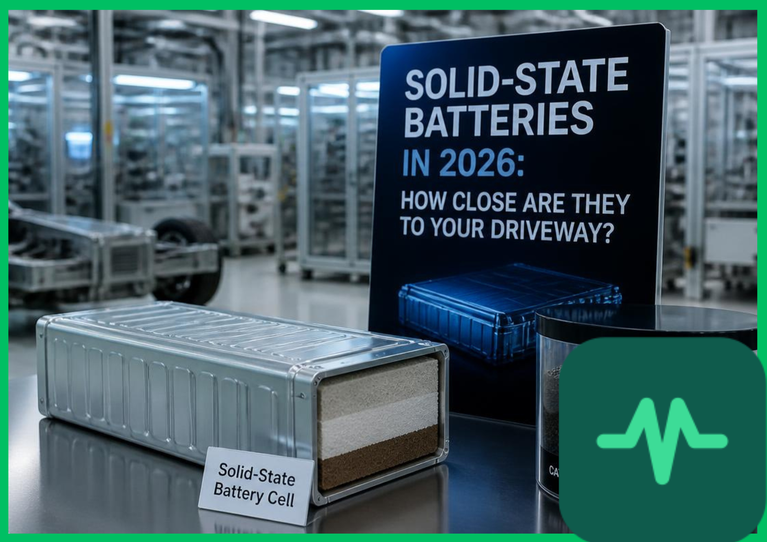
If you've been genuinely excited about electric vehicles, you've probably heard whispers about solid-state batteries for a few years now. They sound almost magical, promising longer range, faster charging, genuinely safer performance.
Let's talk honestly about where this genuinely stands in 2026, what's real progress, and what's still further out than the hype suggests.
What Makes a Battery "Solid-State"
Current EV batteries use a liquid material inside to help electricity flow. Solid-state batteries genuinely replace that liquid with a solid material instead.
This small, technical change creates genuinely big potential benefits, more energy stored in the same space, and genuinely improved safety since there's no flammable liquid involved.
What's Genuinely Different in 2026
This is the update worth paying real attention to. A few years ago, solid-state batteries existed almost entirely in labs and small prototype vehicles. In 2026, several automakers and battery manufacturers have genuinely moved into limited pilot production, building small batches of vehicles or battery packs meant for real-world testing, not just laboratory demonstration.
This is a genuinely meaningful shift. It's the difference between "we believe this will work" and "we're now watching it perform under actual driving conditions." Several manufacturers have publicly targeted small-scale commercial availability within the next couple of years, though genuinely widespread, affordable availability still remains further out.
Why Range Could Genuinely Improve
Solid-state technology could genuinely pack more energy into the same battery size. For drivers, this could genuinely mean significantly longer range without needing a larger, heavier battery pack.
That's genuinely exciting for anyone who's felt real anxiety about running out of charge on a longer trip, a concern that remains genuinely common even as charging networks have expanded.
Why Charging Could Become Genuinely Faster
Solid-state batteries can potentially handle faster charging speeds more safely than current technology allows. This could genuinely shrink charging stops from many minutes down to something genuinely closer to a quick coffee break.
Early pilot testing happening in 2026 is genuinely focused heavily on proving this specific benefit holds up outside a controlled lab environment.
Why Safety Genuinely Improves Too
Current EV batteries carry a small, genuine risk of fire if damaged, due to their liquid components. Solid-state batteries genuinely reduce this risk significantly, offering real peace of mind for safety-conscious buyers.
The Honest Truth About Timing in 2026
Here's where genuine patience still matters. Even with real pilot production now underway, solid-state batteries remain genuinely difficult and expensive to manufacture at the massive scale needed for mainstream, affordable vehicles.
Most industry timelines now point toward meaningful, broader consumer availability landing later in this decade, not immediately. Don't expect to walk into a dealership today and drive home in an affordable solid-state EV. This technology is genuinely closer than it was a couple of years ago, just not quite here yet for the average buyer.
Why Companies Are Racing So Hard
Whoever genuinely solves affordable, scalable solid-state battery manufacturing first stands to gain enormous competitive advantage. This explains the genuinely intense investment and research happening across the industry right now, with 2026 marking a real inflection point as multiple companies race to be first past pilot production.
Why This Feels Genuinely Exciting to Watch Right Now
There's something genuinely hopeful about watching real technological progress unfold in real time. The shift from lab prototypes to actual pilot vehicles on real roads in 2026 genuinely marks a turning point worth paying attention to.
What You Should Genuinely Do Right Now
If you need an EV today, don't wait for solid-state technology to arrive. Current batteries genuinely work well for most everyday driving needs already, and the meaningful, affordable version of solid-state remains a few years off still.
Think of solid-state batteries as a genuinely exciting near-future upgrade, not a reason to delay a purchase you genuinely need right now.
Common Questions
When will solid-state EVs genuinely reach everyday consumers?
Most industry timelines now point toward meaningful availability later in the decade, following the pilot production happening in 2026.
Will solid-state batteries genuinely cost more at first?
Yes, initially, though prices should genuinely fall as manufacturing scales up beyond today's pilot phase.
Should I wait to buy an EV until this technology arrives?
Not necessarily. Current EVs genuinely serve most everyday needs well already, right now.
Final Thoughts
Solid-state batteries in 2026 have genuinely moved from theory into real pilot production, a meaningful step forward. The exciting future of longer range, faster charging, and real safety improvements is genuinely closer than before. It just requires a little more patience before it genuinely reaches your driveway at an affordable price.



Comments (0)
Login to leave a comment.
No comments yet. Be the first to share your thoughts!