
 ) from ambient air—where concentrations hover near
 (
 )—requires overcoming a fundamental thermodynamic barrier dictated by the entropy of mixing. While direct air capture (DAC) systems successfully strip
 from the gas phase using liquid absorbents or solid sorbents, permanent isolation requires binding the captured gas into stable mineral matrices. Combining direct air capture with silicate rock weathering and synthetic carbonate rock formation permanently locks carbon away for geological timescales, mitigating the reversal risks inherent in superficial underground gas storage.
Thermodynamic Separation Work and Energy Penalty Metrics
The foundational thermodynamic constraint governing direct air capture is the minimum theoretical work of separation ( ), which is derived from the change in Gibbs free energy associated with extracting a component from a gaseous mixture. For an ideal gas at atmospheric pressure and ambient temperature, separating
 from air at a concentration of
 requires a theoretical minimum energy input of approximately
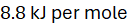 of
 (
 of
 ).
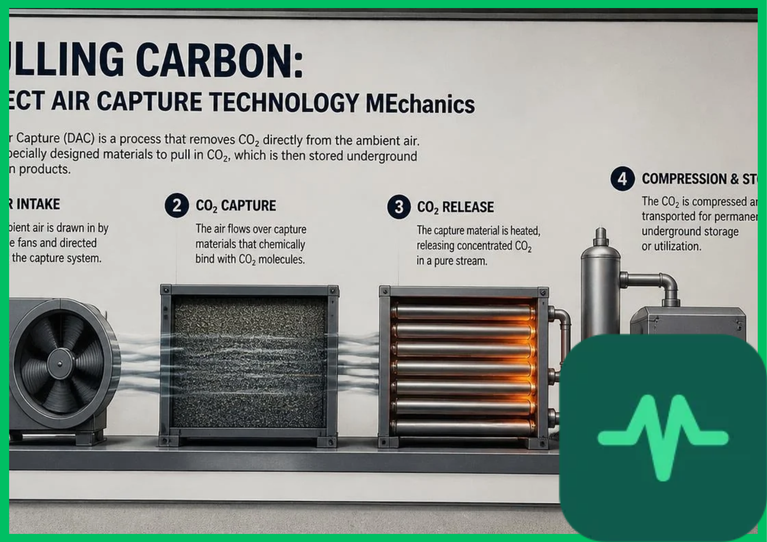
In practical industrial operations, irreversible thermodynamic losses—such as mass transfer resistance, chemical regeneration enthalpy, fan work, and fluid pumping friction—elevate actual energy consumption significantly above theoretical baselines. Commercial DAC technologies operate via two primary chemical pathways:
- Liquid Solvent Systems: Utilize an aqueous potassium hydroxide (
 ) solution that reacts with ambient
 to form potassium carbonate (
 ). Regenerating the solution requires high-temperature calcination kilns operating between
 and
 (
 to
 ), demanding thermal energy inputs alongside electrical power. Total energy penalties range from
 to
 of thermal and electrical energy per metric ton of
 captured.
- Solid Sorbent Systems: Employ porous solid matrices functionalized with amine groups (
 ) that chemically bind
 via adsorption at ambient temperatures. Desorption is achieved through low-temperature vacuum swing adsorption (VSA) operating at mild thermal regimes between
 and
 (
 to
 ), reducing thermal energy penalties to
 to
 per metric ton of
 .
Silicate Rock Weathering and Mineral Carbonation Chemistry
Once  is captured and concentrated, permanent sequestration via carbon mineralization accelerates natural silicate rock weathering pathways into engineered industrial processes. Natural chemical weathering of continental silicate rocks—such as calcium silicates (
 ) and magnesium silicates (
 , commonly found in olivine and basalt formations)—acts as the Earth's primary long-term carbon sink over millions of years.
Industrial mineral carbonation replicates this geochemical reaction by reacting purified  with divalent metal cations (
 or
 ) in an aqueous medium or subsurface basalt formation. The generalized exothermic carbonation reaction for magnesium-rich olivine is expressed as:


This carbonation reaction releases significant thermal energy ( ), driving a spontaneous thermodynamic transformation that permanently converts gaseous carbon dioxide into stable, solid synthetic carbonate rocks. Unlike supercritical
 injected into sedimentary saline aquifers, which remains a mobile fluid subject to potential leakage along caprock fault lines, mineralized carbonate rocks present zero risk of atmospheric leakage, ensuring multi-millennial permanence.
Subsurface In-Situ Mineralization and Basalt Dissolution Kinetics
Executing mineral carbonation at scale requires managing subsurface reaction kinetics, fluid permeability, and dissolution rates within basaltic geological formations. Basalt rock—comprising iron- and magnesium-rich plagioclase feldspars and pyroxenes—offers immense global storage capacity due to its widespread oceanic and continental distribution.
In-situ mineralization involves dissolving captured  into water at surface facilities (achieving concentrations of 50 to 60 gigagrams of
 per cubic meter of water) and injecting the acidic carbonated water deep into basalt reservoirs at depths ranging from
 to
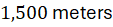 (
 ). Upon injection, the low-pH fluid reacts aggressively with the basalt mineral matrix, leaching out calcium, magnesium, and iron ions. As subsurface pH buffers upward toward neutral values, stable carbonate precipitates—such as calcite (
 ) and magnesite (
 )—nucleate and grow within the microscopic pore spaces and fracture networks of the rock.
Field demonstrations and academic geochemical monitoring confirm that over 95% of injected  dissolves and mineralizes into solid stone within two years of injection, bypassing the multi-thousand-year reaction timescales required under passive dry-gas storage conditions.
Technical Data Specifications of DAC and Mineralization Parameters
| Direct Air Capture & Mineralization Parameter | Engineering Specification Standard |
|---|---|
Ambient  Concentration Baseline |  (  volumetric fraction) |
| Minimum Thermodynamic Separation Work |  (  ) |
| Liquid Solvent Thermal Regeneration Temp |  to  (  to  ) |
| Solid Sorbent Desorption Temperature |  to  (  to  ) |
| Total DAC Energy Penalty (Practical) | 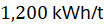 to  equivalent |
| Subsurface Mineralization Injection Depth |  to  (  ) |
| In-Situ Mineralization Conversion Rate |  fixed within 2 years of basalt injection |
Porosity Management, Fluid Permeability, and Scaling Challenges
While direct air capture carbon mineralization efficiency offers permanent geochemical storage permanence, scaling the combined technology presents severe engineering hurdles related to subsurface porosity clogging and fluid permeability. When carbonation reactions precipitate dense carbonate minerals inside basalt pore networks, the total rock porosity decreases. If precipitation occurs too rapidly near the wellbore injection zone, permeability drops precipitously, causing injection pressure spikes that can fracture the surrounding caprock and compromise well integrity.
Industrial operators manage porosity reduction by optimizing water-to-gas injection ratios, utilizing organic complexing ligands to accelerate mineral dissolution rates without premature clogging, and spacing injection wells strategically across vast basalt formations. Furthermore, ex-situ surface mineralization reactors are deployed for specific industrial waste streams—such as steel slag and construction demolition waste—where crushed silicate materials are reacted in controlled slurry vessels to produce commercial aggregate materials for the construction industry, offsetting operational capital expenditures.
The Final Take
Mastering direct air capture carbon mineralization efficiency establishes a permanent, geochemically stable pathway for industrial carbon dioxide removal. Citing IEA assessments and academic geochemical research, overcoming thermodynamic separation energy penalties and accelerating exothermic silicate weathering transforms dilute atmospheric gases into inert synthetic carbonate rocks. By combining low-temperature solid sorbent capture with rapid in-situ basalt mineralization, engineered carbon removal achieves absolute storage permanence.

Comments (0)
Login to leave a comment.
No comments yet. Be the first to share your thoughts!