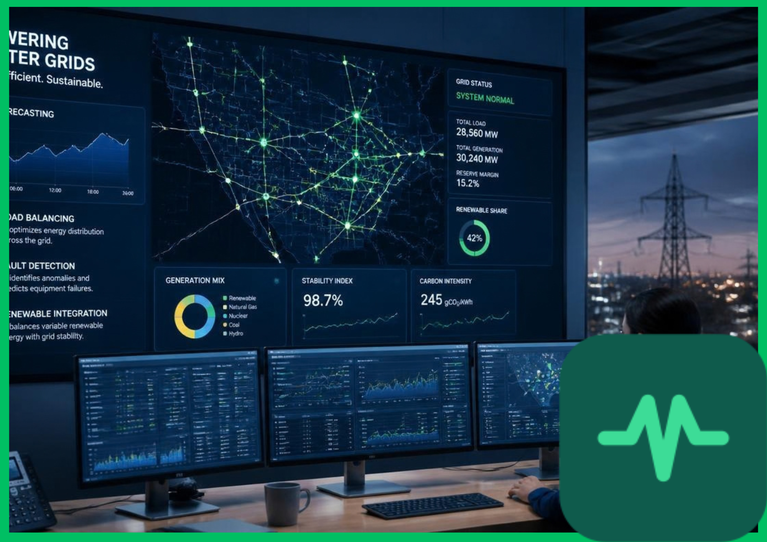
That is what running a modern electrical grid feels like.
Electricity must be generated the exact millisecond it is consumed. If supply exceeds demand, voltage spikes and damages equipment. If demand exceeds supply, the grid destabilizes and triggers rolling blackouts.
For a century, human operators managed this delicate balancing act manually.
Today, the grid has grown infinitely more complex with the addition of millions of intermittent solar panels, wind turbines, and electric vehicle chargers.
Human operators can no longer keep up. Artificial intelligence has stepped in to save the day.
Here is how machine learning algorithms optimize power grid stability in real time.
The Volatility of Renewable Power
Traditional power grids were predictable. When grid operators needed more power, they shoveled more coal into a furnace or opened a dam valve.
Renewable energy introduces dynamic volatility.
Wind speeds shift unpredictably. Passing clouds block solar generation in seconds. Power production fluctuates constantly, making it impossible to rely on old manual control methods.
At the same time, consumer demand patterns are shifting. Millions of electric vehicles plug in to charge at the end of the work day, creating massive, localized surges in electricity demand.
Managing this chaotic two-way energy flow requires split-second reactions.
Machine Learning Energy Balancing
Artificial intelligence excels at processing massive datasets at lightning speed.
Machine learning algorithms ingest terabytes of real-time data from weather satellites, wind speed sensors, smart meters, and historical grid loads.
By analyzing these patterns, AI models can forecast weather-driven solar and wind generation with astonishing accuracy hours in advance.
If an incoming storm front is about to drop solar output across a region, predictive grid management software automatically ramps up energy storage battery banks or signals flexible gas-peaker plants to stand by, all before a single watt of power drops.
Automated Load Shedding and Demand Response
AI algorithms do not just manage supply; they also optimize demand.
Smart grids use automated demand response systems coordinated by AI. When power supply tightens during a scorching summer afternoon, the algorithm communicates with smart appliances, industrial thermostats, and commercial building systems across the city.
It subtly adjusts power draws—cycling down non-essential industrial machinery or nudging residential air conditioning settings by a fraction of a degree—to balance the grid effortlessly without human intervention.
This automated load balancing prevents blackouts before they ever begin.
Securing the Future of Smart Grids
The marriage of artificial intelligence and electrical engineering is transforming power distribution into a self-healing, hyper-efficient digital network.
As renewable energy integration accelerates, AI ensures our power grids remain rock-solid, reliable, and resilient.
By reacting in milliseconds to the shifting winds of our clean energy future, artificial intelligence keeps our lights on safely around the clock.
Comments (0)
Login to leave a comment.
No comments yet. Be the first to share your thoughts!