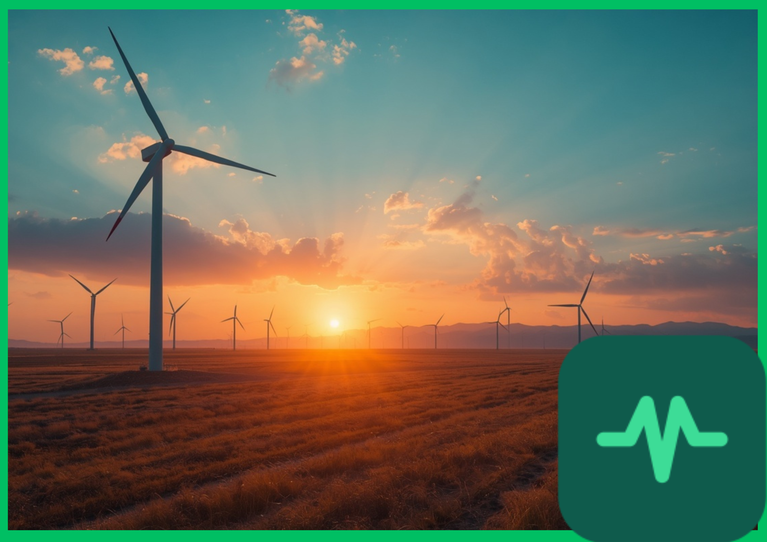
You rarely stop to think about the complex web of machinery working behind the scenes to deliver that electricity.
For over a century, traditional electrical grids operated on a predictable, steady rhythm. Large coal, gas, and nuclear power plants burned fuel continuously, ramping generation up or down to match shifting human routines.
That predictable rhythm is gone.
As the world transitions toward clean energy, our power sources are changing. Wind gusts shift unexpectedly across open fields, and clouds drift across solar farms, causing power generation to fluctuate from minute to minute.
Balancing a power grid fueled by variable renewable energy is one of the greatest engineering puzzles of our time.
According to energy infrastructure reports from the International Energy Agency (IEA), smart grid assessments, and academic electrical engineering research, artificial intelligence is stepping up to solve that puzzle.
Here is how intelligent software and machine learning algorithms manage clean power, keeping our global grids stable, reliable, and efficient.
The Volatility Challenge of Renewable Energy
To understand why traditional grids struggle with clean power, you have to look at the fundamental nature of electricity.
Unlike water or oil, electricity cannot be stored easily in massive quantities on a whim. Power generation and electricity consumption must match each other in real time, every second of every day.
If generation suddenly outstrips demand, electrical frequencies spike, threatening to damage transformers and trip regional systems. If demand exceeds supply, blackouts ripple across cities.
Fossil fuel plants made grid management simple because operators could throw a valve or shovel more coal into a furnace whenever demand surged.
Wind and solar power do not work that way.
The wind blows when nature decides, and the sun shines according to weather patterns.
Integrating millions of decentralized solar panels on residential rooftops and massive offshore wind farms creates a wildly dynamic puzzle.
Human operators staring at control room screens can no longer process data fast enough to keep the grid balanced.
We needed a smarter, faster system.
What Is an AI-Optimized Smart Grid?
An AI-optimized smart grid is an intelligent power network equipped with advanced digital sensors, automated controls, and machine learning software.
Instead of relying solely on human reaction, smart grids use artificial intelligence to monitor electricity flows across thousands of miles of transmission lines simultaneously.
Machine learning algorithms ingest massive streams of data from weather satellites, atmospheric sensors, smart meters, and grid substations.
The software analyzes historical weather patterns alongside real-time meteorological shifts to predict exactly how much power wind turbines and solar farms will generate hours before it happens.
At the same time, the AI tracks consumer demand trends across neighborhoods, commercial centers, and industrial hubs.
By predicting supply and demand imbalances before they occur, the algorithm adjusts the entire system automatically.
Dynamic Load Balancing and Energy Storage
When renewable generation surges unexpectedly or local electricity demand peaks, smart algorithms execute dynamic load balancing.
As academic power systems research demonstrates, AI coordinates distributed energy resources with astonishing speed.
If a sudden storm blocks sunlight over a regional solar cluster, the smart grid instantly reroutes surplus electricity from distant hydroelectric dams or discharges utility-scale battery storage facilities within milliseconds.
Furthermore, smart grids communicate with connected commercial buildings and residential smart devices.
When clean power is abundant and cheap, the system automatically signals electric vehicle chargers, heat pumps, and industrial water heaters to ramp up operation, soaking up surplus energy.
When clean generation dips, the AI dials back non-essential power loads smoothly, preventing grid overloads without human intervention.
Predictive Maintenance and Grid Resilience
Artificial intelligence does more than balance daily electricity flows; it protects the physical infrastructure of the grid itself.
High-voltage transmission lines, transformers, and substations operate under extreme electrical stress.
Machine learning models analyze acoustic data, thermal imaging feeds, and electrical resistance patterns from grid components to detect signs of wear and tear long before a physical breakdown occurs.
Instead of waiting for equipment to fail and cause a regional blackout, utility operators receive precise alerts telling them which transformer needs maintenance or which transmission line requires clearance.
This predictive approach prevents costly outages, reduces maintenance expenses, and enhances overall grid reliability.
Powering a Reliable Clean Future
Artificial intelligence proves that the digital revolution and the clean energy transition go hand in hand.
By bringing real-time intelligence, automated load balancing, and predictive oversight to our electrical networks, software transforms intermittent wind and solar resources into a stable, dependable power supply.
We are overcoming the historical limitations of renewable energy.
Through AI-optimized smart grids, global power systems are becoming smarter, more resilient, and fully capable of lighting our world with clean, sustainable electricity.

Comments (0)
Login to leave a comment.
No comments yet. Be the first to share your thoughts!