It is easy to look at all of that and feel incredibly small.
You might find yourself standing in the grocery store aisle wondering if choosing a cardboard carton over a plastic container actually matters. You might wonder if turning off your air conditioner an hour early makes a dent in a global problem. When the scale of a crisis is that massive, our individual choices can feel like trying to empty an ocean with a teaspoon.
The truth is that large-scale change is built out of millions of small, individual actions. The real challenge has never been a lack of caring; it has been a lack of information. It is hard to change a habit when you cannot see the impact of that change.
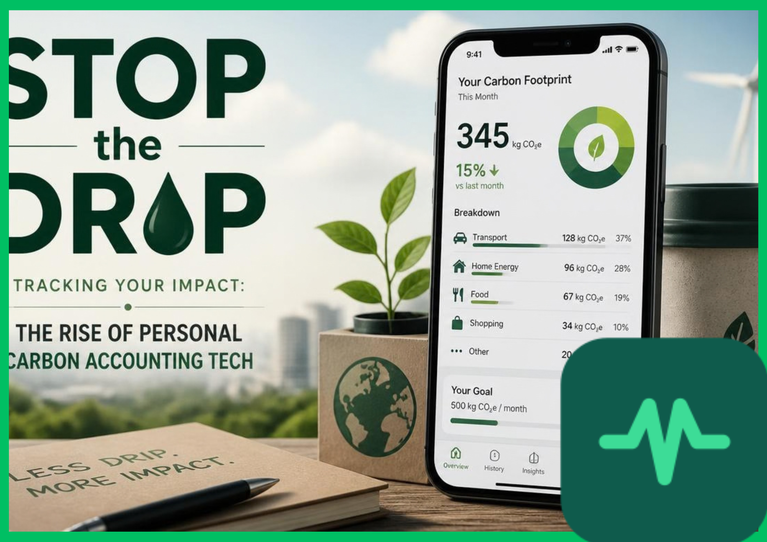
That is where a new wave of personal technology is stepping in. By using carbon footprint tracking apps, everyday people are finally getting the clarity they need to turn vague eco-friendly intentions into measurable, real-world progress.
What is Personal Carbon Accounting?
Most of us are familiar with the concept of tracking our steps or our daily caloric intake. We understand that if we want to get healthier, we need to know our baseline numbers. Personal carbon accounting applies that exact same logic to our environmental impact.
Instead of counting calories, you are measuring personal emissions.
Every single thing we do leaves a footprint. The food we eat had to be grown, packaged, and shipped. The clothes we wear required water and energy to manufacture. The electricity powering our screens and the fuel moving our cars all generate carbon emissions.
Historically, calculating your personal share of these emissions required complex math, hours of research, and a deep knowledge of industrial supply chains. It simply was not practical for a busy person managing a household budget and a full-time job.
Modern digital tools have completely removed that barrier. They take the abstract data of global supply chains and translate it into a simple, personal ledger. They make the invisible environmental cost of your daily life visible for the first time.
How Carbon Footprint Tracking Apps Work
You do not need to spend your evenings logging receipts or typing into spreadsheets to track your impact. The latest generation of tracking software does the heavy lifting for you by integrating directly with your digital life.
Smart Banking Integrations
Many modern tracking tools link securely to your everyday banking cards or digital wallets. When you buy a coffee, purchase a flight, or pay your monthly utility bill, the app analyzes the transaction. It looks at the company you bought from and the amount you spent.
Using massive global databases of carbon intensity, the software instantly estimates the emissions attached to that purchase. If you spend money on a local train ticket versus a tank of petroleum or gas, the app notes the difference and updates your profile automatically.
Lifestyle and Habit Audits
For the areas of your life that money tracking cannot capture, these apps use simple, conversational questionnaires. They ask about your home’s heating setup, your typical diet, and how often you commute.
By combining your financial data with your daily choices, the software builds a highly accurate, living map of your environmental footprint. It helps you see exactly where your personal emissions are concentrated, whether it is in your kitchen, your garage, or your travel habits.
Shifting from Guilt to Actionable Habits
The goal of tracking your footprint is not to make you feel guilty about living your life. Guilt is an incredibly unhelpful emotion when it comes to making long-term lifestyle changes. If a tool just makes you feel bad about driving to work or buying groceries, you will eventually delete it from your phone.
The best apps focus entirely on building sustainable consumer habits. They treat the data like a game or a fitness target, offering small, achievable challenges to help you improve your score over time.
Finding the High-Impact Changes
When you look at your personalized data dashboard, you will often find surprises. You might realize that making one or two small adjustments to your diet—like swapping out beef for chicken a few times a week—saves more carbon than completely changing how you wash your laundry.
Or you might see that driving just five kilometers or three miles less each week moves your score drastically. This targeted information allows you to focus your energy on the changes that deliver the biggest environmental return for your effort.
Rewarding Consistently Green Choices
Many platforms use positive reinforcement to keep you engaged. As your footprint drops, you earn digital badges, track your streak of green days, or see your progress compared to global averages. Some apps even partner with verified environmental projects, allowing you to fund real-world tree planting or renewable energy initiatives directly through your daily habit milestones. It turns an abstract sacrifice into a tangible, rewarding experience.
The Power of the Conscious Consumer
It is true that individual actions alone cannot solve the climate crisis without massive changes from major corporations and governments. However, tracking your personal impact is not just about changing your own household; it is about sending a powerful signal to the global marketplace.
When millions of people use tech to pursue an eco-friendly lifestyle tracking routine, consumer behavior shifts at a massive scale.
When you choose a product with a lower carbon intensity, you are voting with your wallet. Companies notice when consumers start abandoning high-emissions products in favor of sustainable alternatives. It forces businesses to clean up their supply chains, reduce their packaging, and invest in greener manufacturing processes just to keep your business. Your small, daily data points accumulate into a tidal wave of market pressure that global industries cannot afford to ignore.
Taking the First Step Toward a Clearer Future
Living sustainably does not require you to completely upend your life or move off the grid. It simply requires awareness. By utilizing the computing power right inside your smartphone, you can clear away the confusion and take control of your relationship with the environment.
We measure our finances to build a secure future, and we track our health to live longer lives. Taking a few minutes to track our carbon footprint is simply the next logical step in becoming a responsible citizen of the world. It replaces anxiety with clarity and gives you the exact tools you need to do your part in protecting our shared home.
Comments (0)
Login to leave a comment.
No comments yet. Be the first to share your thoughts!