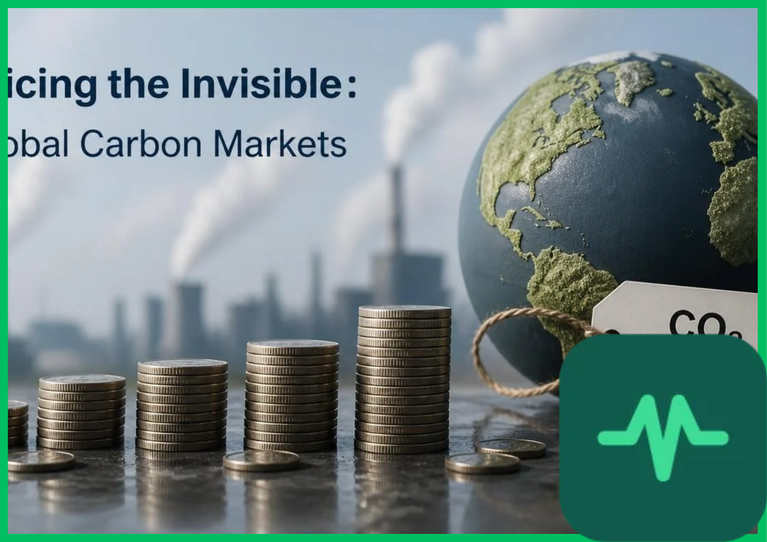
You take a deep breath of fresh autumn air.
It feels invisible, endless, and entirely free.
For generations, human civilization treated the global atmosphere as an infinite dumping ground.
Factories billowed thick black smoke into the sky.
Cargo ships burned bunker fuel across the open oceans.
Power plants pumped millions of tons of invisible carbon dioxide straight up into the clouds without paying a single penny for the damage.
Polluting the air was free.
Cleaning it up was left to nature and future generations.
That broken economic rule fueled a century of unchecked climate disruption.
We cannot build a stable, sustainable world while allowing heavy polluters to dump greenhouse gases into our shared atmosphere for free.
What if emitting carbon carried a real financial cost?
What if invisible pollution was tracked, measured, and priced so that clean technology became the cheapest choice on the market?
A quiet, powerful economic revolution is transforming global industry across the globe.
According to global climate reports from the International Energy Agency (IEA), environmental governance frameworks from the United Nations Environment Programme (UNEP), efficiency benchmarks from ENERGY STAR, and academic economic research, global carbon pricing mechanisms and carbon tax structures are changing how business gets done.
By placing a clear financial price on greenhouse gas emissions and trading pollution allowances across international markets, we turn climate pollution into a costly liability.
Here is how carbon markets work, why international emissions trading changes industrial economics, and how pricing the invisible secures our sustainable future.
The Hidden Cost of Free Atmospheric Dumping
To understand why global carbon markets matter so much, you have to look at the market failure that allowed climate change to spiral out of control.
For decades, industrial manufacturers operated under a glaring economic blind spot.
If a factory dumped toxic waste into a local river, local environmental laws fined the company heavily.
Yet that same factory could pump millions of tons of carbon dioxide into the sky for zero cost.
Pollution was an externality—a cost shifted entirely onto society while corporate profits stayed private.
Skeptics once argued that putting a price on carbon would crush global economies and destroy industrial manufacturing.
Economists and environmental scientists proved those skeptics wrong.
When you make pollution free, companies have zero financial incentive to clean up their operations.
When you put a price on carbon, innovation explodes overnight.
What Is a Global Carbon Pricing Mechanism?
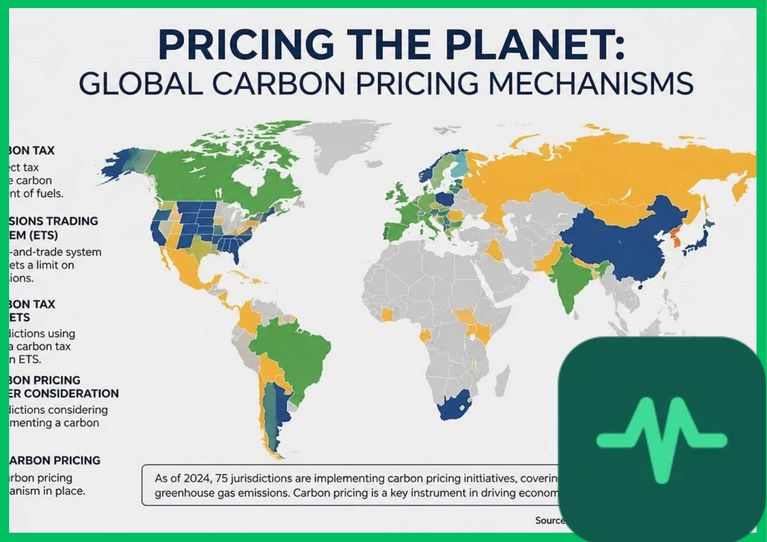
A global carbon pricing mechanism is a regulatory market system that establishes a financial cost for greenhouse gas emissions, either by setting a direct government tax on every ton of carbon emitted or by creating a cap-and-trade system where companies buy and sell limited pollution permits.
Instead of treating the atmosphere as a free trash bin, the system operates through strict market accountability:
- The Emission Cap: Governments or international bodies set a legal upper limit on total carbon emissions allowed across the economy, reducing that limit by a strict percentage every single year.
- Allowance Trading: Companies receive or buy specific pollution permits. If a clean factory cuts its emissions below its limit, it can sell its leftover permits on the open market to heavier polluters.
- Financial Accountability: Heavy polluters face steep financial penalties if they emit more carbon than their permits allow, forcing boardrooms to invest in clean energy immediately.
Pollution becomes expensive. Clean efficiency becomes profitable.
The Science of Emissions Trading and Corporate Accounting
How does trading invisible carbon credits across international financial markets force giant corporations to redesign their factories and supply chains?
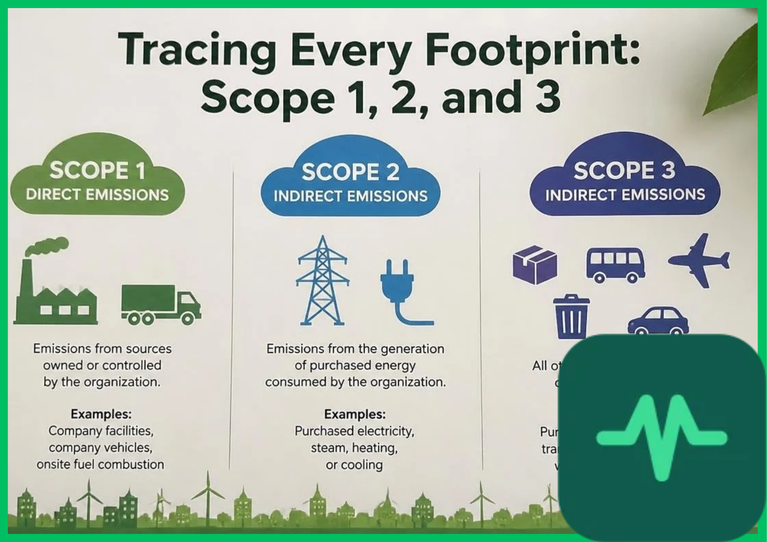
It comes down to market incentives and corporate carbon accounting.
Academic economic research shows that carbon pricing mechanisms harness the power of market competition to find the cheapest ways to cut emissions.
When a cement manufacturer or steel mill faces rising carbon costs, corporate accountants calculate whether it is cheaper to buy expensive carbon allowances or invest millions in renewable energy and carbon capture technology.
Almost always, the math favors decarbonization.
Furthermore, international emissions trading systems ensure that emissions cuts happen wherever they cost the least, driving capital straight into clean tech development worldwide.
According to ENERGY STAR and international industrial efficiency evaluations, companies subject to carbon pricing reduce their energy waste and greenhouse gas output significantly faster than businesses operating in unregulated markets.
Financial markets start telling the truth about climate costs.
Environmental Integrity and Global Industrial Transformation
The environmental benefits of global carbon pricing mechanisms extend far beyond corporate balance sheets or government tax revenues.
They provide the foundational scaffolding required to achieve global net-zero emissions targets.
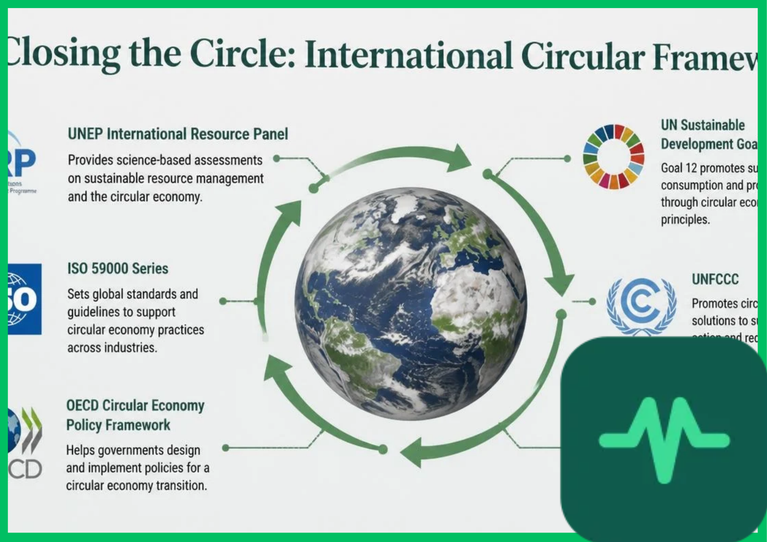
According to UNEP environmental governance frameworks, transparent carbon accounting and international trading prevent companies from dodging climate regulations by simply moving dirty factories across national borders, thanks to carbon border adjustment principles that level the playing field.
When every ton of carbon carries a universal price tag, international trade stops rewarding high-emission manufacturing.
According to IEA clean energy roadmaps, scaling up robust carbon pricing markets is an absolute pillar to shift trillions of dollars of private investment away from fossil fuels and into renewable infrastructure.
When the market rewards climate action, the entire global economy reorganizes itself around sustainability.
Overcoming Compliance and Market Stability Realties
Scaling carbon pricing mechanisms from regional pilot programs into a unified global market involves navigating real-world regulatory and economic hurdles.
Designing a fair carbon market requires balancing high enough prices to drive genuine industrial change against keeping energy affordable for everyday consumers during economic transitions.
Economists, policymakers, and international trade experts solve these challenges by setting predictable price floors, distributing carbon revenue dividends directly back to households, and linking regional emissions trading systems across national borders.
As global climate accountability matures and corporate carbon accounting standards harmonize worldwide, carbon pricing is transitioning successfully from theoretical economic models into standard global industrial law.
Pricing the Invisible Toward a Sustainable Future
Global carbon pricing mechanisms prove that market economics can be harnessed to protect our planetary atmosphere rather than destroy it.
We no longer have to accept that industrial progress requires treating our air as a free dumping ground.
By placing a clear financial cost on carbon emissions and trading pollution allowances across international markets, we make sustainability the most profitable business model on Earth.
We step away from unchecked pollution, embracing a transparent, accountable, and enduring standard of global commerce.
Through brilliant economic design, rigorous academic research, and a deep respect for our shared biosphere, pricing the invisible secures a clean, balanced, and sustainable future for every community on Earth.

Comments (0)
Login to leave a comment.
No comments yet. Be the first to share your thoughts!