You take a deep breath of fresh air.
You look up at the clear blue sky.
It feels infinite. It feels like an endless ocean of air that can absorb anything humanity pumps into it without breaking a sweat.
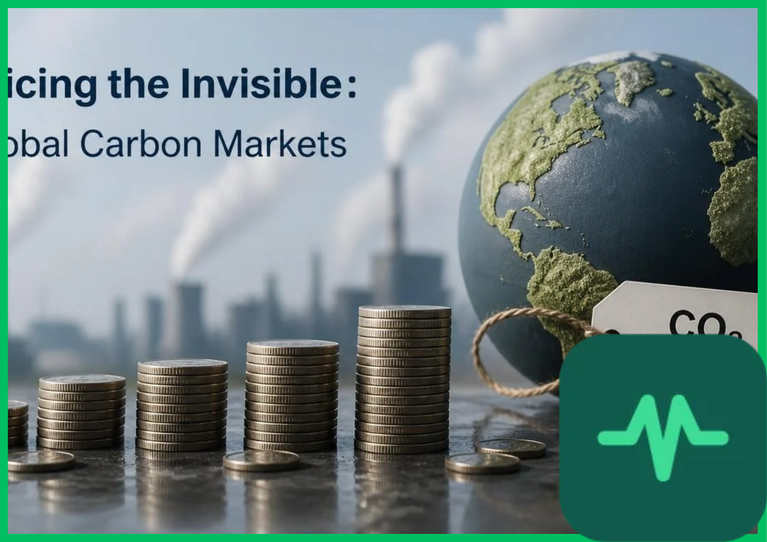
For generations, humanity treated the atmosphere like an open sewer with no price tag.
Factories burned coal, oil, and natural gas around the clock. They pumped billions of tons of carbon dioxide straight up into the clouds.
They paid nothing for the damage.
The pollution was free. The heavy cost fell entirely on our warming planet, rising sea levels, and changing weather patterns.
If you ran a business, dumping waste into a public river cost money. Dumping carbon waste into the shared sky cost zero.
That broken economic rule drove our global climate crisis.
How do you change the behavior of giant industrial corporations that pump billions of tons of greenhouse gases into the air every single day?
You make pollution expensive.
A quiet, powerful economic revolution is sweeping across international markets.
According to global climate reports from the International Energy Agency (IEA), resource protection frameworks from the United Nations Environment Programme (UNEP), energy efficiency standards from ENERGY STAR, and academic economic research, global carbon pricing mechanisms are changing the math of industrial survival.
By attaching a clear financial cost to every ton of greenhouse gas emissions, market policies reward clean innovation and penalize carbon waste.
Here is how carbon pricing works, why cap-and-trade systems shift corporate behavior, and how economic incentives secure our sustainable future.
The Hidden Subsidy of Free Pollution
To understand why carbon pricing matters so much, you have to look at the broken economics of traditional industrial manufacturing.
For over a century, fossil-fuel energy enjoyed an invisible subsidy.
Power plants and factories could emit carbon dioxide into the shared atmosphere completely free of charge.
That meant burning cheap, dirty coal looked economically superior on a corporate balance sheet compared to investing in clean, renewable wind and solar power.
Corporations maximized their short-term profits by pushing the true long-term costs onto society.
Taxpayers paid for the floods, heatwaves, and rising sea levels caused by climate change.
Economists realized that humanity needed a way to fix that market failure.
If pollution has a direct price tag, polluting becomes bad for business.
Clean technology suddenly becomes the cheapest way to survive in the market.
What Are Global Carbon Pricing Mechanisms?
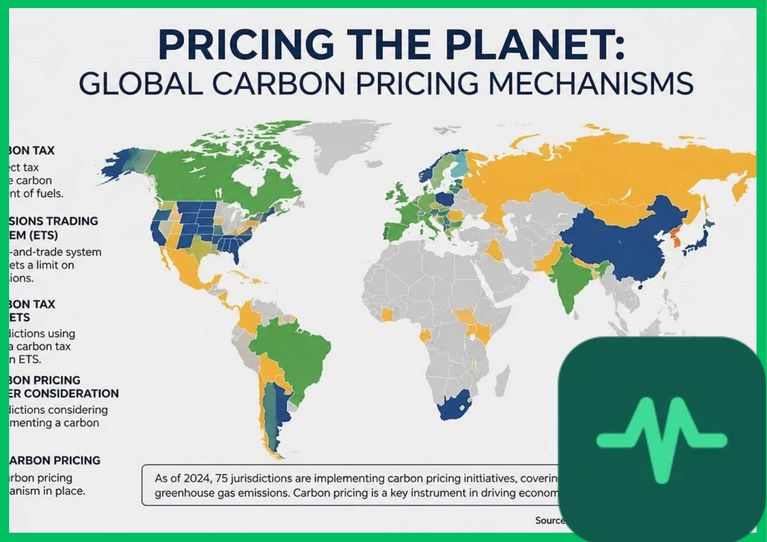
Global carbon pricing mechanisms are government and international market systems designed to put a financial value on greenhouse gas emissions.
Instead of letting factories pollute the sky for free, these systems force companies to pay a set fee for every ton of carbon dioxide they release into the atmosphere.
There are two primary economic models driving this transition:
- Carbon Taxes: A direct government-set fee on every ton of greenhouse gas emitted by burning fossil fuels. Companies pay a fixed price per ton, which rises steadily over time to encourage cleaner industrial operations.
- Cap-and-Trade Systems: A market-driven approach where governments set a hard legal limit on total regional emissions. Authorities issue a declining number of pollution permits. Companies trade these permits openly on a market exchange, creating a financial incentive for clean factories to sell their unused allowances to heavy polluters.
When emissions cost money, corporate boards pay attention.
The Science of Market-Driven Decarbonization
How do carbon prices change industrial behavior in the real world?
It comes down to simple business math and capital allocation.
Academic economic research shows that when carbon prices cross a certain threshold, corporate investment patterns shift instantly.
A steel manufacturer facing high carbon fees realizes that continuing to burn coal will bankrupt the company within a decade.
Management reallocates capital, abandoning fossil-fuel blast furnaces and investing in clean green hydrogen or electric arc furnaces powered by renewable electricity.
According to IEA energy market assessments, widespread carbon pricing mechanisms accelerate industrial decarbonization faster than voluntary corporate pledges alone.
When clean technology is cheaper than paying carbon fees, the market naturally solves the pollution problem.
Environmental Integrity and Global Equity
Designing fair carbon pricing systems across diverse global economies requires careful governance.
Skeptics worry that carbon taxes could harm low-income households or push heavy industries to relocate to regions with weak environmental regulations.
This is where international policy coordination matters.
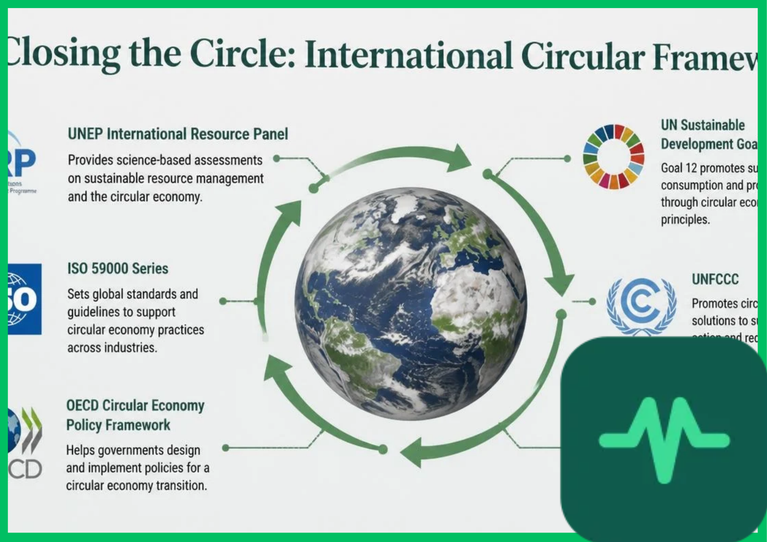
According to UNEP resource governance frameworks, transparent carbon pricing must include financial protections for vulnerable communities and border adjustment mechanisms to prevent polluting industries from escaping climate rules.
When wealthy nations and developing economies align their carbon pricing standards, they level the playing field for clean technology.
According to ENERGY STAR and international industrial efficiency evaluations, market pricing models drive energy efficiency upgrades across factories, commercial buildings, and transport networks, ensuring that every kilowatt of power is used wisely.
Pricing Pollution Toward a Sustainable Future
Global carbon pricing mechanisms prove that market economics can work hand in hand with environmental protection.
We no longer have to accept that polluting our shared atmosphere is free while protecting the planet is an unaffordable luxury.
By attaching a clear financial cost to carbon emissions, utilizing cap-and-trade systems, and rewarding clean industrial innovation, we rewrite the rules of global commerce.
We step away from free pollution, embracing a responsible, market-driven standard of living.
Through smart economic policy, rigorous academic research, and a deep respect for our global climate, pricing carbon secures a clean, thriving future for our world.
Comments (0)
Login to leave a comment.
No comments yet. Be the first to share your thoughts!