
 ) emissions, industrial emitters face zero financial friction for burning fossil fuels. Establishing robust carbon pricing frameworks introduces direct economic costs to carbon-intensive thermodynamic processes, shifting marginal abatement cost curves and accelerating commercial investment in low-carbon engineering technologies such as green hydrogen reduction and electric arc furnaces.
Emissions Trading Systems (ETS) and Cap-and-Trade Mechanics
The foundational market mechanism driving industrial carbon pricing is the emissions trading system (ETS), structured around cap-and-trade principles. Regulatory authorities establish a legally binding absolute emissions cap that ratchets downward annually across multi-year compliance periods—typically decreasing by 2% to 4% per year to align with international climate targets. Within this regulated framework, industrial installations receive or purchase emission allowances, where one allowance grants legal authorization to emit one metric ton of carbon dioxide equivalent ( ).
Industrial facilities that reduce their specific emissions below their allocated cap through process electrification, energy efficiency upgrades, or carbon capture and storage (CCS) can sell surplus allowances on carbon exchange markets to emitters exceeding their compliance limits. The market-clearing price of carbon allowances establishes a direct financial valuation for every ton of greenhouse gas released. When carbon allowance prices exceed the marginal cost of deploying low-carbon technologies—such as switching from blast furnace-basic oxygen furnace (BF-BOF) steelmaking to direct reduced iron-electric arc furnace (DRI-EAF) production powered by green hydrogen—heavy industrial operators face immediate economic incentives to transition their infrastructure.
Carbon Border Adjustment Metrics and Carbon Leakage Prevention
A critical economic challenge accompanying stringent regional carbon pricing mandates is the risk of carbon leakage. Carbon leakage occurs when heavy industrial manufacturers relocate production facilities from jurisdictions with high carbon prices to countries with lax environmental regulations or zero carbon pricing, resulting in zero net reduction in global emissions while damaging domestic industrial competitiveness.
To prevent carbon leakage, regulatory frameworks integrate carbon border adjustment mechanisms (CBAM). A carbon border adjustment system imposes financial levies on imported carbon-intensive commodities—such as crude steel, aluminum, cement, fertilizers, and hydrogen—proportional to the embedded  emissions generated during their production and the carbon price differential between the exporting and importing jurisdictions. Embedded emissions (
 ) per metric ton of product are calculated mathematically as:
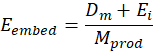
where  represents direct process emissions,
 represents indirect emissions from consumed electrical energy, and
 is total mass of manufactured output.
By applying equivalent carbon costs to foreign imports, carbon border adjustment metrics equalize competitive playing fields, compelling global industrial suppliers to adopt low-carbon manufacturing processes to maintain market access.
Technical Data Specifications of Carbon Pricing Parameters
| Carbon Pricing & Economic Parameter | Engineering & Economic Specification Standard |
|---|---|
| Annual Emissions Cap Reduction Rate | 2% to 4% downward ratcheting per compliance year |
| Emissions Allowance Unit Valuation | One allowance per 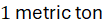 of  |
| Industrial Decarbonization Sectors | Steel, cement, chemicals, aluminum, and refining |
| Marginal Abatement Cost (MAC) Threshold |  of  avoided |
| Carbon Border Adjustment Calculation | Direct process emissions plus indirect electricity footprint |
| Energy Intensity of Primary Steelmaking |  of crude steel output |
| Cement Calcination Process Emissions |  of  per ton of clinker |
Marginal Abatement Cost (MAC) Curves and Industrial Technology Adoption
Evaluating how carbon pricing drives industrial decarbonization requires analyzing marginal abatement cost (MAC) curves. A marginal abatement cost curve ranks potential decarbonization technologies from lowest cost per ton of  reduced to highest cost, mapping economic viability against prevailing carbon market valuations.
In heavy industries, certain energy efficiency measures—such as waste heat recovery systems, variable-speed motor drives, and insulation upgrades—exhibit negative or low marginal abatement costs ( ), delivering immediate financial savings alongside emission reductions. However, deep decarbonization technologies—such as post-combustion amine scrubbing for carbon capture and storage (CCS) or high-temperature industrial electric resistance heating—require substantial capital expenditure (
 ) and exhibit high marginal abatement costs (
 ).
When carbon pricing mechanisms elevate allowance costs above these marginal abatement thresholds, heavy industrial operators reallocate capital budgets away from fossil-fuel infrastructure toward deep decarbonization projects, neutralizing financial penalties and transforming abatement obligations into strategic clean technology investments.
Carbon Taxation Versus Cap-and-Trade Elasticity
Policy architectures governing industrial carbon pricing diverge primarily between cap-and-trade systems and direct carbon taxes. Each approach introduces distinct economic elasticity and compliance dynamics for heavy industrial operators:
- Cap-and-Trade Elasticity: Fixes the absolute environmental quantity of emissions while allowing the carbon market price to fluctuate dynamically based on macroeconomic demand, industrial output, and energy market volatility. High market liquidity ensures transparent price discovery.
- Carbon Taxation Certainty: Fixes a predictable, escalating financial price per metric ton of emitted
 , providing corporate treasuries with absolute cost certainty for long-term capital planning, though total emission reduction volumes remain variable and dependent on industry response elasticity.
Industrial economists and IEA analyses indicate that hybrid models incorporating price floors and stability reserves within cap-and-trade markets deliver optimal outcomes, combining price predictability with strict environmental quantity controls.
Thermodynamic Realities of Hard-to-Abate Industrial Sectors
Applying carbon pricing mandates to heavy industries must account for the fundamental thermodynamic and chemical realities governing high-temperature thermal production. In cement manufacturing, over 60% of total emissions stem directly from the chemical calcination of limestone ( ) into lime (
 ) and carbon dioxide (
 ):
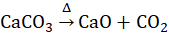
This stoichiometric reaction is thermodynamically independent of fuel combustion; even if a cement kiln operates on 100% renewable electrical energy, calcination releases  natively. Similarly, primary steelmaking via the blast furnace route utilizes metallurgical coke as both a chemical reducing agent and a thermal fuel source to strip oxygen from iron ore (
 ).
Because these industrial emissions are chemically bound to primary material transformations, carbon pricing provides the necessary economic pressure to commercialize novel chemical pathways—such as electrochemical cement curing, biomass-derived reducing agents, and direct green hydrogen DRI reduction—transforming industrial manufacturing physics from linear carbon-intensive models into closed-loop circular systems.
The Final Take
Mastering carbon pricing mechanism industrial decarbonization impact accelerates global heavy industry transformation by internalizing environmental externalities into corporate balance sheets. Citing IEA energy economics reports and UNEP climate assessments, emissions trading systems, carbon border adjustment metrics, and rising marginal abatement cost thresholds compel heavy industries to deploy capital-intensive clean technologies. By establishing rigorous economic mandates, carbon pricing creates an indispensable foundation for universal industrial net-zero compliance.
Comments (0)
Login to leave a comment.
No comments yet. Be the first to share your thoughts!