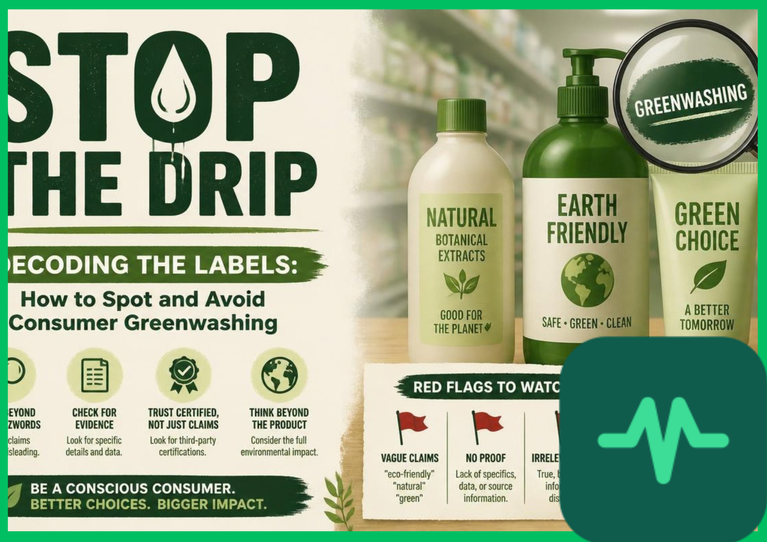
It feels good to put these items into your shopping cart. You walk away believing you have made a positive choice for your home and the environment.
Unfortunately, many of these beautiful packages are hiding an uncomfortable truth. As consumer demand for eco-friendly products has exploded globally, a deceptive corporate marketing strategy has grown right alongside it. Companies realize they can charge a premium for items that look sustainable, regardless of how the product was actually made.
This corporate sleight of hand creates a massive barrier for ethical shopping. When a company uses misleading imagery or vague vocabulary to exaggerate its environmental credentials, it undermines the hard work of truly sustainable businesses. Learning to identify these tricks is the only way to protect your budget and ensure your money supports genuine environmental progress.
The Art of the Hidden Trade-Off
Misleading environmental claims do not usually take the form of flat-out lies. Companies rarely fabricate data from thin air because regulatory bodies would penalize them instantly. Instead, they rely on partial truths. They highlight one single positive attribute while completely ignoring a mountain of negative environmental consequences.
This tactic forms the foundation of greenwashing in consumer products.
Imagine a clothing brand launching a new t-shirt line made from organic cotton. The packaging features bright green labels celebrating the reduction in chemical pesticides during farming. It sounds like a massive win for the planet.
What the label avoids mentioning is the broader picture. The factory processing that organic cotton might be powered entirely by coal, dumping heavy carbon emissions into the atmosphere. The garment might be dyed using toxic chemicals that pollute local waterways. The shirt might be shipped thousands of miles or kilometers across the ocean wrapped in three layers of single-use plastic.
By forcing your attention onto one tiny, eco-friendly detail, the brand successfully distracts you from a deeply unsustainable manufacturing pipeline. True sustainability requires evaluating a product's entire lifecycle, not just a single ingredient.
Deconstructing the Vague Marketing Language
The easiest way to spot misleading products is to pay close attention to the vocabulary used on the packaging. Truly sustainable companies use precise, scientific language to describe their achievements. Greenwashers rely heavily on sweeping, emotional buzzwords that sound wonderful but mean absolutely nothing under scrutiny.
To protect yourself, you need to know how to spot greenwashing hidden inside everyday product descriptions.
The Organic and Natural Trap
The word "natural" is one of the most abused terms in the global marketplace. Legally, the term has no universal definition when applied to household goods or cosmetics. Arsenic is natural. Uranium is natural. A plastic bottle can contain synthetic chemicals and still use the word "natural" on the front cover simply because it contains a small amount of plant extract. Unless a claim is backed up by specific data or legal certification, treat it as pure decoration.
The Myth of Unverifiable Claims
You will frequently see items labeled as "eco-friendly" or "sustainable." Ask yourself a simple question when you see these words: says who? If a company claims a bottle is made from recycled material, it should list the exact percentage. A statement like "made with recycled plastic" could mean the container uses 99% recycled material, or it could mean it uses less than 1%. If a company refuses to share the exact math, they are likely trying to deceive you.
Reading Past the Visual Elements
Human beings are visual creatures. We process colors and shapes much faster than we read tiny blocks of text on the back of a label. Corporate design teams understand this psychological quirk completely. They use specific visual cues to trick your brain into assuming a product is clean before you ever read a single word.
Cardboard that has been intentionally left unbleached and brown gives an immediate impression of raw, rustic sustainability. Soft pastel shades of green, blue, and beige evoke feelings of nature and purity. Logos featuring little green leaves, small frogs, or spinning wind turbines are slapped onto bottles of harsh chemical cleaners.
None of these design choices require government approval. Any company can print a green leaf onto a plastic bottle of industrial bleach without passing a single environmental test.
When you go shopping, try to treat the packaging design like a billboard advertisement. Ignore the leaves, look past the brown paper texture, and flip the item around to read the actual ingredient deck and manufacturing data. Do not let a color palette dictate your environmental choices.
Searching for Trusted Third-Party Certifications
If corporate marketing cannot be trusted, how can an everyday shopper make an informed choice? You cannot carry a chemistry kit into the store to test every bottle of laundry soap. You do not have the time to audit the supply chain of a shoe company while standing in a retail aisle.
The solution lies in shifting your gaze away from corporate claims and looking for independent, third-party validation. This is how you identify authentic sustainable marketing claims.
A genuine eco-friendly product will feature a stamp of approval from an independent organization that has no financial interest in the item's success. These certifying bodies send independent experts into factories to verify exactly how materials are sourced, how workers are treated, and how waste is managed.
Look for globally recognized stamps that require rigorous testing, such as certifications for organic farming, responsible forestry management, or cruelty-free manufacturing. These logos are legally protected. A company cannot print them on a label unless they have fully passed comprehensive, ongoing audits. Learning to recognize these tiny symbols takes a little bit of practice, but it provides an instant, foolproof shield against corporate deception.
Demanding Transparancy for a Greener Market
Every time you refuse to buy a greenwashed product and choose an authentically sustainable option instead, you participate in a quiet market revolution. Companies watch their sales data continuously. When deceptive marketing campaigns stop translating into higher profits, corporate executives are forced to rethink their strategy.
We deserve honesty from the brands we bring into our homes. By holding companies accountable to clear, data-driven global green advertising standards, we can clear the fog of misleading marketing away from our store shelves. This transparency allows genuine innovation to thrive and empowers every consumer to make choices that truly protect our planet.

Comments (0)
Login to leave a comment.
No comments yet. Be the first to share your thoughts!